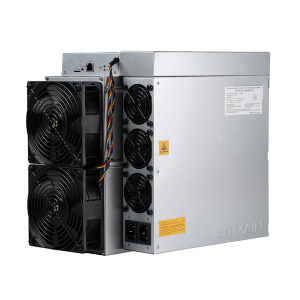
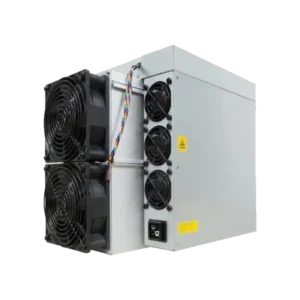
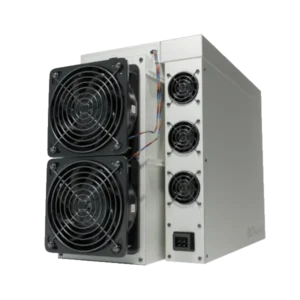
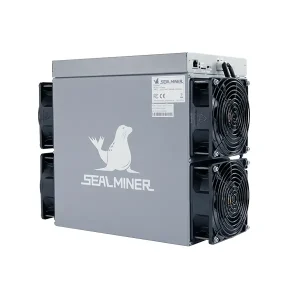
MicroBT Whatsminer M70 Bitcoin Miner
Price range: R65000 through R69100
The MicroBT Whatsminer M70 mines Bitcoin (BTC) on the SHA-256 algorithm at 220 or 236 TH/s and 14.5 J/TH, drawing about 3,190–3,422W. It is air-cooled with an integrated power supply, runs on 220–240V and needs a dedicated 20A circuit on South Africa’s 230V supply.
Product Description
Product Overview
The MicroBT Whatsminer M70 is the standard model in MicroBT’s M70 series, launched on 8 December 2025 in Abu Dhabi alongside the M70S. It is an air-cooled Bitcoin (BTC) ASIC miner on the SHA-256 algorithm, which also covers Bitcoin Cash (BCH) and Bitcoin SV (BSV), and it belongs to our Bitcoin (BTC) ASIC Miners range.
MicroBT rates the M70 at 214–236 TH/s and 14.5 J/TH, with power of 3,140–3,500W. We offer two units from inside that range, 220 TH/s at about 3,190W and 236 TH/s at about 3,422W.
At 14.5 J/TH the M70 uses less energy per terahash than any M60-series air unit we list, including the MicroBT Whatsminer M60S++ at 15.5 J/TH, while keeping the same 430 x 155 x 226 mm chassis and 230V single-phase input. For the lowest energy per terahash in our air-cooled Whatsminer range, see the MicroBT Whatsminer M70S at 13.5 J/TH.
Key Features
- Two hashrate options: 220 or 236 TH/s, both inside MicroBT’s published range.
- Efficiency: 14.5 J/TH (±5%), a step down in energy per terahash from the M60 series.
- Integrated power supply: The PSU is built into the chassis, so the miner takes mains power directly.
- Familiar chassis: The same 430 x 155 x 226 mm size and 11.5 kg net weight as the M60 series, so existing shelving and ducting fit.
- Single-phase input: AC 220–240V suits South Africa’s 230V supply.
- Operating range: Rated to run from -5 to +35°C.
- Wired networking: An Ethernet port gives a stable connection to your pool.
Technical Specifications
- Manufacturer: MicroBT
- Model: Whatsminer M70
- Algorithm: SHA-256
- Mineable coins: Bitcoin (BTC), Bitcoin Cash (BCH), Bitcoin SV (BSV)
- Hashrate options: 220 and 236 TH/s
- Hashrate (MicroBT nominal): 214–236 TH/s (±5%)
- Efficiency: 14.5 J/TH (±5%)
- Power (these units): about 3,190W and 3,422W (hashrate x efficiency)
- Power (MicroBT nominal): 3,140–3,500W (±10%)
- Input: AC 220–240V, IEC C19 power cable rated at least 16A
- Power supply: Integrated
- Cooling: Air
- Operating temperature: -5 to +35°C
- Network: Ethernet
- Dimensions: 430 x 155 x 226 mm
- Weight: 11.5 kg net, 12.6 kg gross
- Launched: 8 December 2025, Abu Dhabi
Power & Installation Notes
South African mains supply is 230V single-phase at 50Hz, inside the M70 input range of 220–240V. Both options draw more than the roughly 2,944W a 16A domestic circuit should carry continuously, so each miner needs a dedicated 20A circuit installed by a registered electrician to SANS 10142, with an IEC C19 power cable rated at least 16A.
Load shedding stops the miner whenever the grid drops. Carrying a 3.2kW to 3.4kW load around the clock on an inverter or battery bank is rarely economical, so most owners let the miner restart when power returns and fit surge protection on the circuit.
The power the M70 draws leaves as heat, so plan for about 3.2kW to 3.4kW of warm exhaust per unit. Use a ventilated space, duct the exhaust outside and keep intake air within -5 to +35°C, with filters where dust is a problem.
Electricity Cost Context (South Africa)
At the indicative rate of R2.80/kWh and 24-hour operation, the M70 costs about R6 431 a month on the 220 TH/s unit (about 3,190W) and about R6 899 a month on the 236 TH/s unit (about 3,422W). The working for the 220 TH/s unit is 3.190 kW x 24 x 30 x R2.80 = about R6 431 per month.
Tariffs vary by municipality and by tariff type, so put your own rate into the same formula. This is an estimate of operating cost only and does not project mining income or profit.
Ideal Use Cases
- Fleet upgrades: Replacing the MicroBT Whatsminer M60 or the Whatsminer M50 124T with a unit that delivers more hashrate per kilowatt in the same chassis size.
- Home mining: One unit on a dedicated 20A circuit in a ventilated garage or outbuilding.
- Small farms: Adding hashrate in steps of about 3.2kW to 3.4kW, one circuit per unit.
- Heat reuse: Sites that can use warm exhaust air for space heating in winter.
Frequently Asked Questions
Can the M70 run on South African household power?
It runs on 230V, but it needs a dedicated 20A circuit rather than a plug socket shared with other appliances. Use a registered electrician.
Which coins and pools can it mine?
The M70 runs SHA-256, so it mines Bitcoin, Bitcoin Cash and Bitcoin SV. Point it at any SHA-256 pool by entering the pool address and your worker details in the miner’s settings.
How should I cool it?
It is air-cooled. Keep intake air between -5 and +35°C, give it room to breathe and duct the hot exhaust outdoors.
Should I choose the M70 or the M70S?
The MicroBT Whatsminer M70S is rated at 13.5 J/TH against the M70’s 14.5 J/TH, and our M70S batch runs at 254–258 TH/s for about 3,429–3,483W. The M70 draws a little less power per unit at 220 or 236 TH/s.
How does it compare with the M60S+?
The MicroBT Whatsminer M60S+ runs at 17 J/TH, so the M70 produces each terahash with roughly 15% less energy.
What’s Included
- 1 x MicroBT Whatsminer M70 ASIC miner
- Integrated power supply, built into the chassis
- IEC C19 power cable rated at least 16A (confirm inclusion at time of purchase)