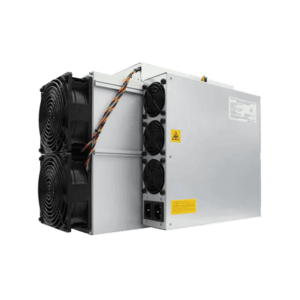
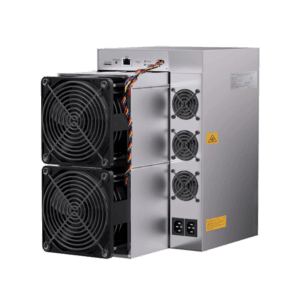
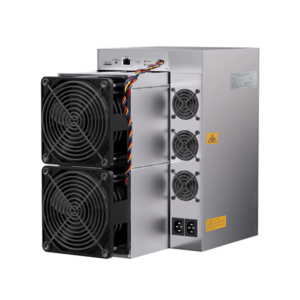
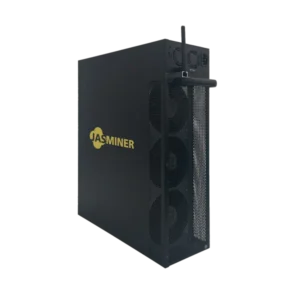
Bitmain Antminer KA3 173Th Kadena Miner
R33500
The Bitmain Antminer KA3 173Th mines Kadena (KDA) on the Blake2S algorithm at 173 TH/s, drawing about 3,287W at 19 J/TH. It is air-cooled with a built-in power supply rated at 3,600W. On South Africa’s 230V supply it needs a dedicated 20A circuit installed by a registered electrician.
Product Description
Product Overview
The Bitmain Antminer KA3 173Th is an air-cooled ASIC miner built for Kadena (KDA), the proof-of-work network that runs on the Blake2S algorithm. It hashes at 173 TH/s and is the higher-hashrate of the two KA3 versions in our Kadena (KDA) ASIC Miners range.
The KA3 is Bitmain’s Kadena miner. Bitmain’s official specification covers the KA3 family, and the 173 TH/s unit is a higher-binned version, so its hashrate and power figures come from published industry listings and should be read as approximate. Inside, 276 chips on three hash boards share one integrated power supply rated at 3,600W.
At 19 J/TH it runs at the same efficiency as the Bitmain Antminer KA3 166T while adding about 4% more hashrate per machine. That helps operators who are limited by rack space or by the number of circuits they can install.
Key Features
- 173 TH/s on Blake2S: Dedicated Kadena hashing, with hashrate held within ±3% of rating.
- 19 J/TH efficiency: About 3,287W at full output, with power held within ±5% of rating.
- Integrated 3,600W-rated PSU: The power supply is built in and feeds from two AC inputs at 10A each.
- Three hash boards, 276 chips: All in a 430 x 195.5 x 290 mm chassis weighing 16.1 kg net.
- Rated to 2,000 m altitude: Johannesburg, Pretoria and most of Gauteng sit below that height, so sites in and around Johannesburg fall within the rating.
- Air cooling: Air-cooled at about 80 dB, suited to a dedicated mining room or outbuilding.
- Standard network management: RJ45 Ethernet (10/100M) for pool setup and monitoring over your local network.
Technical Specifications
- Manufacturer: Bitmain
- Model: Antminer KA3 (173 TH/s version)
- Algorithm: Blake2S
- Coin: Kadena (KDA)
- Hashrate: 173 TH/s (±3%)
- Power consumption: About 3,287W (±5%)
- Efficiency: 19 J/TH
- Chips: 276 chips on 3 hash boards
- Cooling: Air-cooled
- Noise: About 80 dB
- Input: 200–240V AC, 50–60Hz, 20A, two AC inputs at 10A each
- Power supply: Integrated, rated 3,600W
- Network: RJ45 Ethernet, 10/100M
- Operating temperature: 0–40°C
- Operating humidity: 10–90% RH
- Altitude: Up to 2,000 m
- Dimensions: 430 x 195.5 x 290 mm
- Packed dimensions: 570 x 316 x 430 mm
- Weight: 16.1 kg net, 17.7 kg gross
Power & Installation Notes
South Africa’s 230V single-phase supply at 50Hz sits inside the KA3’s 200–240V input range. At about 3,287W the miner draws roughly 14.3A, which is more than the roughly 2,944W a 16A domestic circuit should carry continuously. Each unit therefore needs a dedicated 20A circuit, installed and certified by a registered electrician to SANS 10142. The KA3 has two AC inputs, each drawing up to 10A, so plan two outlets or two PDU ports per machine. Larger installations call for 32A circuits or, in commercial premises, three-phase 400V distribution.
About 3.3kW of heat leaves the exhaust continuously. Keep intake air between 0°C and 40°C and extract the hot air outside rather than recirculating it. Thinner air at Highveld altitude carries away less heat, so leave a margin below the 40°C limit in summer. At about 80 dB the KA3 belongs in a mining room, garage or outbuilding.
During load shedding the miner stops when power drops and restarts when supply returns. Save your pool settings so it rejoins mining by itself, and fit surge protection, because spikes often follow restoration. Battery backup for a 3.3kW continuous load needs a large inverter and battery bank, so most owners let the unit stop.
Electricity Cost Context (South Africa)
Running the KA3 173Th 24 hours a day at about 3,287W uses roughly 78.9 kWh a day, or about 2,367 kWh over 30 days. At an indicative tariff of R2.80/kWh that comes to about R6,627 a month.
(3,287 / 1,000) x 24 x 30 x R2.80 = about R6,627 per month
Tariffs vary by municipality and by supply type, so check the rate on your own bill. This is an operating cost estimate, not a profitability projection.
Ideal Use Cases
- Dedicated Kadena mining: A purpose-built Blake2S machine for operators who want KDA output.
- A second algorithm beside Bitcoin: Runs alongside SHA-256 machines from our Bitcoin (BTC) ASIC Miners range to spread exposure across coins.
- Circuit-limited sites: More hashrate per 20A circuit than the 166 TH/s KA3 at the same efficiency.
- Growing a KA3 fleet: Shares its chassis, inputs and management with other KA3 units, so racks and wiring stay uniform.
Frequently Asked Questions
Will the KA3 173Th run on South African power?
Yes. South Africa’s 230V, 50Hz supply sits inside its 200–240V input range. At about 3,287W it needs a dedicated 20A circuit installed by a registered electrician to SANS 10142, with both AC inputs fed.
Which coins and pools can it mine?
It is built for Kadena (KDA) on the Blake2S algorithm. Choose a pool that supports KDA, then enter its stratum address, your worker name and your wallet address in the miner’s settings.
How loud is it, and how should I cool it?
About 80 dB, which is too loud for a home living area. Keep intake air between 0°C and 40°C, extract the hot exhaust outside and keep dust away from the intake.
How does it compare with the KA3 166T?
The Bitmain Antminer KA3 166T delivers 166 TH/s at 3,154W. The 173Th adds 7 TH/s for about 133W more, and both run at 19 J/TH.
Can the KA3 mine Handshake (HNS)?
The KA3 is built for Kadena. For Handshake (HNS), look at the Bitmain Antminer HS3 8.55T or the Bitmain Antminer HS3 9T, which we list in the same category.
What’s Included
- 1 x Bitmain Antminer KA3 173Th miner
- Integrated power supply, rated 3,600W (built into the unit)