
Solo Bitcoin lottery mining
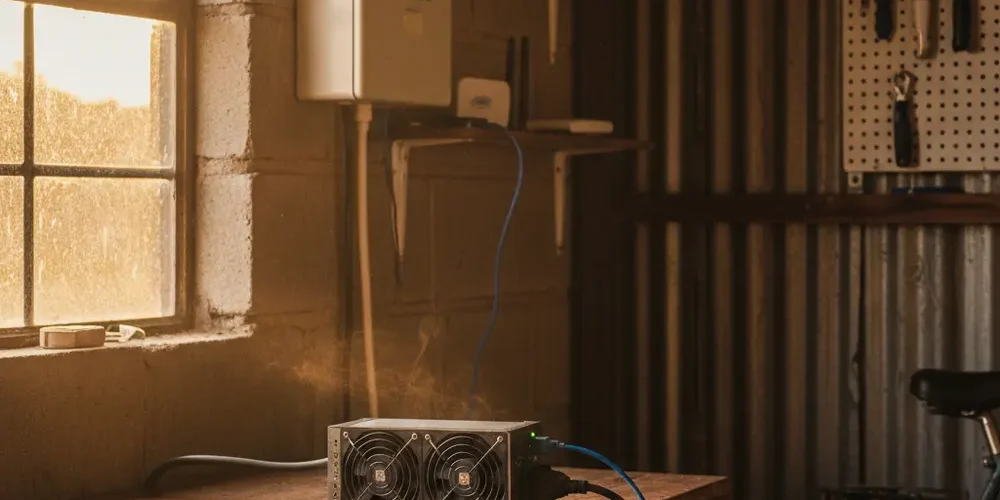
Solo, or lottery, Bitcoin mining is where you accept long odds for the chance of a full block payout instead of smooth daily pool income. In South Africa, the same choice is amplified by power interruptions, noisy hardware constraints, and electricity tariffs that can change by customer type.
By the end of this article you will be able to estimate your solo mining odds from hashrate share, choose between true solo to your own node and solo via a service, and sanity-check a basic setup. You will also have a simple decision tree you can follow before you spend time, money, or kilowatt-hours.
Note for South Africa:
- Electricity costs vary a lot between Eskom direct and municipal tariffs, and recent tariff changes have specific effective dates, so use your actual bill and tariff documents, not a generic cents per kWh number.
- Load shedding and power quality can reduce uptime and effective hashrate, and frequent restarts can create stability issues if cooling and networking are marginal.
- Latency and packet loss from your connection to the solo endpoint matter, so test your network path and pick a nearby region when you have the choice.
At a glance:
- Solo mining is high variance, you can run perfectly for months and still earn zero, so decide upfront if you can tolerate that outcome.
- Your odds are driven by your share of network hashrate, expected time is a planning estimate, not a schedule.
- You can solo mine either to your own Bitcoin Core node, or via a solo service like CKPool that speaks Stratum to your ASIC.
- In South Africa, cost and uptime, including load shedding and trips, often matter more than squeezing small efficiency gains.
Key takeaways:
- Use hashrate share to estimate probabilities, and treat any single month as a coin flip with usually tiny odds.
- Pick the simplest architecture you can operate reliably, then validate with logs and pool dashboards before you assume it is working.
- Keep records from day one for SARS, including mined receipts, dates, wallet addresses, and power and hardware costs.
What solo or lottery mining means on Bitcoin, and what it does not mean
Solo mining means you are not sharing block rewards with other miners in a proportional payout scheme. If your mining work produces a valid block, you get the block reward paid to the coinbase address you specify, subject to that block being accepted by the network.
Lottery mining is an informal name for the same idea, because the outcomes are lumpy. You either find a block and get a large payout, or you find nothing and get zero, even though you still paid for power and wear.
Solo mining does not mean you are avoiding difficulty, and it does not mean you are mining on an easier network. Your miner is still competing at Bitcoin network difficulty, and the network still targets an average block interval of about 10 minutes.
It also does not mean you can skip basic operational discipline. You still need stable power, cooling, and networking, and you still need to protect your payout address like it is a salary account.
If you are new
- Start by running your hardware on a normal pool for a short period so you can validate temps, uptime, and networking before adding solo variance.
- Learn the difference between hashrate shown on the miner and effective hashrate seen by the endpoint, they can diverge when packets drop or shares are stale.
- Decide on a monthly power budget cap, and stick to it, because variance can keep you running long after it stops feeling rational.
- Use a dedicated payout address, backed up safely, rather than a reused exchange deposit address.
If you have done pool mining before
- Expect the dashboard to look boring, no steady payouts, and many days with nothing to show for it.
- Shift your mindset from daily revenue to uptime and correctness, logs and accepted shares are your progress markers.
- Take extra care with pool URLs, DNS, and failover, a silent misconfiguration can burn weeks.
- Revisit cooling and noise, because solo often tempts people to run at home for longer periods.
The maths of solo mining odds, expected time, and variance
Solo mining odds are driven by one core concept, your share of total network hashrate. If you control 1 in a million of network hashrate, then on average you would expect to find about 1 in a million blocks, over a very long period.
Bitcoin adjusts difficulty to keep the overall network producing blocks at roughly a 10 minute average, and it does so every 2,016 blocks. That adjustment schedule is widely explained and it is important for solo miners because your odds are not fixed forever, they drift with difficulty and network hashrate. You can read a plain-language overview of difficulty and adjustment mechanics in this explainer on difficulty. Bitcoin mining difficulty explained
Expected time is a planning metric, not a promise. The distribution of outcomes is extremely wide, so you can be unlucky for a long time, and someone else can be lucky with a tiny miner.
A simple way to estimate your odds from hashrate share
You can approximate your chance of finding a block over a time period by working in steps. This is not a precise financial model, it is a sanity check that keeps expectations realistic.
- Estimate the network blocks per day, Bitcoin targets about 144 blocks per day on average.
- Calculate your hashrate share, your_hashrate divided by network_hashrate, using the same units.
- Estimate your expected blocks per day, 144 multiplied by your share.
- Convert that to an expected time to find one block, 1 divided by expected blocks per day, then convert days to months or years.
Two practical notes matter. First, network hashrate is not a constant, so re-check it periodically rather than baking one number into your plan. Second, expected time can be many years for small hashrates, and the most honest way to frame it is, you are paying for a chance, not buying a schedule.
Why you can mine for months or years and get nothing, even if you are doing everything right
Block discovery is a probabilistic process. Even if your expected time is, say, two years, it is still plausible to go four years without a block, because randomness does not smooth out on small sample sizes.
This variance is why solo mining is emotionally tricky. It can feel like something is broken when it is not, which leads to risky changes like overclocking without testing, switching firmware weekly, or chasing questionable solo offers.
It also means you should separate two questions. Question one is, is my miner working correctly and submitting valid shares. Question two is, did I get lucky and find a block, which is not something you can force.
Solo options, true solo to your own node vs solo via a service
There are two main ways people approach Bitcoin solo mining. One is true solo mining to infrastructure you run yourself, typically a Bitcoin Core full node plus additional software that speaks to ASIC miners.
The other is using a solo mining service that provides a Stratum endpoint and handles the backend node work, while still paying the full block reward to your address if you find a block. A widely referenced example is CKPool, which is often used by hobbyists because it is simple to connect and does not require account registration. CKPool solo mining setup
Both approaches can be valid. The best choice depends on your goal, your ability to operate infrastructure reliably, and your tolerance for operational risk versus trust risk.
| Option | Best for | Trade-offs | What you must control |
|---|---|---|---|
| True solo to your node | Maximum control, learning | More moving parts | Node uptime, security, wallet |
| Solo via a service | Simplicity, quick start | Trust and endpoint reliance | Payout address, miner config |
| Hybrid with local proxy | Many miners, local LAN | Extra software layer | Proxy uptime, monitoring |
If you want the simplest start, it is reasonable to begin with a reputable solo endpoint, validate stability, then decide if running a full stack is worth it. If you want maximum independence and you enjoy systems work, running your own stack can be part of the hobby.
What Stratum is doing, and why most ASICs cannot mine directly to Bitcoin Core
Most ASIC miners speak Stratum, which is a protocol designed for miners to receive work and submit shares efficiently. Bitcoin Core does not expose a Stratum interface directly, it exposes RPC interfaces that are used by mining software.
In practice that means there is usually software in the middle. It can be a pool server, a solo server, or a proxy that translates between the miner and the node.
If you want to understand the architecture behind a Stratum server used in solo contexts, ckpool is a commonly referenced codebase, and its repository documentation describes modes like connecting to a bitcoind backend and proxy modes. solo mining server architecture
Setup overview for South African miners, connectivity, latency, power, noise, heat
A solo setup only works if it runs consistently, and in South Africa that consistency is often the hardest part. Focus on basics, stable power, stable networking, and predictable cooling, before you chase any advanced tuning.
If you are shopping for hardware, make sure you plan the full system, not just the miner. That includes breakers, cabling, surge protection, ventilation, and where the heat will go in summer. If you want a starting point for sourcing, browse ASIC categories and accessories on our shop. Bitcoin ASIC miners in the shop
- Connectivity: Fibre is usually more stable than LTE for packet loss and latency, but test your route to the endpoint you plan to use.
- Latency: High latency increases stale shares, it can reduce effective hashrate, especially on unstable links.
- Power quality: Brownouts, surges, and abrupt cutovers can crash miners or corrupt settings, protect both miner and networking gear.
- Noise: ASIC fans are loud, plan for neighbours, body corporate rules, and sleep.
- Heat: If you cannot remove heat, the miner will throttle or shut down, and your effective hashrate drops.
Where failures happen most often, and how to sanity-check your setup
Most solo mining failures are boring, not mysterious. The miner is running, but it is pointed at the wrong endpoint, it cannot resolve DNS, it has the wrong worker format, or it is overheating and throttling.
Use this quick sanity checklist before you assume you are unlucky. The goal is to confirm you are contributing valid work at the expected rate, not to chase block luck.
- Confirm the miner shows accepted shares, not only hashrate.
- Confirm the endpoint dashboard shows your worker and a non-zero effective hashrate after a reasonable warm-up period.
- Confirm time sync on your network, large time drift can cause strange behaviour on some devices and routers.
- Check temperatures, fan speed, and any throttling indicators.
- Check for packet loss, run a ping and a traceroute to the endpoint, then compare fibre versus LTE if you have both.
If you want help planning airflow, ducting, or power layout for a home or small workshop setup, contact us before you buy extra hardware. Talk to us about a mining setup plan
Decision tree, should you solo mine at all
This decision tree is designed to prevent the most common solo mining regret, spending for months on power with no clear stop rule. Follow it top to bottom, and write down your answers.
- Do you need predictable payouts? If yes, solo is a poor fit, consider normal pool mining instead.
- Can you tolerate earning zero for long periods? If no, do not solo mine, or cap it as a hobby budget.
- Can you keep uptime high? If load shedding, trips, or overheating will cut uptime often, your odds worsen and your costs per effective TH go up.
- Can you run and secure a full node reliably? If yes and you want control, consider true solo to your node. If no, use a solo service endpoint.
- Is your expected time-to-find within your acceptable horizon? If it is longer than your patience window, treat it as entertainment, not income.
- Set guardrails: Define a monthly power budget and a stop date to reassess, then stick to it.
Payouts, fees, and risks, custody, scams, pool trust, and operational mistakes
When you find a block while solo mining, the payout is the block subsidy plus transaction fees included in that block, paid to your specified coinbase output. The exact amount varies per block because transaction fees vary, so do not anchor expectations to a fixed number.
Solo services may charge a fee, and they may have specific payout mechanics, confirmation requirements, and conventions for how you set your payout address in the username field. Always read the service documentation carefully, and test with a small pilot run before you commit weeks of uptime. CKPool documents its connection approach and general model on its site. how Stratum solo mining endpoints work
- Custody risk: Use a payout address you control, ideally on a wallet where you control the keys, not an exchange deposit address you cannot prove ownership of later.
- Phishing risk: Fake pool sites and lookalike domains exist, bookmark the correct URL and avoid random links from chat groups.
- Malware risk: Mining management software and firmware should come from trusted sources, and you should isolate miners on a separate VLAN or router if possible.
- Operational risk: Wrong endpoint, wrong worker format, or unstable DNS can result in zero effective hashrate.
Common mistakes
- Pointing the miner at a pooled payout endpoint and assuming it is solo, the payout model is defined by the endpoint, not your intention.
- Using an exchange deposit address as the payout address, then losing access, changing the account, or failing to prove ownership for records.
- Ignoring stale shares and packet loss, effective hashrate can be far lower than the miner screen shows.
- Running without surge protection or with undersized cabling, then chasing random reboots and hardware faults.
- Overclocking immediately, then spending weeks debugging instability instead of validating baseline operation.
Costs and break-even thinking in South Africa, electricity tariffs, downtime, and hardware wear
Cost modelling for mining in South Africa is less about finding a universal cents per kWh and more about building your own template. Eskom direct customers and municipal customers can have different effective dates and different structures, and fixed charges can change the real cost of running 24/7 versus intermittently.
Eskom has published tariff changes with effective dates, including differences between Eskom direct and municipal bulk purchase increases, and it is worth reading the primary notice so you do not rely on outdated assumptions. Eskom tariff increase effective dates
Use these inputs for a simple monthly cost template. Keep it boring and explicit, because solo mining outcomes are already uncertain.
- Your tariff, including any time-of-use periods and fixed charges that apply to your meter.
- Miner power draw in watts at your chosen settings, from the manufacturer or your own measured power meter.
- Realistic uptime percentage, factoring in load shedding, trips, maintenance, and overheating risk.
- Cooling and extraction power, fans and ducting can add meaningful watts.
Downtime matters twice. It reduces your chance of finding a block, and it can increase your effective cost per unit of useful work, because many household costs and fixed fees do not drop in proportion.
Hardware wear is real. Fans, PSUs, and connectors age faster under heat and dust, so include basic maintenance time and parts in your plan, even if you treat solo as a hobby.
Tax and record-keeping basics in South Africa, SARS
Tax rules depend on your facts and circumstances, and you should consider professional advice if your activity is material. What you can do immediately, without guessing outcomes, is keep clean records that make any later compliance simpler.
SARS has a dedicated page on crypto assets and tax, and it explicitly references mining as a way crypto assets can be acquired. That page also stresses that tax treatment depends on whether amounts are revenue or capital in nature, which is determined by your specific situation. SARS guidance on crypto assets and tax
SARS has also issued compliance warnings about crypto asset activity, which is a practical reminder that poor records can become expensive later. SARS media release on crypto asset compliance
- Keep a log of dates and times your miner ran, and any major downtime events.
- Record payout addresses used, and keep wallet backups and proof of control where possible.
- Keep invoices for hardware, repairs, spares, and power-related equipment, and keep your electricity bills.
- Record each mined receipt with date, amount, and the block or transaction reference, then record what you did with it later.
If you are decommissioning older gear or rotating hardware, it can help to separate household assets from mining assets for record clarity. You can also review options on our site for selling items when you upgrade. Sell your mining and IT items
Practical troubleshooting flow for solo mining
When solo mining feels like it is doing nothing, treat it like a systems problem, not a luck problem, until you have evidence. This flow is designed to find the common issues quickly.
- Confirm endpoint reachability: Can you resolve the hostname and connect to the port from your network.
- Confirm correct worker format: Verify the username and payout address pattern required by the service or your own server.
- Confirm accepted shares: Miner should show accepted shares, not only local hashrate.
- Confirm effective hashrate: Check the endpoint dashboard after at least one full difficulty window for that service.
- Check stales and rejects: High stale rate suggests latency or packet loss, high rejects can be misconfiguration or instability.
- Check thermals and power: Look for throttling, PSU errors, or repeated restarts.
If you want a deeper checklist for small mining rooms, noise control, and heat extraction, browse more mining articles in our Insights section. More mining and hardware insights
Frequently asked questions
Is solo mining the same as pool mining with a different payout method?
No. In solo mining you only get paid if you personally find a valid block, while in pool mining you typically get frequent smaller payouts based on contributed work.
Can I solo mine directly to Bitcoin Core without any extra software?
Most ASICs speak Stratum and Bitcoin Core does not provide a Stratum endpoint, so you usually need bridging software, such as a Stratum server or proxy that connects to your node via RPC.
How do I know if I am actually solo mining and not being scammed?
Use known, documented endpoints, verify the domain carefully, and check that your payout address is correctly configured. Also confirm accepted shares and that the endpoint dashboard shows your worker and hashrate.
Does load shedding make solo mining pointless?
Not automatically, but it reduces uptime, which reduces your effective odds while many costs remain. If your uptime is unpredictable, treat solo as a hobby with a strict budget cap and stop rules.
What should I record for SARS if I mine Bitcoin?
Keep dates, amounts, wallet addresses, transaction references, electricity bills, and hardware invoices. Clean records help you support the nature of receipts and any allowable expenses, depending on your circumstances.
Next steps
If you want to try solo mining without overcomplicating things, start with a short pilot run, measure stability, then decide if you want to commit to the long odds. If you are choosing hardware or planning extraction and noise control, start by scoping the full system, not only the ASIC.
When you are ready to source equipment, you can browse our shop categories, including solo-focused options. Solo lucky miners in the shop
If you want help sizing airflow, checking a power layout, or troubleshooting a stubborn setup, reach out. Contact our team
Summary:
- Solo mining is a variance play, plan for long periods of zero return.
- Your odds come from hashrate share, expected time is not a schedule.
- Pick either true solo to your own node or solo via a service, based on what you can operate reliably.
- In South Africa, uptime, tariff structure, and power quality often dominate outcomes.
- Keep SARS-ready records from day one, even if this is a hobby.
This is educational content, not financial advice.

