
Cashflow Strategy: Sell Daily, Weekly, or Hold?
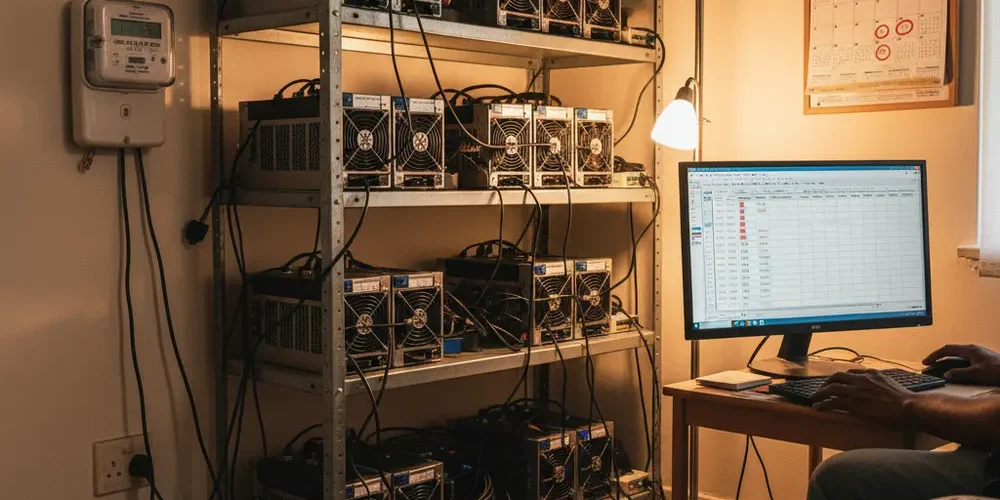
Mining cashflow is not just about profitability, it is about timing and survival when revenue swings and bills do not. In 2026, the question is not only sell or hold, it is how often you sell and what you protect first.
By the end of this article you will be able to map your ZAR obligations, pick a default sell schedule, and define clear exception triggers. You will also leave with a simple decision tree and recordkeeping habits that reduce forced sales and admin mistakes.
Note for South Africa:
- Electricity tariffs and structures can change on different dates for Eskom direct supply vs municipalities, which shifts your cashflow calendar
- Most operating costs are ZAR-based, so holding BTC creates both BTC price risk and USD-ZAR FX exposure
- Off-ramping and transfers have compliance friction, including travel rule requirements and provider status checks
At a glance:
- If you have ZAR bills due inside 7 to 14 days, you are usually choosing between daily sell or a buffered weekly sell, not a pure hold
- Pick one baseline rule, then add exception triggers for tariff changes, downtime, and withdrawal delays
- Use a reserve buffer to avoid forced selling into dips and to handle repairs and PSU replacements
- Design your sell timing to make SARS reporting easier, not harder, by standardising timestamps, rates, and documentation
Key takeaways:
- Daily selling buys stability, but can increase admin and fee drag if your tooling is weak
- Weekly or rule-based selling is often the best default for operators with a cash buffer
- Holding can be rational, but only with explicit risk limits and a plan for ZAR liabilities
The cashflow problem in 2026, why timing matters more than the slogan
Miners often talk about being bullish or bearish, but your operation lives on invoices and uptime. Rewards arrive continuously, while costs land in lumps, electricity, hosting, salaries, debt servicing, and parts.
Two things make timing harder than it looks. First, revenue per unit of hash can change quickly due to network difficulty and fee spikes. Second, your conversion path from coin to ZAR can be delayed by bank rails, exchange processes, or compliance checks.
That is why sell timing is not a price prediction exercise. It is a policy decision, like deciding how much fuel you keep in a generator tank, and when you refill it.
Quick definitions that help you think clearly
- Operating cash buffer: liquid ZAR or near-cash funds that cover at least one billing cycle
- Sell schedule: when you convert mining rewards to pay costs and build buffers
- Treasury slice: the portion you keep as coin exposure, usually BTC, sometimes stablecoins
- Exception trigger: a pre-written rule that overrides your default schedule
Map your obligations first (electricity, hosting, debt, repairs, salaries)
Before you debate daily vs weekly, list what must be paid in ZAR, and when. Your first job is not to maximise upside, it is to avoid forced sales under stress.
Start with a calendar view of the next 30 to 60 days. If you are a direct Eskom customer, note that tariff effective dates can differ from local authorities, so your cost step-changes may not match another miner’s timeline.
Then separate fixed obligations from variable ones. Fixed items are the ones that punish you if you miss them, and they drive your minimum sell rate.
Obligation checklist (build this once, then maintain it)
- Electricity: billing dates, deposit requirements, fixed charges, and any time-of-use structure that changes your effective cost
- Hosting and internet: contract dates, penalties, and whether invoices are VAT inclusive
- Debt or equipment finance: repayment dates, covenants, and what happens if hash rate falls
- Repairs and spares: typical lead times for PSUs, fans, hashboards, and delivery costs
- People costs: salaries, contractors, security, and insurance renewals
- Tax: provisional tax timing if applicable, and the paperwork you need to support it
Comparison table: what each strategy optimises for
| Strategy | Best for | Main downside | What you must have first |
|---|---|---|---|
| Sell daily | High ZAR stability | More admin and fee exposure | Automation and clear bookkeeping |
| Sell weekly or rule-based | Balanced workload and risk | Needs a buffer for bad weeks | Reserve policy and trigger rules |
| Hold (partial or full) | Long-term conviction | Risk of forced sale later | Risk limits and ZAR liquidity plan |
Strategy 1, sell daily, what it solves, what it breaks
Daily selling is the most conservative cashflow choice, because it matches revenue timing to running costs. It reduces the chance you are caught short by a sudden difficulty jump, fee drop, or an exchange withdrawal delay.
It can also simplify the mental model. Each day’s production becomes a small cash deposit, and you judge performance with less emotion.
But daily selling can break down if your execution is messy. You can lose money on repeated spreads and fees, and you can drown in reconciliation work.
Daily selling solves these problems
- Electricity shock absorption: you adapt faster when tariffs change or your effective cost rises
- Downtime recovery: you keep cash coming in even when parts fail and you need repairs
- Debt discipline: you reduce the chance of missing a repayment date because you waited for a price move
- FX and price exposure control: you hold less BTC if your liabilities are mostly ZAR
Daily selling creates these risks
- Fee drag: more conversions can mean more cumulative trading and withdrawal costs
- Operational load: more transactions to label, export, and store for tax records
- Bad habits: chasing perfect execution each day can cause manual errors
If you choose daily selling, put the process on rails. Use your pool payout settings, exchange automation tools where available, and a standard naming scheme in your bookkeeping.
When you need help building a repeatable process, start from your operational baseline and document it, then escalate to a formal review via our contact page.
Strategy 2, sell weekly or on a rule, balancing admin, fees, and volatility
Weekly selling is often the best middle path for operators. You cut transaction count, you still keep tight control on cash, and you can bundle conversions to reduce friction.
The key is not the exact day of the week, it is the rule. A good rule is simple enough to follow when you are busy, and strict enough to prevent emotional decisions.
Weekly selling fails when you do not have a buffer. If one bad week can sink you, you are not really weekly, you are forced-sell, and forced-sell is usually the worst execution.
Examples of rule-based schedules (pick one, do not mix randomly)
- Fixed percent weekly: sell X% of weekly rewards, keep the rest as treasury
- Expense cover first: sell enough each week to fund the next 14 to 30 days of ZAR costs, then hold the remainder
- Threshold rule: sell when your treasury reaches a coin balance threshold, or when ZAR buffer falls below a floor
- Two-bucket rule: one bucket for operating cash, one for long-term hold, only rebalance monthly
How to make weekly selling work in SA
- Plan around bank processing times and public holidays, because delayed settlement can create surprise shortfalls
- Prefer fewer, cleaner payouts from pools, then reconcile once per week with consistent timestamps
- Keep a parts budget in ZAR so a PSU failure does not force a BTC sale on a bad day
If you want to reduce downtime risk, pair a weekly sell rule with resilience work. For example, if you are running inverter-backed power, keep your repair route ready via our professional inverter repair service.
Strategy 3, hold (partial or full), when it is rational, when it is reckless
Holding mining rewards is a treasury decision, not a mining decision. It can be rational when your operation can pay bills without selling, and you want long-term BTC exposure.
It becomes reckless when you confuse volatility with a plan. If your costs are ZAR-based and you have no buffer, holding is often a hidden leveraged bet.
A safer version is partial holding, where you sell a baseline amount for obligations and hold the rest under a clear risk limit.
Holding can be rational when
- You have a cash buffer that covers at least one full billing cycle, including electricity and hosting
- You have low debt, or flexible repayment terms
- You can survive a prolonged drawdown without turning off machines
- Your off-ramp is reliable and compliant, so you can liquidate when you choose
Holding is reckless when
- You are one invoice away from switching off, or one repair away from defaulting
- You regularly delay maintenance because cash is tight
- You do not track realised values and timestamps, which creates tax and audit stress later
If you want long-term exposure, define a drawdown rule in plain language. Example, if the treasury value falls below your minimum operating buffer, you sell enough to restore it, no debate.
SA-specific constraints, ZAR liquidity, banking rails, and regulatory friction
In South Africa, your mining operation’s risk is not only coin volatility. It is also whether you can convert to ZAR quickly and cleanly when you need to.
Compliance requirements can increase friction, especially for transfers between wallets and service providers. The Financial Intelligence Centre has published a joint advisory stating Directive 9 of 2024 on the travel rule takes effect on 30 April 2025, which matters for how CASPs collect and share transaction information FIC travel rule Directive 9 effective date.
Provider risk is also real. Before you rely on an exchange or custodian for your weekly or daily sell rule, verify their regulatory posture and communications through the FSCA FSCA guidance on crypto asset service providers.
Practical SA checklist for off-ramp reliability
- Know your daily and weekly withdrawal limits, including bank transfer cut-off times
- Test a full cycle, deposit, convert, withdraw to bank, and record the elapsed time
- Keep a documented fallback plan, including an alternative compliant route if a provider is down
- Maintain clean wallet hygiene, labelled addresses, and consistent memo practices
Tax and recordkeeping in SA, how sell timing can change your paperwork and risk
Your sell schedule changes how many taxable events and records you must manage. More frequent selling can mean more line items, but it can also mean cleaner, more consistent documentation if you automate.
SARS makes it clear that normal tax principles apply, and that crypto receipts can be on revenue or capital account depending on facts. Their guidance also explicitly mentions mining as a scenario that can have tax consequences SARS guidance on crypto assets and tax.
SARS has also publicly signalled increased attention to crypto compliance. A media release dated 9 October 2024 warns about crypto asset compliance and points to the use of third-party data and compliance programmes SARS warning on crypto compliance.
Recordkeeping habits that reduce pain
- Freeze your data sources: pool statements, exchange trade confirmations, and bank proof of payment
- Store timestamps and rates: capture the date and time of receipt, conversion, and withdrawal
- Separate wallets: one for mining inflows, one for treasury holds, one for operational spend
- Track fees explicitly: pool fees, trading fees, network fees, and withdrawal charges
How sell timing affects your SARS workload
- Daily selling: many small trades, but less ambiguity about realised values if the workflow is automated
- Weekly selling: fewer trades, but you must still account for each receipt event from the pool
- Holding: fewer conversions now, but potentially higher complexity later when you liquidate during stressful periods
If you are unsure how your specific facts should be treated, get advice. This article cannot replace tax advice, and SARS outcomes depend on your circumstances.
Implementation playbook, set a policy, automate, and review monthly
A strategy is only real when it is written down and followed. Treat your sell schedule like an operations policy with owners, tools, and monthly review points.
Keep it simple enough that a second person can execute it if you are offline. That is a real-world resilience test.
Step-by-step policy setup (operator-friendly)
- Write your objective: for example, keep mining running, avoid forced sales, maintain a treasury slice
- Choose your baseline schedule: daily, weekly, or hold with partial sells
- Set buffer targets: define a ZAR buffer floor and a parts reserve
- Define exception triggers: tariff changes, downtime, withdrawal delays, difficulty spikes
- Assign tools and owners: who exports pool data, who reconciles exchange trades, who approves withdrawals
- Review monthly: compare expected vs actual cashflow, update buffers, and refine triggers
If you are planning a hardware refresh or liquidation of old rigs to fund buffer targets, use a controlled resale process. Our sell your items page can help you think through disposal pathways for tech gear, and our corporate IT asset disposal service is relevant if you also run broader infrastructure.
Practical decision tree, pick a baseline sell rule and define exception triggers (difficulty spikes, fee spikes, downtime, tariff changes)
Use this decision tree to pick your default, then commit to it for at least one month before changing it. You are aiming for consistency, not perfection.
- Do you have fixed ZAR costs due in the next 7 to 14 days?
- If yes, default to sell daily, or sell enough each week to fully cover those invoices plus a margin
- If no, go to the next question
- Do you have a reserve buffer that covers at least one full billing cycle?
- If no, default to sell weekly until the buffer target is met
- If yes, go to the next question
- Is your operation debt-financed with hard repayment dates?
- If yes, sell on a rule that always pre-funds repayments, do not rely on price moves
- If no, go to the next question
- Are you comfortable with BTC and USD-ZAR exposure versus ZAR liabilities?
- If no, keep a higher sell percentage and keep buffer assets closer to ZAR cash needs
- If yes, consider partial hold with explicit risk limits
- Do you have a reliable, compliant off-ramp and clean tax records?
- If no, reduce complexity, sell less frequently, and focus on fixing processes first
- If yes, you can choose daily, weekly, or hold based on your risk limits
Exception triggers you should write down now
- Tariff change window: increase sell percentage for the first 2 to 4 weeks after an electricity tariff step-change
- Withdrawal friction: if withdrawals take longer than your tested baseline, pause large holds and rebuild ZAR buffer
- Extended downtime: if uptime drops beyond your tolerance, sell more to fund repairs and prevent backlog
- Fee spike events: if a rare fee spike boosts revenue, skim a portion into ZAR reserves instead of assuming it will repeat
Common mistakes
- Selling based on feelings, then calling it a strategy
- Holding 100% while paying ZAR bills from an empty bank account
- Ignoring tariff and billing calendars, then being surprised by a cost jump
- Underestimating admin, and losing track of timestamps, fees, and realised values
- Using an off-ramp without checking regulatory communications and operational history
If you’re new
- Start with weekly selling until you can build a one-cycle buffer
- Keep wallets separate for mining receipts and personal spending
- Do one reconciliation session per week, save PDFs and exports in a single folder structure
- Do a small test withdrawal to your bank before relying on the route for bill payments
- Focus on uptime basics first, cooling, power quality, and spare fans
If you have done X before
- If you have survived a drawdown before, formalise what worked into written trigger rules
- If you have used multiple exchanges before, document a primary and a fallback route with tested settlement times
- If you have run debt before, pre-fund repayments from mining income and do not depend on price timing
- If you have managed a treasury before, add a drawdown cap and a buffer floor, then review monthly
- If you have had hardware failure cascades before, allocate a parts reserve and treat it as untouchable
Frequently asked questions
Is selling daily always safer for a South African miner?
It is safer for short-term bill risk, but not automatically better overall. Daily selling can increase admin and fee drag, so it only stays safer if your process is automated and your records are clean.
What buffer should I keep before I consider holding?
A practical starting point is at least one full billing cycle of ZAR costs, plus a separate parts reserve for likely repairs. The right number depends on your uptime risk, settlement times, and whether you have debt.
Does the travel rule change how I move mining rewards?
It can add friction and extra data requirements for transfers through CASPs, which affects how fast you can move funds and how predictable withdrawals are. In South Africa, Directive 9 of 2024 takes effect on 30 April 2025, so plan for more structured transfer workflows South Africa travel rule requirements for crypto transfers.
How does SARS treat crypto earned via mining?
SARS indicates that tax outcomes depend on your facts, and that crypto can be taxed under normal income tax rules or as capital gains depending on circumstances. Mining is explicitly listed as an acquisition scenario with tax consequences, so treat recordkeeping as a core operational task how SARS treats crypto earned through mining.
How do electricity tariff changes affect sell timing?
They can shift your break-even point and your cash buffer needs overnight, especially if fixed charges or time-of-use structures change your effective cost. Eskom has published announcements and tariff pages you can use to confirm effective dates and structure changes for planning Eskom FY2026 tariffs effective dates.
Short summary you can act on today
- Write down your ZAR obligations and dates, then size a buffer before you optimise anything else
- Choose one baseline schedule, daily, weekly, or partial hold, and commit for a month
- Add exception triggers for tariff changes, withdrawal delays, and downtime
- Make recordkeeping part of operations, not an afterthought
This is educational content, not financial advice.

