
IT Asset Disposal for Financial Services in South Africa
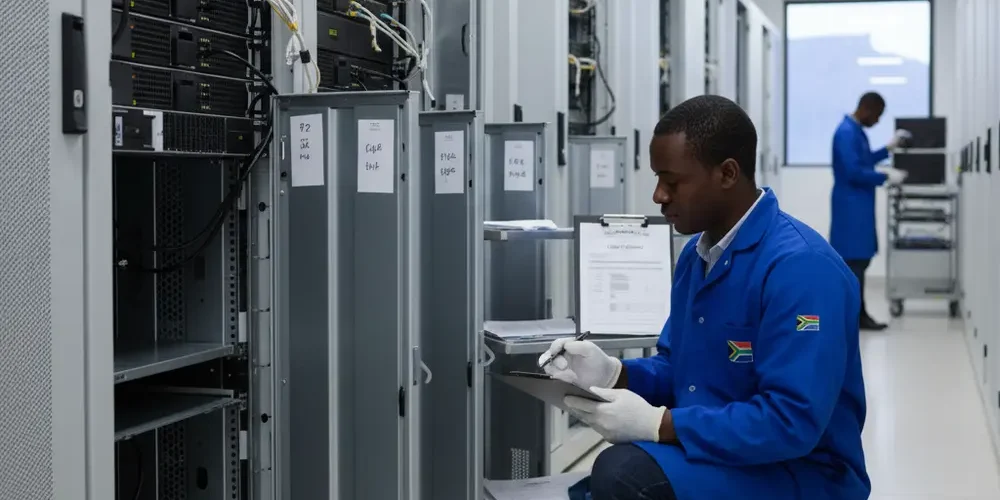
For South African financial institutions, a decommissioned laptop or retired server is not just old hardware. It is a potential POPIA liability, a regulatory audit risk, and a live data security threat until every byte on it is verifiably destroyed.
This guide will give CIOs and compliance officers a clear picture of the legal framework governing corporate IT asset disposal in South Africa, the real risks of getting it wrong, and a step-by-step process to get it right. By the end, you will have a practical checklist and the vendor selection criteria your procurement team needs.
Note for South Africa:
- POPIA (Protection of Personal Information Act, No. 4 of 2013) is the primary data law. Sections 19 and 21 directly govern data destruction obligations on decommissioned hardware.
- The Financial Sector Conduct Authority (FSCA) and the Prudential Authority both have IT governance expectations that extend to end-of-life asset management.
- South Africa's Extended Producer Responsibility (EPR) regulations under NEMWA impose obligations to channel e-waste to registered recyclers, not informal collectors.
At a glance:
- POPIA obligates you to destroy personal data on hardware before disposal or transfer to a third party.
- FSCA IT risk guidelines require lifecycle accountability, including at end-of-life, at board and senior management level.
- E-waste must go to EPR-registered recyclers. Using informal collectors exposes you to environmental enforcement risk.
- A certificate of destruction is not legally mandated by name, but it is the primary evidence of compliance in any audit or regulatory review.
Key takeaways:
- IT asset disposal is a compliance function, not a facilities task. Treat it accordingly.
- Your ITAD vendor is a POPIA operator under Section 21. They must be contractually bound to your security standards.
- Chain-of-custody documentation and certified data destruction are your legal defence if a breach is ever traced to decommissioned hardware.
Why IT Asset Disposal Is a Compliance Issue, Not Just a Logistics One
Most FinServ organisations have strong controls around active data systems. Firewalls, access management, and encryption receive serious attention and budget. End-of-life hardware often gets far less.
The problem is that a hard drive pulled from a decommissioned branch workstation may still hold years of customer records, transaction logs, or staff personal information. Once that asset leaves your building without proper data destruction, you have lost control of that data permanently.
This is not a theoretical risk. Improperly disposed hardware is a recognised vector for data harvesting and identity fraud in the South African banking sector, as tracked by SABRIC, the South African Banking Risk Information Centre. The cost of a single notifiable data breach, including regulatory response, reputational damage, and potential POPIA sanctions, will always exceed the cost of a proper ITAD programme.
The Regulatory Stakes for South African Financial Institutions
Financial institutions in South Africa sit at the intersection of multiple regulatory obligations when it comes to IT asset disposal. POPIA governs data destruction. The FSCA governs technology risk management. NEMWA governs physical e-waste. King IV governs board-level accountability. None of these are optional, and none operate in isolation.
CIOs who treat ITAD as a procurement or facilities afterthought are creating an uncontrolled compliance exposure that sits directly in their own governance remit.
The Legal and Regulatory Framework Governing ITAD in South Africa
Understanding which laws apply, and what they actually require, is the starting point for any defensible ITAD policy.
| Regulation / Framework | What It Requires for ITAD | Enforcement Body |
|---|---|---|
| POPIA (Sections 19 and 21) | Secure destruction of personal data on decommissioned hardware. ITAD vendors must be contractually bound as operators. | Information Regulator |
| FSCA IT Risk Guidelines | Technology risk management across the full asset lifecycle, including end-of-life disposal, with board-level accountability. | FSCA / Prudential Authority |
| NEMWA and EPR Regulations (GN R1184, 2021) | E-waste must be channelled to licensed, EPR-registered recyclers. Informal disposal is non-compliant. | DFFE (environmental enforcement) |
| King IV, Principle 12 | Governing body responsible for information asset protection throughout lifecycle, including disposal. Audit committee visibility required. | JSE / Audit Committee / Stakeholders |
| ISO/IEC 27001, Annex A.11.2.7 | Documented procedure for secure equipment disposal and verification before asset is released. | Certification auditor / Internal audit |
POPIA, the FSCA, and the Banks Act – What They Require
POPIA's Section 19 security safeguards require responsible parties to implement appropriate technical and organisational measures to prevent loss, damage, or unauthorised access to personal information. This obligation does not end when a device is switched off. It ends when data is verifiably and irreversibly destroyed.
Section 21 governs operator relationships. If you engage an ITAD vendor to handle data-bearing assets on your behalf, that vendor is a POPIA operator. You must have a written contract that binds them to the same security standards you are required to meet. Without that contract, the accountability for any data breach sits with you.
The FSCA IT risk guidelines extend technology risk accountability to the full asset lifecycle. Data confidentiality obligations persist until data is verifiably destroyed, even on hardware that has been physically removed from service. Governance accountability sits at board and senior management level, which places CIOs directly in frame.
King IV Principle 12 requires governing bodies to ensure responsible management of information assets throughout their lifecycle. In practice, this means your ITAD policy and its outcomes should be visible to your audit committee, not buried in a facilities SLA.
E-Waste Obligations Under the Extended Producer Responsibility Regulations
South Africa's EPR regulations under NEMWA formalise the requirement to channel electrical and electronic waste to registered Producer Responsibility Organisations (PROs) and their affiliated recyclers. The primary burden falls on producers and importers, but large enterprises disposing of bulk IT assets are expected to use compliant downstream channels.
For FinServ institutions with multi-branch footprints, this has practical implications. Hardware retired from dozens of branches across a year represents a significant e-waste volume. Sending that equipment to an informal collector, or simply skipping the recycling step entirely, creates environmental enforcement exposure under NEMWA and undermines your ESG reporting obligations.
Confirm that your ITAD vendor is affiliated with a registered PRO and can provide a waste transfer note or e-waste manifest for every disposal event. The CSIR's e-waste research consistently highlights that informal recycling channels in South Africa do not provide the data security or environmental accountability that regulated entities require.
The Risks of Non-Compliant IT Asset Disposal
Data Breach Liability, Reputational Damage, and Regulatory Sanctions
The Information Regulator has signalled active enforcement intent since POPIA's commencement provisions took full effect in 2021. Financial institutions are high-value targets for scrutiny, given the volume and sensitivity of personal and financial data they process.
Under POPIA, the burden of proof rests with the responsible party. You must be able to demonstrate that data was properly destroyed, not simply assert that it was. A certificate of destruction from a reputable ITAD vendor, referencing the destruction method and standard used, is the primary evidence you will need in any enforcement or audit context.
The risk categories for non-compliant ITAD in FinServ are:
- Regulatory sanctions. The Information Regulator can issue enforcement notices and refer matters for criminal prosecution. Administrative fines and reputational consequences follow.
- FSCA supervisory action. Non-compliance with IT risk governance standards can trigger supervisory review, conditions on licences, or formal findings.
- Data breach liability. If customer data is recovered from a disposed asset, you face notification obligations, potential civil claims, and serious reputational damage.
- Environmental enforcement. Non-compliant e-waste disposal under NEMWA carries its own penalties and can generate negative media exposure.
- Audit findings. An ISO 27001 audit or internal audit committee review that identifies gaps in ITAD controls will produce findings that require board-level remediation.
A Compliant ITAD Process for Financial Services – Step by Step
Asset Auditing, Chain of Custody, and Certified Data Destruction
A compliant ITAD process for a South African financial institution has a clear sequence. Skipping or compressing any stage introduces compliance risk.
- Asset inventory confirmation. Before any asset is decommissioned, confirm it is accurately tagged and recorded in your asset register. Include serial number, asset type, location, and data classification.
- Data classification review. Identify what categories of data the asset may have stored or processed. This determines the minimum destruction standard required.
- Destruction method selection. For most FinServ hardware, Purge or Destroy-level sanitisation under NIST SP 800-88 is appropriate. Note that SSDs and flash storage require different treatment to HDDs. Simple overwriting is not sufficient for NAND flash media.
- Vendor engagement and operator contract. Engage your ITAD vendor under a written contract that binds them as a POPIA operator. Confirm their certifications (R2 or e-Stewards) and their chain-of-custody controls before assets are transferred.
- Chain-of-custody documentation. Document every handover point from asset collection through to destruction. A signed transfer note at each stage is the minimum standard.
- Certificate of destruction issuance. Obtain a certificate of destruction for every disposal event. It should reference the destruction method, the standard applied, and the asset serial numbers covered.
- E-waste manifest and recycler confirmation. Confirm that the residual physical material is routed to an EPR-registered recycler. Retain the waste transfer note or manifest.
- POPIA record-keeping. Retain all destruction certificates, transfer notes, vendor contracts, and disposal records for the period required by your POPIA records management policy.
- Compliance officer and CIO sign-off. The disposal event should be formally closed with sign-off from both the compliance officer and the CIO, or their designated deputies.
Choosing the Right ITAD Vendor in South Africa
What to Look For – Certifications, Audit Trails, and Downstream Accountability
Not all ITAD vendors in South Africa operate to the same standard. For a regulated financial institution, vendor selection is itself a compliance activity, not a procurement shortcut.
The two internationally recognised ITAD certifications are R2 (Responsible Recycling) and e-Stewards. Both require independent auditing, documented chain-of-custody controls, and responsible downstream management of recycled materials. A vendor that holds either certification has demonstrated a baseline of data security and environmental accountability that supports your due diligence record under POPIA Section 21.
Key questions to ask any ITAD vendor before engagement:
- Are you R2 or e-Stewards certified? Can you provide your current certificate?
- Do you issue certificates of destruction that reference the destruction method and standard (such as NIST SP 800-88)?
- Can you provide chain-of-custody documentation from asset collection through to final destruction and recycling?
- Are you willing to sign a POPIA operator agreement and accept the obligations of a Section 21 operator?
- Which EPR-registered PRO are you affiliated with for e-waste recycling?
- Can you service multi-site collection, including regional or smaller branch locations?
For smaller FinServ entities or branch-level asset retirement, a local vendor with a straightforward, documented process may be more practical than a large national contractor. Sell Your PC's corporate IT asset disposal service is one accessible option for South African businesses looking to retire end-of-life equipment with proper documentation and accountability. You can also contact the Sell Your PC team directly to discuss your organisation's specific requirements.
Common Mistakes in FinServ IT Asset Disposal
- Treating disposal as a facilities task. ITAD is a compliance and security function. It needs ownership from IT and compliance, not just the office manager.
- No written operator contract with the ITAD vendor. Without this, POPIA Section 21 obligations are unenforceable and the liability stays with you.
- Assuming deletion equals destruction. Deleting files or reformatting a drive does not meet the Purge or Destroy standard required for financial sector hardware.
- Not accounting for SSDs and flash media. Standard overwrite methods are not sufficient for NAND flash. Get explicit confirmation from your vendor on SSD-specific destruction methods.
- Failing to document the e-waste chain. A certificate of destruction alone is not enough if the physical residue went to an informal recycler. You need the waste manifest too.
- Leaving retired assets in storage indefinitely. Hardware sitting in a storeroom is still a data security risk and still subject to POPIA. 'Offline' does not mean 'low risk'.
If You Are New to Formal ITAD in Your Organisation
- Start with a current asset inventory. You cannot manage what you have not mapped. Many FinServ organisations are surprised by the volume of untracked end-of-life hardware in storage.
- Review your existing vendor contracts. Check whether any current IT service or disposal contracts include POPIA operator language. Most older contracts will not.
- Pick one data destruction standard and apply it consistently. NIST SP 800-88 is the most widely referenced benchmark. Align your internal policy and vendor SLA to it.
- Request a sample certificate of destruction from any vendor you are evaluating before you commit. The quality and specificity of that document tells you a great deal about their process.
- Loop in your compliance officer from the start. ITAD policy that is built without compliance input will need to be rebuilt when an audit or regulatory review asks questions.
If You Have an Existing ITAD Process in Place
- Audit your current vendor contract for POPIA Section 21 operator language. If it is not there, add it before the next disposal event.
- Check whether your certificates of destruction reference a named destruction standard such as NIST SP 800-88. Generic certificates are not adequate for a regulatory audit.
- Confirm your vendor's EPR registration status. The 2021 regulations changed the compliance landscape and some legacy vendor arrangements may no longer be sufficient.
- Review your SSD and flash media disposal procedure separately. Many organisations have updated their HDD process but not their SSD process.
- Check that ITAD disposal events are being reported to and signed off by both the CIO and compliance officer. An informal process with no documented sign-off is a governance gap.
Pre-Disposal Compliance Checklist for FinServ CIOs
Use this checklist for every disposal event. Each item should be completed and documented before assets leave your control.
- Asset inventory confirmed and all units tagged and recorded in the asset register.
- Data classification review completed for each asset or asset batch.
- Destruction method selected and documented, referencing NIST SP 800-88 or equivalent, with separate confirmation for any SSD or flash media.
- ITAD vendor confirmed as R2 or e-Stewards certified, or equivalent local standard.
- Written POPIA operator agreement in place with the ITAD vendor before asset transfer.
- Chain-of-custody documentation initiated, with signed transfer note at first handover.
- Certificate of destruction received, reviewed for completeness, and filed.
- E-waste manifest or waste transfer note obtained and filed, confirming EPR-registered recycler used.
- POPIA record-keeping obligations met. All documents retained per your records management policy.
- Formal sign-off obtained from both compliance officer and CIO or designated deputies.
For help structuring your organisation's ITAD programme or to request a quote for a corporate disposal event, visit the Sell Your PC professional services page.
Frequently asked questions
Does POPIA legally require us to destroy data on decommissioned hardware?
Yes, in practical terms. POPIA Section 19 requires responsible parties to implement appropriate technical and organisational measures to prevent unauthorised access to or destruction of personal information. This obligation applies to stored data, including data on hardware that has been taken out of service. The standard interpretation is that data must be irreversibly destroyed before the asset is transferred or disposed of. The Information Regulator places the burden of proof on the responsible party to demonstrate that destruction occurred.
Is a certificate of destruction a legal requirement under South African law?
There is no statute that uses the phrase 'certificate of destruction' as a named requirement. However, under POPIA you must be able to demonstrate that data was properly destroyed. In practice, a certificate of destruction referencing the method and standard used is the primary document you will rely on in any regulatory review or enforcement action. Treat it as a legal requirement in effect, even if it is not one by name.
What data destruction standard should we use for FinServ hardware?
NIST SP 800-88 Rev. 1 is the most widely referenced benchmark and is used by R2 and e-Stewards certified vendors. For financial sector hardware, the Purge or Destroy categories are typically required given the sensitivity of the data involved. ISO 27001 Annex A.11.2.7 requires documented procedures for equipment disposal, and alignment with NIST SP 800-88 satisfies that control in most audit contexts. Confirm with your ITAD vendor that they can certify to this standard.
What are our obligations under the EPR regulations when disposing of IT equipment?
South Africa's Extended Producer Responsibility regulations under NEMWA require that e-waste be channelled to licensed, EPR-registered recyclers. While the primary obligations fall on producers and importers, enterprises disposing of bulk IT equipment are expected to use compliant downstream channels. Your ITAD vendor should be affiliated with a registered Producer Responsibility Organisation. Retain the waste transfer note or e-waste manifest as evidence of compliant disposal.
How does King IV apply to our ITAD programme?
King IV Principle 12 requires governing bodies to ensure responsible management of information assets throughout their lifecycle, including at end-of-life. This means your ITAD policy and its outcomes should be visible to your board and audit committee, not managed solely at an operational level. If your ITAD process has never been reviewed at audit committee level, that is a governance gap. King IV applies on an apply-and-explain basis, but 'we had no policy' is not a defensible position for a regulated financial institution.
Summary
- Corporate IT asset disposal in South Africa is governed by POPIA, FSCA IT risk guidelines, NEMWA and EPR regulations, and King IV. All four apply simultaneously to regulated financial institutions.
- Your ITAD vendor is a POPIA operator under Section 21 and must be bound by a written contract before any data-bearing assets are transferred.
- Purge or Destroy-level sanitisation under NIST SP 800-88 is the appropriate standard for FinServ hardware. SSDs require separate treatment to HDDs.
- Certificates of destruction and e-waste manifests are your primary compliance evidence. Retain them for the duration required by your records management policy.
- ITAD is a board-level governance matter under King IV. CIOs should ensure disposal events have documented compliance officer and CIO sign-off.
This is educational content, not financial advice.

