
Inland vs Coastal Mining in South Africa: Humidity, Corrosion, and Maintenance
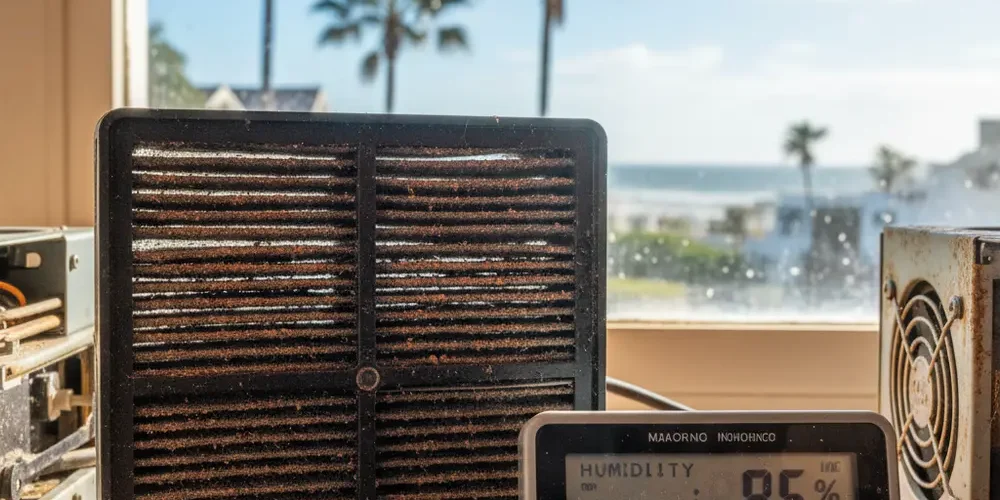
In home mining, the most expensive failures often start with corrosion and contamination, not sudden chip death. Inland vs coastal mining changes how fast those failures build up, and what maintenance actually prevents them.
By the end of this guide you will know what to measure in your mining room, what to clean and how often, and what to change in your airflow path for your region. You will also be able to decide when DIY cleaning is enough, and when it is time for professional help.
Note for South Africa:
- Coastal cities like Cape Town, Durban and Gqeberha add salt aerosols to humidity, which can accelerate corrosion on connectors and exposed metal.
- Inland cities like Johannesburg, Pretoria and Bloemfontein often bring higher dust load and bigger temperature swings between day and night.
- Load shedding can create stop-start heat cycles, reduce continuous ventilation, and increase the chance of moisture settling when rigs cool down.
At a glance:
- Coastal miners should prioritise salt and moisture control at the air intake, plus more frequent inspection of connectors and fans.
- Inland miners should prioritise dust filtration, ESD-safe cleaning, and stable airflow to avoid hot spots and thermal cycling.
- Measure relative humidity and temperature near the intake and exhaust, then watch dew point risk rather than chasing a single humidity number.
- Use the two-column checklist below to set cleaning intervals, tool choices, and clear triggers for professional service.
Key takeaways:
- Condensation is the real enemy, corrosion is often the result.
- Salt plus humidity is harder on connectors and fan bearings than humidity alone.
- Dust control must not choke airflow, restriction can raise temperatures and stress hardware.
Inland vs coastal mining, what actually changes
For mining hardware, you care about what the air brings into the rig and how the rig cools down between runs. Inland and coastal homes differ in moisture, salt contamination, dust load, and temperature swings.
- Air moisture: Higher humidity slows evaporation, keeps surfaces damp longer, and can raise condensation risk when temperatures drop.
- Salt aerosols: Coastal air can carry fine salt particles that deposit on metal, solder joints, and connectors, then attract moisture.
- Dust and grit: Inland airflow can carry more dry dust that cakes heatsinks, clogs fans, and insulates hot components.
- Temperature swings: Bigger indoor swings, especially during power interruptions, can push surfaces below dew point and cause brief wetting.
Region is not the only variable. A humid bathroom-adjacent flat in Johannesburg can be tougher than a well sealed garage in Cape Town, so measure your own room before you decide on a strategy.
| Factor | Coastal focus | Inland focus |
|---|---|---|
| Primary contamination | Salt plus moisture film | Dry dust and grit |
| Common early failures | Corroded connectors, noisy fans | Overheating from clogged fins |
| Main control lever | Intake filtration, moisture control | Filtration, ESD-safe cleaning |
| Inspection frequency | Shorter intervals | Moderate, depends on dust |
| Big hidden risk | Condensation after cool-down | Static discharge during dry spells |
Humidity and condensation basics for miners
Humidity problems are often misunderstood because relative humidity alone does not tell you if water will form on a surface. The real risk is when any metal or PCB surface becomes cooler than the dew point of the air around it.
In practice, condensation shows up when a room cools quickly, or when you bring cold air into a warmer, humid space. That can happen after a load shedding shut-down, after switching off extraction, or when night temperatures drop.
- Measure, do not guess: Keep a hygrometer where the rig breathes, ideally near the intake and not on a sunny window ledge.
- Watch trends: Sudden rises in humidity during rain, cooking, or showers matter more than the monthly average.
- Control the cool-down: A gentle, continuous airflow can reduce damp settling compared with stop-start ventilation.
Relative humidity vs dew point, why condensation is the real danger
Relative humidity is a percentage that depends on temperature. Dew point is the temperature at which the air can no longer hold its moisture, and water starts to condense on cooler surfaces.
For miners, that means a simple rule. If your intake air is humid and your rig or room surfaces cool down quickly, you can get condensation even when the room did not feel wet.
- Practical check: If you notice fogged windows, damp smells, or water beads on metal in the same room, treat your mining air as condensation-prone.
- Placement matters: Intake ducts that run through a cool ceiling void can chill incoming air and change local dew point conditions.
- Logging helps: Even a basic temperature and humidity log lets you spot the times of day when risk spikes.
Coastal risks, salt aerosols, corrosion, and connector failures
Coastal mining problems are usually a mix of moisture and ionic contamination. Salt deposits can make a thin film that attracts water, increases leakage currents, and accelerates corrosion.
The most vulnerable areas are the places where different metals meet and where current flows through small contact surfaces. Think connectors, solder joints at exposed edges, fan bearings, and any uncoated steel hardware.
- Intake is the battlefield: Filter and manage moisture before air hits the miner, cleaning later is harder and riskier.
- Avoid wet air paths: Do not duct intake air from a laundry, bathroom, or sea-facing patio that gets mist.
- Plan for more maintenance: Salt contamination builds even when you cannot see it, especially near open windows.
Early warning signs, rust staining, green residue, fan and PSU symptoms
Corrosion often gives small signals before it causes a shutdown. The key is to catch it early, before connectors pit and contact resistance rises.
- Visual: Rust staining on screws and shields, white powdery deposits, or green residue on copper or connector pins.
- Smell: A persistent damp or musty smell near the intake path can mean moisture is lingering.
- Fans: New rattles, ticking sounds, or fans that struggle to start can indicate bearing contamination.
- PSU symptoms: Intermittent resets, unstable behaviour under load, or visible oxidation on AC pins and plugs.
If you see connector discolouration or residue on a hashboard edge, treat it as a stop-and-inspect moment. Continuing to run can turn a cleanable issue into a burned connector or damaged pad.
Inland risks, dust load, static electricity, and thermal cycling
Inland environments often punish miners with dry dust, fine grit, and big daily swings in temperature. Dust acts like a blanket on heatsinks and an abrasive in fan bearings, so temperatures climb and fans work harder.
Very dry conditions can also raise ESD risk. That matters when you open a miner, remove a GPU, or brush dust off a PCB.
- Dust is a thermal problem: When fins clog, your fan curve climbs, noise increases, and component temperatures drift up.
- Thermal cycling is fatigue: Frequent heating and cooling can stress solder joints and connectors over time.
- ESD is a handling problem: It is most likely during cleaning, not during normal closed-case operation.
Dust control and filtration strategies that do not choke airflow
Filtration works only if it stays breathable. If you use a filter that is too restrictive, the miner pulls harder, airflow drops, and temperatures rise.
- Use a staged approach: A coarse pre-filter catches fluff and hair, a finer layer catches smaller dust. Clean the first layer often.
- Maximise filter area: Larger surface area reduces restriction. Avoid tiny intake openings with dense foam.
- Seal bypass gaps: If air can bypass the filter, dust will still load the heatsinks. Tape and basic gaskets help.
- Keep filters dry: A damp filter traps more dirt and can become a corrosion source if it stays wet.
If you are choosing new gear or spares like fans and filters, keep your options flexible by sourcing through the Sell Your PC shop so you can match parts to your environment and noise constraints.
Practical hardening plan for each region (home-friendly)
The goal is simple. You want clean, stable airflow, and you want to avoid periods where humid air meets cold surfaces.
Start with room choice and airflow path, then add controls like filtration and moisture management. Do not start with advanced coatings before you have basics like intake filtration and logging.
Ventilation path, filtration, room sealing, and moisture control options
Use the same planning steps inland or coastal, but choose different priorities. Build a predictable airflow path from intake to exhaust and keep it away from moisture sources.
- Room selection: Prefer a room with a door you can close, stable airflow, and no direct exposure to sea mist, bathrooms, or kitchens.
- Airflow layout: Keep intake and exhaust separated, short-circuiting hot exhaust back into intake is a common cause of overheating.
- Sealing: Seal obvious gaps that pull in unfiltered air, especially around windows and door gaps near the intake.
- Moisture control: If humidity is regularly high, consider a dehumidifier with a drain plan, and keep it away from the miner intake so it does not recirculate warm exhaust air.
- Measurement: Place one hygrometer near the intake and one near the exhaust, then compare conditions during the day and during load shedding.
If you want help planning ducting, filter sizing, or a quieter airflow path for a small flat, use the details on our contact page and share your room dimensions, intake source, and noise limits.
Maintenance schedule and inspection checklist
Maintenance is easier when you treat it like a routine. The right frequency depends on your contamination load, so use inspection results to set your interval rather than copying someone else’s calendar.
Below is a home-friendly, two-column checklist you can print or copy into notes. It focuses on what changes between inland vs coastal mining, and what to check before damage becomes permanent.
| Area | Coastal checklist | Inland checklist |
|---|---|---|
| Room selection | Keep away from open sea-facing windows and mist | Keep away from garages with sanding or grinding |
| Airflow layout | Short intake path, avoid damp corners | Separate intake and exhaust to reduce recirculation |
| Humidity targets | Focus on avoiding condensation and damp smells | Avoid extreme dryness when handling boards |
| Measurement plan | Log intake humidity during rain and at night | Log dust load by filter colour and airflow feel |
| Filtration | Pre-filter plus fine layer, keep it dry | Large area pre-filter, check restriction weekly |
| Cleaning intervals | Inspect more often, salt film builds quietly | Clean when fins start matting and temps drift up |
| Visual inspection points | Connector pins, screw heads, board edges | Heatsink fins, fan blades, intake grills |
| Fans and PSU | Listen for bearing noise, check plug oxidation | Check for dust cake, verify fan ramps normally |
| Safe cleaning tools | ESD-safe brush, dry air, gentle vacuum at distance | ESD-safe brush, controlled air, avoid high pressure |
| Storage and transport | Seal in dry packaging, avoid damp boot overnight | Keep sealed from dust, avoid static-prone blankets |
| Decision triggers | Residue on connectors, repeated errors after cleaning | Temps stay high after cleaning, repeated fan faults |
Common mistakes:
- Cleaning with high-pressure air that spins fans like turbines and can damage bearings or generate voltage.
- Using liquids without a proven process, then powering on before everything is fully dry.
- Adding dense filters that starve airflow, then blaming the miner for high temperatures.
- Leaving intake near a bathroom, kitchen, or open window that brings damp air straight onto boards.
- Handling hashboards or GPUs without basic ESD precautions during dry weather.
If you’re new
- Start with measurement, place a hygrometer near intake and track a week of readings.
- Keep the setup simple, short intake path, clear exhaust path, and easy access for inspection.
- Install a pre-filter you can clean quickly, then check it after the first 48 hours to set expectations.
- During load shedding, let the room ventilate gently if possible, sudden cool-down in humid air is a risk.
- Do one small change at a time, so you can see what improved or worsened temperatures and humidity.
If you already run rigs
- Trend your temperatures and fan speeds, slow drift often signals dust loading before a crash.
- Inspect connectors and plugs with a torch, especially if you are coastal or you see any residue.
- Standardise your cleaning process, same tools, same steps, same post-clean checks.
- Keep spare fans and filters on hand, they are common wear items in both regions.
- Consider a dedicated intake box with larger filter area to reduce restriction and noise.
Advanced protection options and trade-offs
Advanced options make sense only after you control intake air and cleaning. If salt and moisture still win, you can reduce risk further with better enclosure design, higher quality filtration, and in some cases conformal coating.
Each advanced option has a trade-off. Many reduce serviceability or make heat management harder, so take a conservative approach and document any change.
- Better intake engineering: Larger filter area, sealed ducts, and controlled intake location can outperform frequent cleaning.
- Positive pressure rooms: A filtered intake fan can reduce unfiltered air leaks, but you must manage heat and noise.
- Spare parts strategy: Keep known-good fans, power leads, and filters, it reduces downtime when maintenance reveals a failing part.
Conformal coatings, when to consider them, and what standards to look for
Conformal coating is a thin protective layer applied to PCBs to reduce exposure to moisture and contaminants. It is not magic, it does not fix existing corrosion, and it can make repairs harder.
If you are coastal and you repeatedly see residue or corrosion despite good intake control, conformal coating can be a risk reduction option. Treat it as an advanced step that should be done by someone with correct prep, masking, curing, and inspection.
- What to look for: Materials described as qualified to IPC-CC-830 are generally framed around material qualification, not guaranteed field results.
- What it does not solve: Corroding connectors, damp cables, and rusty hardware still need cleaning and replacement.
- Thermal and service trade-offs: Coating can complicate rework and may interact with heat transfer and inspection if applied poorly.
For background on how coatings are specified and what lab-style tests can be involved, see this overview of conformal coating selection and application guidelines. For an accessible explanation of what IPC-CC-830 qualification does and does not mean, read what IPC-CC-830 does and does not guarantee.
When to stop DIY and send it in (repair triggers and safe transport)
DIY cleaning is fine for dust and light contamination, if you work slowly and keep ESD in mind. But there are clear points where you should stop, because continued running can worsen damage or create a safety risk.
- Stop and seek help if: you see green residue on connector pins, burnt smell near a plug, or visible pitting on contacts.
- Also stop if: errors persist after a careful clean, fans fail repeatedly, or temperatures remain high with clean filters.
- Electrical warning signs: arcing marks, discoloured plugs, hot-to-touch connectors, or intermittent power behaviour.
Before transporting hardware, power down, unplug, and let it cool. Seal it in clean, dry packaging, keep accessories and screws in a separate bag, and avoid leaving it in a damp boot overnight.
If you want a second opinion on whether corrosion is cosmetic or a real failure risk, or you want help planning a more robust airflow setup, reach out via contact us. If you are replacing hardware rather than repairing, you can also browse options in the shop and compare what fits your room constraints.
Frequently asked questions
Is coastal mining always worse than inland mining?
Not always, it depends on your room and intake air. Coastal air often adds salt contamination that accelerates corrosion, while inland setups can fail just as fast from dust, overheating, and ESD damage during cleaning.
What humidity should I aim for with ASICs or GPU rigs?
Use your device manual if it specifies an operating range, because limits can vary by manufacturer and model. If you cannot confirm a specific range, focus on avoiding condensation, keeping airflow stable, and tracking dew point risk rather than chasing one number.
Do I need a dehumidifier for mining near the coast?
Not everyone does, but it helps if you regularly see damp smells, fogged windows, or repeated corrosion signs. A dehumidifier is most effective when the room is reasonably sealed and you have a plan for continuous drainage.
Can I just clean my miner more often instead of changing airflow?
Cleaning helps, but it is reactive and can introduce risk if done aggressively. Intake control, filtration area, and keeping wet air away from the miner usually reduce failures more than frequent deep cleaning.
Is conformal coating a good DIY project?
For most home miners, no. Correct prep, masking, curing, and inspection are easy to get wrong, and poor application can trap contamination or complicate repairs, so consider professional application if you truly need it.
Summary, what to do next
- Measure humidity and temperature at the intake and exhaust, then look for condensation risk windows.
- Coastal, prioritise salt and moisture control at the intake, and inspect connectors and fans more often.
- Inland, prioritise dust filtration area, avoid choking airflow, and follow ESD-safe handling during cleaning.
- Use the two-column checklist to set a routine, and stop early if you see connector residue or heat damage.
This is educational content, not financial advice.

