
New vs Used ASIC Miners: What Makes Sense
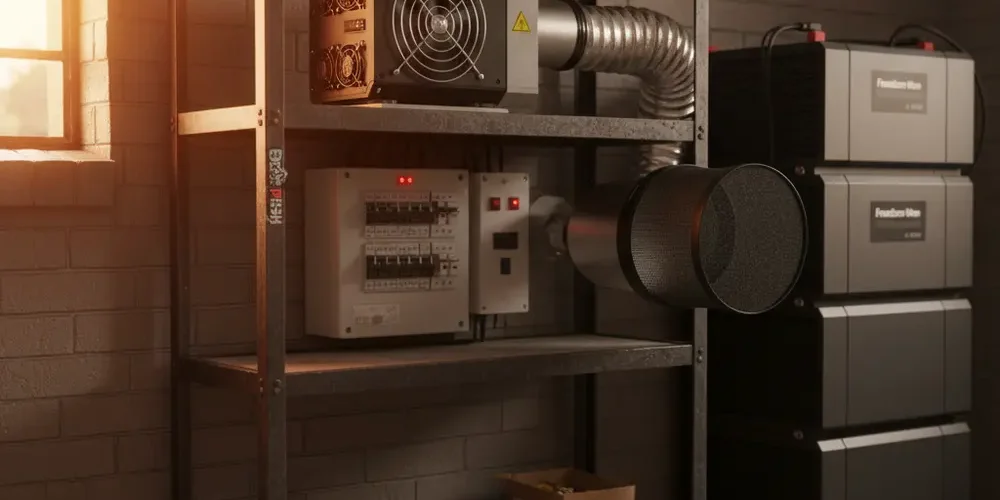
Buying a miner in 2026 is less about chasing the newest model and more about managing risk, especially for a home setup. A used ASIC can be a smart buy, but only if you treat it like a high-load industrial device, not a second-hand laptop.
By the end of this post, you will be able to choose between new and used based on total cost, warranty reality, and uptime risk in South Africa. You will also have a practical checklist and a copy-paste message to request the right proof from a seller.
Note for South Africa:
- Most home miners are on municipal tariffs, not Eskom direct, so your effective cost per kWh depends on fixed charges and time-of-use rules, not only the energy rate.
- Load shedding and faults affect revenue and hardware wear, plan for safe shutdowns, surge protection, and controlled restarts.
- Imports can look cheap until you add shipping, clearing fees, exchange rate movement, and SARS import VAT based on the customs value method.
At a glance:
- Buy used when you can test under load, verify serial and warranty status, and price in repairs as normal.
- Buy new when warranty and predictable uptime matter more than upfront cost, or when you cannot properly test a used unit.
- In South Africa, compare total landed cost, not sticker price, include SARS import VAT, courier fees, and delays.
- Plan for downtime, your ROI assumptions should include realistic uptime under load shedding.
Key takeaways:
- A good used miner is a verified, testable miner, not just a low price.
- Warranty on used units is often limited or complicated, always check policy and proof of purchase.
- Electricity pricing and uptime are the biggest swing factors, stress-test them before you buy.
New vs used miners in 2026, what has changed since earlier cycles
Earlier cycles rewarded anyone who could get hash rate online fast, even if the hardware was noisy, inefficient, or held together with cable ties. In 2026, home miners are dealing with tighter margins, higher electricity uncertainty, and stricter household constraints like noise, heat, and circuit loading.
Used hardware markets are also more mature now. That is good because there are more units and more seller history, but it is risky because the same model can vary wildly depending on where and how it ran, for example clean air-conditioned racks vs dusty garages.
One more change is the way buyers research. You can now ask for screenshots, logs, and pool-side share stats before you meet, which makes it easier to filter out problem units early.
What this means for a South African home miner
- Electricity cost volatility matters more than small differences in hashrate.
- Downtime planning matters, because unplanned power events can cause extra wear on fans and PSUs.
- Import friction matters, because delays can turn a bargain into a missed window.
When buying used makes sense (and when it does not)
Used makes sense when you are buying a known quantity. That means you can verify the exact model, confirm it hashes at a stable rate, and get enough evidence that it has not been abused, repaired badly, or run outside safe conditions.
Used does not make sense when the seller cannot provide proof, or when you cannot test on a stable power circuit. It also does not make sense if your setup cannot handle heat and noise, because you will end up spending more on mitigation than you saved.
Used is usually a good idea when
- You can do an on-site test or get a verified test window after delivery.
- The price leaves room for repairs, fans, and downtime.
- The seller can show ownership history, serial photos, and recent performance proof.
- You already have proper power, ventilation, and basic spares on hand.
New is usually a better idea when
- You need manufacturer support, or you are not comfortable troubleshooting hardware.
- You are sensitive to uptime, for example you have limited hours of cheap power or solar headroom.
- You cannot realistically test a used miner before the deal is final.
- You are importing anyway and you want clearer paperwork and purchase records.
Total cost in South Africa, price, shipping, SARS import VAT, duties, and cash flow
South African buyers often compare sticker prices and forget the rest of the bill. The moment you import, you should think in terms of total landed cost, then compare that to a local used deal priced in ZAR.
SARS explains that imports may face customs duties and VAT, and that tariff classification drives which duty rates apply. Their guidance also outlines how import VAT is calculated and why origin and customs value matter SARS duties and taxes on imported goods.
If you are unsure about the correct tariff heading, start with SARS tariff classification guidance and, for high-value shipments, consider using a clearing agent who can advise on classification and paperwork SARS tariff classification overview.
Early comparison table, new vs used cost and risk
| Factor | New (typical) | Used (typical) |
|---|---|---|
| Upfront price | Higher | Lower, but variable |
| Import friction | Often higher, if imported | Often lower, if bought local |
| Warranty clarity | Clearer, with invoice | Often limited, depends on policy |
| Failure risk | Lower early-life risk | Higher, especially fans and PSU |
| Testing before buy | Harder, unless local store | Possible if seller cooperates |
| Cash flow risk | Payment before delivery | Can be staged with test window |
What to include in your total cost calculation
- Miner price in ZAR at the exchange rate you will actually pay.
- Shipping, insurance, and packaging risk, especially for heavy units.
- Clearing, courier handling, and any storage fees if delayed.
- Import VAT and any customs duties, based on correct tariff classification and customs value method SARS import VAT formula.
- Electrical work, for example a dedicated circuit, breaker sizing, and surge protection.
- Noise and heat mitigation, such as ducting, filters, and safe ventilation.
Cash flow reality, why used sometimes wins
Used deals can be structured to reduce risk. For example, you can pay a small deposit, do a test, then settle the balance, or agree to a short test window after delivery.
That flexibility matters in South Africa where logistics can be unpredictable. A delayed import can mean you are paying interest on capital while the miner is still in a warehouse.
The condition checklist, what to inspect before paying
A used miner is only a bargain if it is healthy. Your job is to confirm three things, it can hash stably, it stays within safe temperatures, and it has no obvious signs of electrical or mechanical stress.
Do not accept vague answers like it was working last month. Ask for specific proof and treat refusal as a red flag.
Printable used-miner inspection checklist (SA buyers)
- Seller credibility and proof of ownership: Request ID confirmation, purchase invoice if available, and a photo of the miner with a handwritten date and your name on paper.
- Serial number and warranty status: Get clear serial photos and check manufacturer tools where available, for example Bitmain provides a serial-based warranty check method Bitmain Antminer warranty check.
- Photos and video proof: Request a video showing boot, web UI, fans spinning, hashboards visible in status, and pool connection.
- Benchmark run: Ask for a steady run long enough to show stability, include ambient temperature, and include pool-side stats like accepted and rejected shares.
- Firmware and config reset: Confirm you can reset to defaults and change pool credentials, avoid units with locked firmware you cannot verify.
- PSU and cabling: Confirm the exact PSU model included, cable condition, and whether your SA power setup supports the required input voltage and plug type.
- Physical inspection: Check for dust mats, corrosion, insect damage, damaged fan grills, bent heatsinks, and signs of liquid exposure.
- Packaging and shipping: If shipping locally, insist on foam protection and double boxing, fan damage in transit is common.
- Import paperwork (if applicable): If the seller imported, ask for customs paperwork, it helps prove legitimacy and reduces future questions.
- Decision score: Green if you can verify and test, amber if proof is partial but price compensates, red if you cannot test or the story does not line up.
Template message to send a seller
Copy, paste, and edit this, it saves time and filters out weak listings fast.
Hi, I am interested in the miner. Please send (1) clear photos of the serial number and PSU label, (2) a short video showing boot and the status page with all hashboards detected, (3) a screenshot of miner logs from the last run, (4) pool-side stats for the last 12 to 24 hours showing hashrate and rejected shares, (5) a photo of the unit with today’s date and my name on paper. If possible, I would like an on-site test or a 24-hour test window after delivery.
Firmware, logs, hashboards, and error counters (what to ask the seller for)
You do not need to be an engineer, you just need consistent evidence. Ask for screenshots of the status page that shows each board, temperatures, fan RPM, and reported hashrate.
Ask for a miner log excerpt showing start-up and steady state. You are looking for repeated hardware errors, missing boards, or thermal warnings that come back after a reboot.
- Confirm all hashboards are detected and stable.
- Check that temperatures are not wildly different board-to-board.
- Look for stability over time, not only a single screenshot.
Power, cooling, dust, corrosion, and noise (home setup realities)
South African home environments are tough on miners. Dust, coastal humidity, and tight spaces can push temperatures up and clog heatsinks, which then forces fans to run harder and fail sooner.
Noise is not just annoying, it drives bad decisions like putting a miner in an unventilated cupboard. If you cannot vent hot air safely, you will end up throttling or switching off.
- Dust: Ask where it ran, and check the intake side for caked dust.
- Corrosion: Pay extra attention if you are in coastal areas, look for rust and white residue on metal parts.
- Fans: Listen for grinding, and check if RPM stays stable at steady load.
- Heat: Plan a safe exhaust route, hot air must leave the room.
Warranty and support, what you actually get with new vs used
Warranty is a key reason to buy new, but it is not magic. Manufacturer warranties have exclusions, and you typically need correct proof of purchase and to follow the official process.
Bitmain has published warranty updates and provides a way to check warranty status using the serial number for certain series Bitmain warranty information. For a more legal-style example of warranty language and exclusions, you can also review a Bitmain warranty terms excerpt included in an SEC filing Bitmain warranty terms and exclusions.
For Whatsminer, MicroBT’s terms highlight that warranty is non-transferable and enforceable only by the original purchaser, and that purchase channel matters Whatsminer warranty non-transferable terms. That is a big deal for used buyers, because the unit can be within the warranty period but still not be eligible.
Practical warranty checks before you buy used
- Ask for the original invoice or proof of purchase, even if personal details are masked.
- Confirm whether the warranty is transferable under the specific manufacturer policy for that model.
- Confirm whether the seller is the original purchaser, especially for brands that restrict warranty claims.
- Assume you may self-fund repairs, and price the unit accordingly.
Operating risk in SA, electricity tariffs, load shedding, and uptime planning
Mining revenue depends on uptime. In South Africa, uptime is not only about your own setup, it is about scheduled load shedding, faults, and the quality of your power after restoration.
Eskom has outlined that tariff changes and structural updates were implemented for Eskom direct customers from 1 April 2025 and for municipal bulk purchases from 1 July 2025 Eskom FY2026 tariffs announcement. That matters because many municipal tariffs pass through these costs differently, with fixed charges that can raise your effective mining cost even if you mine fewer hours.
For planning beyond a single year, an official summary of NERSA’s multi-year path has been published by government news, which is useful for stress-testing electricity cost assumptions NERSA multi-year tariff decision summary.
Uptime planning, simple stress-test method (no hype numbers)
Do not build your plan around a perfect 24/7 scenario. Stress-test with at least three uptime cases, best case, expected case, and bad case.
- Best case: Stable grid or well-sized inverter, minimal downtime.
- Expected case: Regular load shedding windows and some manual restarts.
- Bad case: Frequent outages, heat stress, and extended downtime waiting for a replacement fan or PSU.
Then run your numbers through a profitability calculator using your own inputs, electricity cost per kWh, pool fee, expected uptime, and conservative difficulty assumptions. If the used unit only makes sense in the best case, it is not really a bargain.
Load shedding vs faults, why it matters for troubleshooting
If your power is off outside the published schedule, Eskom advises treating it as a fault and reporting it, not assuming it is load shedding Eskom load shedding FAQ. This matters because faults can mean unstable restoration, repeated brownouts, and longer downtime.
For your miner, repeated hard power cuts are rough. Plan for safe shutdowns where possible, and do not instantly restart into a hot room with no airflow.
Practical buying paths, local purchase vs importing, escrow, payment safety, and test windows
There are two main paths, buy locally in South Africa or import. Local used buys can be faster and avoid customs complexity, but you must be stricter on fraud prevention and testing.
Imports can give you more choice, but paperwork and landed cost must be clear from day one. If you are importing as an individual, understand that SARS charges and classification drive the final bill, and that VAT is calculated using SARS methods, not the seller invoice alone SARS guidance for importers.
Payment safety basics for high-value used tech
- Prefer in-person collection with an on-site test on stable power.
- If shipping, negotiate a written test window with a clear return rule.
- Use payment methods with traceability, avoid cash deposits to unknown accounts.
- Match serial photos to the unit you receive, do not accept last-minute swaps.
Local buying checklist, quick version
- Meet at a location with reliable power and ventilation for a load test.
- Bring your own laptop and Ethernet cable, and confirm you can access the web UI.
- Check fans, board detection, temperatures, and stability over time.
- Confirm what is included, PSU, cables, spare fans, and any original packaging.
Importing checklist, quick version
- Get a full landed-cost estimate before you pay, include VAT, clearing, and last-mile delivery.
- Confirm packaging standards, heavy miners need proper foam and double boxing.
- Keep all invoices and shipping documents, they matter for warranty and customs queries.
- Plan for delays, do not assume the unit will be mining next week.
Common mistakes
- Buying on price only and skipping a real test run.
- Assuming warranty automatically applies to used units.
- Underestimating noise and heat, then running the miner in unsafe spaces.
- Ignoring fixed electricity charges and only comparing cents per kWh.
- Not budgeting for spares like fans, filters, and spare cables.
If you’re new
- Start with one unit and learn the basics of power, ventilation, and monitoring.
- Assume you will need a dedicated circuit, ask a qualified electrician if unsure.
- Pick a buying path that gives you a test window, even if it costs a bit more.
- Use our Insights hub to build your checklist and avoid impulse buys.
- If you want a safer starting point, compare options in our Bitcoin ASIC miners collection.
If you have done this before
- Prioritise measurable condition signals, logs, temps, and pool stats over seller claims.
- Price in maintenance as standard, not as a worst-case surprise.
- Stress-test uptime assumptions, especially if your area has frequent faults.
- Consider your resilience stack, surge protection, spares, and a plan for restarts after outages.
- If you need help evaluating a deal or planning power and cooling, contact our team via Sell Your PC contact.
Frequently asked questions
How do I know a used miner was not overclocked or abused?
You cannot know with certainty from photos alone. Ask for logs, a long enough benchmark run, and consistent temperatures and fan RPM at steady load, and treat missing proof as risk you must price in.
Is import VAT always charged on ASIC miners in South Africa?
Import VAT is commonly payable on imported goods, and SARS outlines how VAT is calculated for imports, including rules that can affect the VAT base value SARS import VAT guidance. Duty depends on tariff classification, which is why classification is a first step SARS tariff classification guidance.
Does load shedding damage ASIC miners?
Hard power cuts increase stress on power supplies and fans, and they can lead to unsafe restarts if the miner comes back into a hot room. Plan for surge protection, controlled restarts, and treat outages outside schedules as faults to report Eskom load shedding FAQ.
Should I buy a used miner locally or import a new one?
Local used can win on speed and simpler cash flow if you can test properly. Importing new can win on paperwork and warranty clarity, but only if the landed cost, delays, and SARS charges still make sense for your electricity and uptime reality.
Where can I get help with mining hardware, or selling old gear?
If you are stuck on a buying decision, need help planning power and cooling, or want to sell or recycle equipment, start with our professional services or reach out via contact us.
Quick summary
- Used makes sense when you can verify, test, and price in repairs.
- New makes sense when you need clearer warranty support and lower early-life risk.
- In South Africa, calculate total landed cost and stress-test uptime under load shedding.
- Use proof, logs, and stable run data, do not buy on a single screenshot.
- When in doubt, choose a deal structure with a test window or walk away.
This is educational content, not financial advice.

