
Sell Your Used ASIC Miner in South Africa
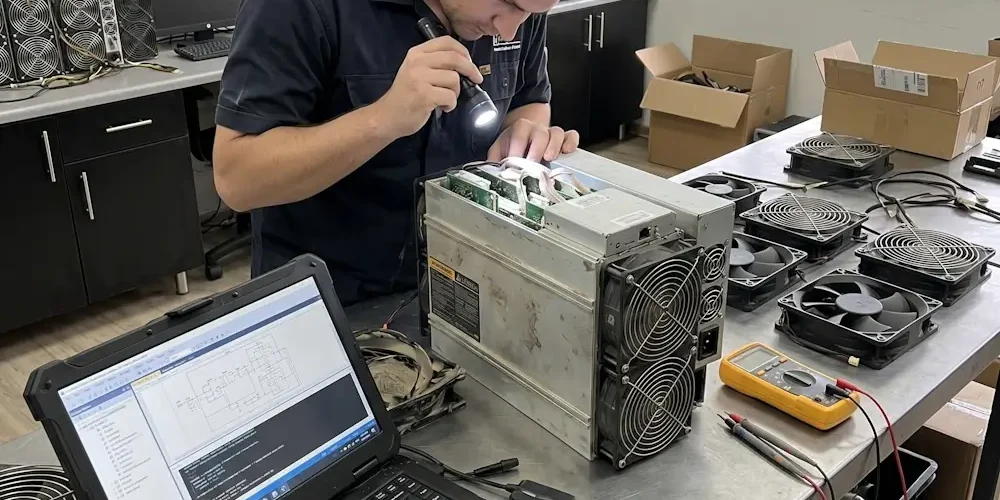
Selling a used ASIC miner in SA is easier than buying one, but only if you know how the buyback side works. The first thing a serious buyer will ask is for a recent hashrate log, the original PSU, and proof you’re the legitimate owner.
This guide walks through the SA buyback process end-to-end: condition grading, what affects your offer, current 2026 buyback ranges by model, and what to do before you contact anyone. By the end you’ll know exactly how to get a fair, fast offer instead of getting low-balled or stuck on a private listing for three months.
Note for South Africa:
- Most professional SA buyers grade condition on a four-tier scale: Working/Original PSU, Working/Replaced PSU, Single Hashboard Down, Major Repair Required.
- Original PSU adds 15 to 25 percent to the offer depending on model. Don’t sell without it.
- SARS treats your mining income separately from the hardware sale. The hardware is a capital asset.
At a glance:
- An S19 100Th in working condition with original PSU buys back at R6 000 to R8 000.
- An S19K Pro 120Th with full warranty card buys back at R12 000 to R15 000.
- An S21+ 235Th in working condition buys back at R55 000 to R65 000.
- Selling to a verified SA buyer is faster and lower-risk than private listing, but typically 8 to 12 percent less.
Key takeaways:
- Run a clean firmware reset and capture a hashrate log before you contact anyone.
- Always include the original PSU. Selling without one drops your offer by 20 to 30 percent.
- Don’t list privately first. The market data tells you the price band quickly via verified buyers.
How the process works in plain English
For full SA mining context, browse the Sell Your PC crypto mining hub. A typical SA buyback follows five steps:
- You submit details on a form like our sell your items page.
- The buyer responds within 24 hours with an indicative offer band.
- You bring or courier the unit for a bench test (30 to 60 minutes).
- The buyer confirms the final offer, usually within a few hours of testing.
- You accept, sign a transfer document, and get paid via EFT same or next day.
That’s it. The variability between buyers comes down to how thorough the bench test is and how transparent the offer logic is. Reputable buyers will show you exactly which factors moved the offer up or down.
What to do before you contact a buyer
Five things to tick off before you reach out. Each one moves your final offer up.
- Run a current hashrate log for at least 24 hours. Save the screenshot.
- Reset the firmware to factory or the latest stable. Use Bitmain’s official firmware downloads for Bitmain units.
- Clean the dust. A miner that’s been running in a Joburg garage will have 18 months of compacted dust. Buyers downgrade for it.
- Locate the original PSU and any spare cables.
- Check the serial number against the original purchase invoice. Provenance helps.
For the technical side of hashrate verification, our piece on how to verify a miner’s hashrate before resale walks through the bench test buyers will run.
How condition affects the offer
Most professional SA buyers use a four-tier condition grade. Each tier moves the offer in a predictable band.
| Condition tier | What it means | Offer adjustment |
|---|---|---|
| Working with original PSU | All hashboards reach spec, no errors, original PSU | Top of band |
| Working, replaced PSU | All hashboards good, third-party or replaced PSU | Drops 8 to 15 percent |
| One hashboard down | Two of three hashboards work, one needs repair | Drops 30 to 45 percent |
| Major repair required | Multiple hashboards or PSU dead | Drops 55 to 75 percent (parts value) |
The steepest drop is between the second and third tiers. A miner that’s lost a hashboard but still runs at two-thirds capacity is worth less than half of a fully working unit, because the repair cost plus warranty risk is real for the buyer.
If your miner needs work before resale, our miner repair services can do the testing and repair quotes in one bench visit.
Current 2026 buyback ranges by model
These are realistic SA buyback ranges in April 2026, derived from current local retail and adjusted for typical condition grades. Cross-reference against AsicMinerValue’s pricing index for the global benchmark.
| Model | Tier 1 (working, original PSU) | Tier 2 (working, replaced PSU) | Tier 3 (one board down) |
|---|---|---|---|
| Antminer S19 (~100 TH/s) | R6 000 – R8 000 | R5 000 – R6 500 | R3 000 – R4 500 |
| Antminer S19j Pro+ (122 TH/s) | R10 000 – R13 000 | R8 500 – R11 000 | R5 000 – R7 000 |
| Antminer S19K Pro (120 TH/s) | R12 000 – R15 000 | R10 000 – R12 500 | R6 000 – R8 500 |
| Antminer S21 (200 TH/s) | R45 000 – R55 000 | R38 000 – R47 000 | R22 000 – R30 000 |
| Antminer S21+ (235 TH/s) | R55 000 – R65 000 | R47 000 – R56 000 | R28 000 – R38 000 |
| Antminer L7 (9.5 GH/s) | R20 000 – R32 000 | R17 000 – R26 000 | R10 000 – R15 000 |
| IceRiver KS5L | R14 000 – R22 000 | R12 000 – R18 000 | R7 000 – R11 000 |
Buyback ranges verified April 2026, confirm exact offer on enquiry. Bands shift weekly based on BTC price, difficulty, and supply. Cross-check current revenue per TH/s on WhatToMine’s BTC SHA-256 calculator.
Older units like the S19 (non-Pro) drop fastest because their efficiency floor is uneconomic at SA tariffs above R2.50 per kWh. For context on where the market is heading, see 2026 mining hardware trends.
What to expect after you accept an offer
Three things happen after you say yes:
- You sign a transfer of ownership document. Single page, includes serial numbers and offered amount.
- The buyer initiates EFT to your verified bank account. Usually clears same day or next day for amounts under R50 000.
- You hand over the unit, PSU, and cables. The buyer issues a final receipt for your records.
For tax purposes, keep the receipt. Mining income that was taxed when received gets a corresponding base cost when you sell the underlying hardware. The SARS guidance on crypto-asset tax covers the underlying coins, but talk to a practitioner about the hardware side specifically. The treatment differs.
Many of the sellers we see in 2026 are upgrading into newer-gen hardware like the Bitmain Antminer S21 Pro 245TH or the more efficient Bitmain Antminer S23 318TH, and trading their S19-era units back to us as part of the swap.
Why people sell: three common scenarios
Upgrade cycle
Existing miner is running an S19j Pro and wants to redeploy capex into an S21+ before the next halving cycle. Common pattern in early 2026 as the efficiency floor rises. The new vs used ASIC reality covers the trade-off.
Tariff exit
Customer was mining at R3.50 per kWh, the maths flipped when difficulty climbed. Selling to recover capex rather than burn cash on unprofitable hashing.
Life change
Moving house, neighbour complaints, family doesn’t want the noise, returning to corporate work. Mining stops being practical for personal reasons. A BusinessTech overview of the SA used-tech market covered some of this lifestyle-driven secondary market activity.
Common mistakes
- Listing privately first and burning two months. The price drifts down while you wait.
- Selling without the original PSU. You’ll lose 20 to 30 percent of the value.
- Not running a current hashrate log. Buyers assume worst case.
- Forgetting to factory-reset the firmware. Buyer can’t audit cleanly.
- Underestimating dust impact. A clean miner gets a clean offer.
- Accepting the first offer without a bench test. Indicative offers swing 10 to 15 percent post-test.
If this is your first sale
- Use a verified buyer with a physical address and CIPC registration. Skip private deals on Telegram.
- Run the hashrate log for 24 hours, not just an hour.
- Photograph the unit from all sides before transport.
- Insure the courier shipment if you’re not delivering in person.
- Keep the offer document and final receipt for tax records.
Scrypt sellers are often upgrading into the Bitmain Antminer L11 20G as the current generation step up from the L7 and L9 buyback inventory.
If you have sold miners before
- Bundle multiple units in one transaction. Bulk discounts on bench test fees plus better blended offer.
- Negotiate trade-in credit toward newer hardware. Buybacks plus upgrades often beat straight cash sales.
- Time your sale to avoid the post-halving dip. Early in a cycle is best.
- If you have a parts-only unit, ask about a hashboard-by-hashboard sale instead of a single bricked offer.
- Need a bench test on multiple units? Contact our team ahead of time so we can schedule the bench properly.
Frequently asked questions
How long does the SA ASIC buyback process take from first contact to payment?
Typically 24 to 72 hours. The first response with an indicative offer usually lands within a working day. The bench test takes 30 to 60 minutes once the unit is on the bench. The final offer follows within a few hours. Payment via EFT clears same day or next morning for amounts under R50 000. Larger amounts sometimes need additional bank verification, which can add a day. If the buyer is asking you to wait a week or more, that’s a red flag. Walk away.
Should I sell my miner privately on Bid or Cash, or to a specialist buyer?
Private sale on auction sites can fetch 8 to 12 percent more on a perfect-condition unit, but the median outcome is worse because of failed sales, time-on-market drift, and a lower-grade buyer pool. Specialist buyers offer a tighter band but settle in days, not weeks. For working units with original PSUs, both routes work. For units with any condition issue, specialist buyers almost always win. They have the test bench and the resale channels. Private buyers don’t. The risk-adjusted return usually favours specialists.
Can I sell my miner if it’s no longer profitable to mine?
Yes. The hardware still has resale value even if it’s no longer profitable to run. Older units like the S19 (non-Pro) at 100 TH/s aren’t economic at SA grid tariffs above R2.50 per kWh, but they sell for parts to operators in lower-tariff regions or to hobbyists with off-grid solar setups. Don’t burn cash running an unprofitable miner. Sell early and redeploy. The longer you wait, the lower the offer. Difficulty keeps drifting up and your unit’s relative efficiency keeps dropping.
Do I need an invoice or proof of original purchase to sell?
Strongly preferred but not always required. A serial number and a hashrate log will get you an offer from most buyers. The invoice helps with provenance and bumps the offer band by a small amount. If the unit was imported privately and you don’t have all the original paperwork, a verified buyer will still take it but may discount slightly for the paper-trail risk. Keep all hardware paperwork from now on, even if you bought it second-hand. It compounds in value over the resale chain.
Will I pay tax on the proceeds of selling my miner?
Probably not income tax on the sale itself, since the hardware is a capital asset. Capital gains tax may apply if you sell for more than your base cost (purchase price plus depreciation if claimed). For most SA miners selling at a loss against original purchase, there’s no CGT liability. The mining income earned with the unit was taxable when you received the BTC, separately. Keep the original invoice and the sale receipt for your records. Talk to a tax practitioner if you’re unsure about the treatment for your specific case.
Summary
- Run a clean hashrate log and reset firmware before you contact a buyer.
- Always include the original PSU. It moves the offer by 20 to 30 percent.
- Condition grading runs on four tiers. The big drop is between Tier 2 and Tier 3.
- Verified specialist buyers settle in 24 to 72 hours, EFT same day.
- Time your sale early in the halving cycle for the best price.
This is educational content, not financial advice.

