
Avoid ITAD headaches in SA
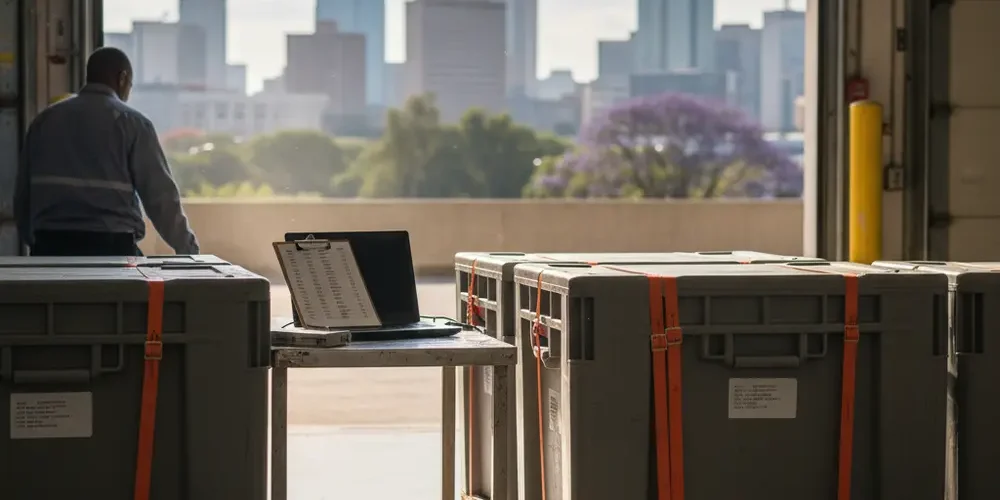
Corporate IT asset disposal is one of those projects that only becomes visible when something goes wrong, missing laptops, disputed serials, or a data exposure incident. The fastest way to create headaches is to treat ITAD as a once-off pickup instead of a controlled, auditable process.
By the end of this article you will be able to scope your ITAD requirement, evaluate a corporate IT asset disposal partner, and write down the evidence you need for audits and internal sign-off. You will also have a practical checklist you can use with procurement, risk, and facilities before the first collection.
Note for South Africa:
- POPIA and internal information governance drive your data destruction evidence, do not rely on verbal assurances
- Multi-site collections across provinces make chain of custody and handover points non-negotiable
- E-waste compliance and downstream due diligence matter, because disposal risk does not end at your loading bay
At a glance:
- Define your scope first, sites, volumes, data classes, and which assets have storage
- Choose sanitisation outcomes per media type, Clear, Purge, or Destroy, and demand device-level reporting
- Lock down chain of custody, sealed containers, serial capture, handovers, and incident process
- Require a reporting pack, reconciliation, certificates, and proof of downstream recycling or reuse
Key takeaways:
- A defensible ITAD programme is mostly documentation, controls, and reconciliation
- Good partners make loss and dispute hard, by designing evidence into every step
- Environmental compliance needs the same discipline as data security, ask where it ends up
Define the scope, your risk profile, and what IT asset disposal includes
Before you evaluate vendors, define what ITAD means in your environment. In some organisations it means laptops and desktops only, in others it includes servers, network gear, printers, mobile devices, and storage media stored in safes.
A partner can only price and control what you can describe. If you have sites with different building security, different storage rooms, or different teams handing over assets, treat each site as a separate risk scenario.
Scope questions that prevent later arguments
- Which sites are included, and who signs the handover at each site, IT, facilities, or security
- What volumes by asset type, and whether pickups are ad hoc or scheduled
- Whether you need on-site wiping, off-site wiping, or physical destruction on-site
- Whether you need resale, donation, redeployment, recycling, or a mix
- Which assets contain storage, including printers, phones, tablets, and some network devices
Get internal alignment early. If procurement wants maximum recovery value but security wants physical destruction, you need a clear decision rule and executive sign-off.
If you want a starting point, align internally on what outcomes look like, then engage a service that matches those outcomes on corporate IT asset disposal.
Early decision points table, choose the right control level
Use this table to push the discussion from opinions to documented choices. You can paste the outcomes into your statement of work.
| Decision point | Lower friction option | Higher control option | When higher control is worth it |
|---|---|---|---|
| Where sanitisation happens | Off-site at vendor facility | On-site at your premises | High sensitivity data, strict internal policy, or weak site storage controls |
| Proof level | Batch certificate | Serial-level log plus certificate | Audits, disputes, or any history of missing assets |
| Media outcome | Clear or Purge | Destroy | Highly sensitive data, failed drives, or unknown encryption status |
| Reuse vs recycle | Maximise refurbishment | Recycle only | Regulated environments, or when you cannot verify sanitisation or downstream controls |
| Logistics | Standard collection | Sealed containers, tracked vehicle, defined handovers | Multi-site pickups, long routes, or third-party building handovers |
Compliance basics in South Africa, POPIA retention and destruction, and what to record
POPIA is not an IT-only problem, it is an information governance problem. Once a device leaves your control, you still carry risk if personal information can be reconstructed.
At a practical level, your ITAD process should show that you did not keep personal information longer than needed, and that when you disposed of it you did so in a way that prevents reconstruction. Section 14 is a common reference point for retention and destruction discussions, and it is worth reading the published text before you finalise your internal policy on POPIA Section 14 retention and destruction requirements.
What to record for audits and internal assurance
- Asset inventory at the point of handover, ideally at serial number level
- Data classification or handling category for the batch, even if simplified
- Sanitisation method requested per device or per media type
- Evidence returned, erasure logs, destruction logs, and certificates
- Final disposition, reused, redeployed, recycled, or destroyed
Document who is responsible for records retention inside your company. Many teams assume the vendor keeps the proof, but audits often happen long after the vendor has changed systems or ownership.
If your organisation has PAIA processes, your compliance stakeholders may already have a documentation mindset. A public body example is the PAIA and POPIA governance context, which can help you frame your own internal pack for sign-off.
Data sanitisation options, when to wipe, when to crypto-erase, and when to physically destroy media
The core idea is simple, match the sanitisation method to the risk and the media. NIST uses Clear, Purge, and Destroy as outcome categories, and it provides a structured way to talk about methods without arguing about brand names or tools.
When you evaluate a partner, ask how they map their procedures to NIST outcomes, and how they prove what they did. NIST SP 800-88 Rev. 2 is a useful reference for a defensible programme and shared vocabulary on NIST SP 800-88 Rev. 2 media sanitization guidelines.
Map methods to media types, HDD, SSD, mobile devices, tapes, and network gear
- HDDs: software overwrite can be appropriate in some cases, but you still need verified logs and a process for failed drives
- SSDs: method selection matters, because overwrite behaviour is not the same as HDD, ask about supported secure erase and verification
- Phones and tablets: include MDM actions, factory reset alone is not a policy, ask how accounts, MFA, and device activation locks are handled
- Tapes and removable media: consider higher control approaches, especially where inventory accuracy is weaker
- Network gear and printers: treat configuration backups and internal storage as data-bearing until proven otherwise
Build a rule for exceptions. If a drive is dead, encrypted status is unknown, or logs are incomplete, decide up front whether the default is to quarantine and destroy.
Also define who holds encryption keys and how crypto-erase decisions are approved. Crypto-erase can be powerful, but it only works if key management is real in your environment.
Chain of custody, logistics, and on-site controls that prevent losses and disputes
Most ITAD disputes are not about the wiping tool, they are about who had the asset when it went missing. Chain of custody is your protection against theft, miscounts, and finger-pointing.
In South Africa, distance between sites, variable security at smaller branches, and mixed handover teams increase risk. Your ITAD partner should be able to describe controls that fit these realities, not just present a generic process diagram.
What evidence to demand, asset lists, serial capture, tamper seals, and sign-offs
- Pre-collection asset list, with serial numbers where available
- On-site serial capture during packing, ideally scanned not typed
- Sealed containers or tamper-evident seals, recorded on paperwork
- Defined handover points, with named signatories and timestamps
- Transport controls, route planning, tracking, and secure holding areas
- Reconciliation report, collected vs processed vs returned vs destroyed
If your building security team is involved, write their role into the process. A simple requirement like, security witnesses sealing and signs the manifest, can prevent arguments later.
If you want a partner to integrate with your process, direct them to your organisation context and services on professional services before you request a quote.
Environmental and e-waste duties, reuse vs recycle, and how EPR affects corporate programmes
ITAD is also waste management. Even when your main driver is data security, you still need to know where equipment ends up, and whether downstream handling is lawful and safe.
South Africa’s policy direction has been to formalise e-waste collection and recycling through Extended Producer Responsibility, including the electrical and electronic equipment sector. For a government reference point and timing context, see the DFFE e-waste recycling programme statement.
What to ask about downstream handling
- Which recycler or downstream partners are used, and whether they can be named in your contract
- Whether your assets might be exported, and what documentation exists if that happens
- How reuse decisions are made, and how data sanitisation is controlled before refurbishment
- What proof of final disposition you receive, and at what level of detail
If you need a plain-English primer for stakeholders outside IT, industry association material can help you align terms like EPR and PRO with your internal roles on EPR and PROs in South Africa explained.
For the security and e-waste link, it is useful to show that data exposure is a recycling risk as well, not only a cyber risk, see data security in e-waste recycling South Africa.
Contracts, SLAs, and reporting pack, what to put in the SoW before the first pickup
If it is not in the statement of work, it is a nice-to-have, not a deliverable. Your goal is to turn expectations into measurable outputs, timelines, and evidence.
Keep the language outcome-based. Do not specify a tool or brand unless your security policy requires it, specify the outcome, verification, and reporting format instead.
SoW must-haves for a corporate IT asset disposal partner
- Definitions, what counts as an asset, what counts as media, and what is in scope
- Service model, on-site vs off-site sanitisation, and handling of failed media
- Evidence, serial-level logs, chain of custody forms, and certificate contents
- Turnaround times, collection scheduling, reporting deadlines, and exception handling
- Incident process, lost assets, suspected theft, and breach notification steps
- Disputes and reconciliation, how mismatches are resolved and within what timeframes
- Downstream controls, named recyclers, reuse rules, and proof of final disposition
Ask for a sample reporting pack before you sign. A good pack should be easy to ingest into your own evidence repository and easy to reconcile against your CMDB or asset register.
If you need help translating these requirements into a procurement-ready brief, use the contact channel on contact us before the first pickup.
Vendor evaluation checklist, use this in procurement
Use this checklist as a scoring sheet in vendor meetings. It is designed to reduce ambiguity and surface gaps early.
1) Pre-scope questions, volumes, sites, data classes
- We provided an asset profile per site, and the vendor confirmed logistics and handover requirements
- Vendor can support multi-site pickups with a defined handover process and named signatories
- Vendor can separate streams, reuse vs recycle vs destruction, without mixing evidence
- Vendor explains how they handle assets with unknown ownership or unclear serials
2) Data sanitisation alignment to NIST outcomes and device types
- Vendor can explain Clear, Purge, Destroy outcomes in their own SOPs without hand-waving
- Vendor has a documented method for HDD, SSD, mobile devices, and removable media
- Vendor has an exception workflow for failed drives, damaged devices, and locked devices
- Vendor provides verification evidence, not only a summary statement
3) POPIA documentation expectations
- Vendor understands that proof must support your internal compliance, not only their internal QA
- Certificates include identifiers that allow you to reconcile, not only a date and a batch name
- Vendor can support retention of evidence for your required period, or provides exports you can store
4) Chain-of-custody controls
- Vendor uses tamper-evident seals or sealed containers, and records seal numbers
- Vendor captures serials at collection, and can provide a collection manifest on the day
- Vendor can describe secure storage at their facility, including access control and CCTV where applicable
5) Downstream due diligence, recycling partners, proof of final disposition
- Vendor names downstream partners and can provide proof of relationships on request
- Vendor provides final disposition reporting, including recycled vs reused vs destroyed
- Vendor will not subcontract without disclosure and your approval
6) Deliverables, certificates, reconciliation reports, and timeline
- Reporting includes collection manifest, processing log, reconciliation report, and certificates
- Deliverables are provided within agreed timelines after each pickup
- Vendor can produce ad hoc evidence packs for audits within a defined SLA
7) Incident process, loss, breach notification, and disputes
- Vendor has a written incident response process, including notification timelines
- Liability and dispute handling are defined in the contract, including how missing assets are investigated
- Vendor can support a hold or quarantine process when legal hold or investigations apply
If you want a single landing page to share internally, point stakeholders to Sell Your PC Expert Insights and keep your checklist aligned to your policy updates.
Red flags and common failure modes that cause headaches, and how to avoid them
Most failures are predictable. The pattern is usually weak evidence, unclear handovers, and scope creep that was never priced or controlled.
Common mistakes
- Allowing assets to pile up in an unlocked storeroom before the vendor arrives
- Using batch-level certificates that cannot be reconciled to serials or asset IDs
- Not identifying non-obvious storage devices, printers, phones, and network gear
- Failing to plan the decommissioning steps, CMDB updates, MDM actions, and licence recovery
- Assuming that recycling automatically implies secure data destruction
If you’re new
- Start with one site and one asset type, then expand once evidence and logistics work
- Pick a default sanitisation outcome per media type and data class, then define exceptions
- Ask for sample reports and certificates before contracting
- Assign roles, who signs handover, who stores evidence, who approves reuse
If you have done this before
- Audit your last project, compare collected vs processed vs certified, and note gaps
- Move from batch proof to serial-level proof for high-risk assets
- Introduce tamper seals and clearer handover points where losses have happened
- Formalise downstream partner disclosure and proof of final disposition
Frequently asked questions
What should a certificate of destruction or erasure include?
At minimum it should let you reconcile what was processed against what left your site. In practice that means identifiers, such as serial numbers or asset tags, the method or outcome category used, dates, and who authorised the work.
Is wiping always enough, or do we need physical destruction?
It depends on your data classification, threat model, and whether the media can be reliably sanitised and verified. You should also define what happens when drives are failed, locked, or cannot produce verifiable logs.
How do we prevent missing assets during collection?
Design the handover so that counting and identification happens at the point of packing, not later. Use manifests, serial capture, sealed containers, and clear sign-offs, then reconcile reports within days, not months.
How do we handle laptops and phones that are enrolled in MDM?
Build decommissioning steps into your runbook, including remote wipe, unenrolment, removal from identity and MFA systems, and checking activation locks. Your ITAD partner should not be guessing these steps on your behalf.
How can we check the e-waste side without becoming waste specialists?
Ask for named downstream partners, proof of final disposition, and clear reporting on reuse vs recycling. If your stakeholders need basic terminology, use an EPR and PRO primer like what is a Producer Responsibility Organisation and capture decisions in your internal governance notes.
Close-out summary
- Scope first, sites, asset types, and which devices are data-bearing
- Specify sanitisation outcomes and demand verifiable, serial-level evidence where risk is high
- Make chain of custody real, sealed containers, defined handovers, and fast reconciliation
- Validate downstream handling, reuse rules, and proof of final disposition
- Put deliverables and incident processes into the SoW before the first pickup
This is educational content, not financial advice.

