
Trusted IT Asset Disposal Partner
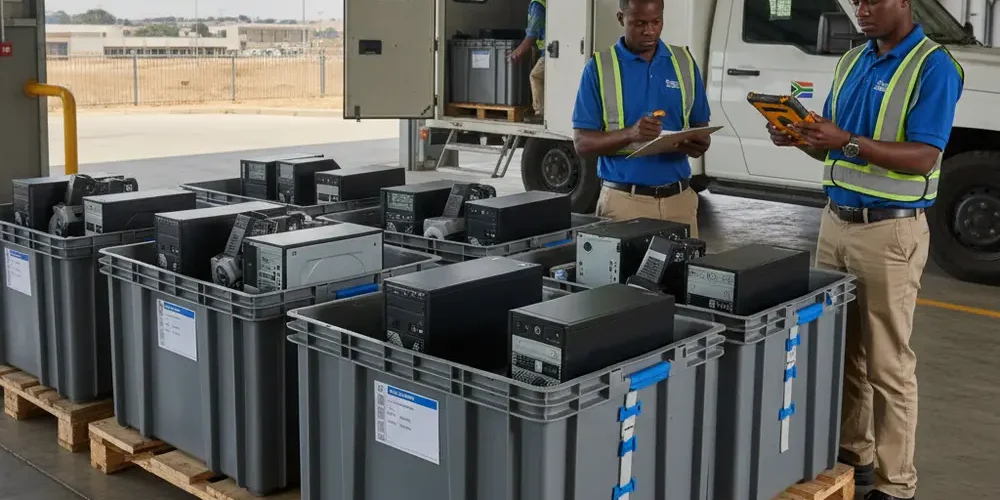
Corporate IT asset disposal is a finance and risk decision, not a storeroom clean-out. In 2026, the wrong disposal partner can turn old laptops into a data breach, audit finding, or ESG headache.
This article gives CFOs a practical buyer checklist for evaluating an IT asset disposal partner in South Africa. By the end, you will be able to run an RFP, ask the right evidence-based questions, and reduce disputes around data wiping, recycling, and value recovery.
Note for South Africa:
- POPIA expectations around destroying, deleting, or de-identifying personal information need to be reflected in your disposal controls and vendor evidence.
- E-waste compliance is not only reputational, it ties into regulated recycling channels and Extended Producer Responsibility (EPR) direction.
- Transport security and multi-site collections are real risk points, define handover points and liabilities up front.
At a glance:
- Define what trusted means, evidence, controls, and audit pack, not brand claims.
- Use a CFO checklist covering POPIA, sanitisation proof, chain of custody, and downstream recycling controls.
- Compare vendors on documentation quality and exception handling, not just quoted % recovery.
- Lock commercial terms, liabilities, and approvals before the first collection leaves site.
Key takeaways:
- If a vendor cannot show serial-level tracking and sanitisation evidence, treat it as high risk.
- Downstream recycling and subcontractors matter, ask for names, roles, and controls.
- Fair value recovery requires transparent grading, reconciliation, and dispute workflows.
What CFOs should mean by a trusted asset disposal partner in 2026
A trusted IT asset disposal partner is one whose process is measurable, repeatable, and auditable. Trust is demonstrated through documented controls, not through promises about being the best.
For CFOs, the trust question is usually three questions. Can we prove data risk was managed, can we prove e-waste was handled responsibly, and can we reconcile assets and cash without disputes.
Start by separating four related services that often get mixed up.
- ITAD (IT asset disposition): governance, tracking, sanitisation, and disposition outcomes.
- Data sanitisation and destruction: methods and evidence per media type.
- Refurbishment and resale: reuse channel with strict wipe and QA controls.
- E-waste recycling: dismantling and material recovery with downstream compliance.
In practice, one vendor may coordinate all four, but you still need evidence for each layer. If you want an overview of our service areas, start with Professional Services before you go to detailed disposal requirements.
If you are new
- Write down your disposal outcomes per asset class, redeploy, resale, recycle, or destroy.
- Decide who owns approvals, IT, finance, risk, or procurement, and document it.
- Make an inventory baseline, even if imperfect, then improve it with vendor serial scans.
- Insist on a minimum evidence pack, certificates, serial lists, and recycling confirmation.
If you have done this before
- Audit last year’s exceptions, missing serials, disputed grades, delayed certificates.
- Update your requirements to include SSD and mobile device handling explicitly.
- Add a transport and handover control, especially for multi-site collections.
- Build ESG reporting fields into the standard monthly disposal report.
Risk and compliance checklist, POPIA, e-waste rules, and audit readiness
This section is about creating a defensible audit trail. Your aim is not to cite laws in a report, it is to make sure your controls and vendor outputs can survive an internal audit, regulator query, or customer due diligence.
Two references are worth aligning to at a concept level. POPIA Section 14 covers retention and the need to destroy, delete, or de-identify records when you are no longer authorised to retain them, including doing so in a way that prevents reconstruction in an intelligible form via POPIA Section 14 record retention and destruction requirements. For media sanitisation vocabulary and evidence expectations, NIST guidance is the most commonly referenced baseline via NIST 800-88 media sanitization guidelines.
From a CFO perspective, convert this into a checklist that procurement can enforce and operations can deliver. The checklist below is designed to be copy-pasted into an RFP and then mapped to vendor responses.
Data sanitisation standards, what to ask for, NIST 800-88 style evidence
Do not accept a generic statement like we wipe drives. Ask for the method per media type and the evidence output per asset, because HDD, SSD, NVMe, and mobile storage can require different approaches and verification.
Also ask vendors which NIST revision they reference. NIST SP 800-88 Rev. 1 was withdrawn in September 2025 and is superseded by Rev. 2, so you want your documentation to reference current guidance rather than outdated templates.
- Scope: Which media types are covered, and which are excluded or forced to physical destruction.
- Method mapping: How the vendor maps methods to concepts like clear, purge, destroy.
- Verification: What success looks like, and what the tool logs show.
- Failure handling: What happens when a drive fails wipe, is encrypted, or is damaged.
- Evidence: Serial number list, per-drive result codes, date, operator, and sign-off.
If you want a single place on our site to start a structured conversation, use Corporate IT asset disposal, then request the specific sanitisation and evidence pack details as part of due diligence.
Environmental compliance, EPR context, recycling downstream controls
E-waste risk is about where your assets end up, not only that they left your building. CFOs should expect to see downstream controls that reduce the risk of informal dumping, undocumented export, or landfill leakage.
In South Africa, EPR for electrical and electronic equipment has been positioned as implemented since November 2021 in government communication, and e-waste is treated as a growing national issue, see South Africa e-waste policy and EPR context and Extended Producer Responsibility regulations under NEMWA. For timeline clarity in plain language, a legal summary can help you brief internal stakeholders via legal summary of South Africa EPR regulations.
- Downstream transparency: Names and roles of recyclers, refurbishers, and any brokers.
- No surprises: Written permission required before assets are transferred to any third party.
- Recycling proof: Weighbridge tickets, recycler confirmation, and batch references where applicable.
- Hazard handling: Batteries, swollen packs, and damaged devices have a defined route.
- Reporting: Mass recycled, reuse rate, and diversion metrics tied to evidence.
The operational model that reduces loss, leakage, and disputes
Most disposal failures happen in the handover gaps. The operational model should make it hard for assets to go missing, hard for data to be mishandled, and easy to reconcile outcomes.
Ask the vendor to explain their process as a flow, then test it with edge cases. A good sign is when they can describe exceptions calmly, with clear timestamps, responsibilities, and escalation steps.
Chain of custody, collection logistics, serialization, and asset tracking
Chain of custody is the backbone of your audit trail. It should define who had control of which assets, when, and under what conditions.
- Pre-collection: agreed scope, site readiness checklist, and authorised signatories.
- On-site capture: serial scanning, asset tag capture, and container sealing.
- Handover: a signed collection note that references the serial list and seal numbers.
- In transit: defined vehicle controls and incident reporting route.
- Receiving: reconciliation against collection record before processing begins.
If your team needs help preparing assets for collection, our general starting point is Sell your items, then move into the corporate disposal workflow for formal collections and tracking.
Documentation pack, certificates, reports, and exception handling
CFOs should insist on a standard documentation pack per batch. The goal is to reduce back-and-forth emails and prevent disputes about what was collected, what was wiped, and what was recycled.
At minimum, your pack should support three reconciliations, physical assets collected, data sanitisation outcomes, and commercial outcomes.
- Collection pack: collection note, serial list, seals, and date-time stamps.
- Sanitisation pack: certificate of sanitisation or destruction, with serial-level detail.
- Disposition pack: resale, redeploy, recycle, or destroy outcome per asset.
- Exceptions: list of missing serials, damaged items, failed wipes, and resolution.
- Management report: totals, trends, and ESG metrics aligned to finance reporting cycles.
Early decision table, which disposal route fits which risk profile
Use this table early in your planning to align stakeholders. It helps avoid a common conflict, IT wants maximum risk reduction, finance wants value recovery, and sustainability wants credible recycling data.
| Route | Best when | Evidence you should demand | Main CFO risk |
|---|---|---|---|
| Redeploy internally | Hardware still fits business needs | Wipe proof, re-image record, handover | Shadow assets, weak tracking |
| Refurbish and resell | Value recovery matters and controls are strong | Serial wipe logs, QA check, buyer channel rules | Data leakage, reputational risk |
| Recycle | Devices are obsolete or damaged | Downstream recycler proof, batch weights | Leakage into informal dumping |
| Physical destruction | High sensitivity or wipe failure cases | Destruction certificate, photos, serial list | Over-destruction reduces value |
Value recovery and commercial terms, how to evaluate fairness without hype
Value recovery should be treated like any other disposal of movable assets, you want transparency, controls, and reconciliation. Avoid being anchored by a headline recovery percentage without understanding grading and deductions.
In governance-heavy environments, it can help to benchmark your internal controls against public-sector style disposal language on market-related value and process, even if you are not a public entity, see disposal of movable assets treasury regulation.
- Pricing method: ask how the vendor discovers prices, and how often pricing is refreshed.
- Grading rules: insist on a written rubric for cosmetic and functional grades.
- Deductions: define logistics, testing, parts harvesting, and recycling fees clearly.
- Settlement: specify timing, reporting format, and dispute windows.
- Ownership transfer: define when title transfers, and who carries loss risk.
Tax and accounting treatment can influence the paperwork finance expects. For general South African context on depreciation and wear and tear, see corporate depreciation considerations for IT equipment, and note that selling assets can have consequences like recoupment in some cases, explained at a high level via wear-and-tear and recoupment overview.
Common mistakes
- Choosing a vendor on price without validating serial-level tracking and wipe evidence.
- Allowing ad hoc collections without a defined handover point and authorised sign-off.
- Not naming subcontractors or downstream partners in the contract and evidence pack.
- Mixing high-sensitivity assets into general recycling streams without exceptions handling.
- Reconciling only at the batch level, not at the serial number level.
Practical CFO due diligence checklist (tick-box ready)
Use this checklist as your internal control baseline, then attach it to your RFP and contract. Where the vendor answers yes, ask what evidence you will receive for every batch.
1) Information security and media sanitisation evidence
- [ ] The vendor provides a documented sanitisation process per media type.
- [ ] The process references a recognised framework and explains clear, purge, destroy concepts.
- [ ] We receive serial-level wipe logs or destruction records for every asset.
- [ ] There is a defined process for wipe failures, damaged drives, and encrypted devices.
- [ ] Operators and signatories are named, and evidence includes dates and batch IDs.
2) POPIA-aligned record destruction controls
- [ ] The vendor’s process supports destruction, deletion, or de-identification outcomes where required.
- [ ] Evidence shows data was made unrecoverable in an intelligible form.
- [ ] We can map disposal outcomes to our retention policy and disposal approvals.
- [ ] The vendor can explain how they handle assets from regulated or high-sensitivity environments.
3) Chain of custody and asset tracking
- [ ] On-site serial capture is performed and shared as a collection record.
- [ ] Containers or pallets are sealed, and seal numbers are recorded at handover.
- [ ] Handover notes are signed by authorised staff and reference the serial list.
- [ ] The vendor reconciles receiving against collection before processing.
- [ ] There is a documented incident process for loss, theft, or discrepancies.
4) Downstream recycling and disposal controls
- [ ] Downstream partners are disclosed, including roles and locations.
- [ ] Transfers to third parties require approval and are recorded in the batch file.
- [ ] We receive recycling confirmation per batch, with weights or counts where applicable.
- [ ] Hazard items like batteries have a defined compliant route.
5) Documentation and audit pack
- [ ] Standard pack includes collection note, serial list, certificates, and disposition report.
- [ ] Reports are delivered within an agreed timeframe after collection.
- [ ] Exceptions are listed explicitly, not hidden in totals.
- [ ] We can get supporting artefacts on request, photos, weighbridge tickets, tool logs.
6) Commercial terms and liability
- [ ] Contract defines title transfer, risk transfer, and the moment of custody change.
- [ ] Insurance cover is disclosed, and certificates can be provided on request.
- [ ] Liability limits and exclusions are clear, including data breach and environmental aspects.
- [ ] Payment terms, grading disputes, and reconciliation steps are documented.
7) ESG reporting needs
- [ ] The vendor can report reuse vs recycle outcomes, with supporting batch evidence.
- [ ] Reporting fields align to our ESG framework, mass, diversion, and downstream controls.
- [ ] The vendor will support audits by making records available for a defined period.
One-page RFP question bank
- Provide your end-to-end process flow from on-site collection to final disposition.
- List media sanitisation methods per storage type and the proof outputs per asset.
- Provide a sample certificate of sanitisation and a sample certificate of destruction.
- Describe your chain-of-custody controls, seals, reconciliation, and incident handling.
- Disclose subcontractors and downstream partners, and explain how you prevent leakage.
- Provide a sample monthly report including serials, dispositions, and ESG metrics.
- Explain your grading rubric and dispute resolution timeline for value recovery.
- Confirm what insurance applies in transit and in custody, and provide proof on request.
Required documents list (ask for these before award)
- Process SOPs for collection, sanitisation, destruction, refurbishment, and recycling.
- Sample certificates and sample serial-level evidence exports.
- Insurance proof and a summary of key exclusions.
- Subcontractor list and downstream partner list with roles.
- Incident response procedure and escalation contacts.
- Data handling and access control policy for processing sites.
Vendor due diligence questions and red flags (RFP ready)
Due diligence is about shortening your risk tail. Ask these questions early, and treat vague answers as a signal to dig deeper.
- Red flag: No serial-level evidence, only batch totals.
- Red flag: Downstream partners are undisclosed or described as confidential.
- Red flag: The vendor cannot explain wipe failures and exception handling.
- Red flag: Certificates are generic PDFs with no identifiers, dates, or signatories.
- Red flag: Value recovery claims are not backed by a grading rubric and reconciliation report.
If you want to sanity-check your RFP pack or align on a realistic evidence set, use Contact us before you commit to a collection schedule.
How Sell Your PC positions its ITAD approach, scope, and service boundaries (what we do, what we do not do)
Sell Your PC operates in the technology resale and professional services space, and corporate IT asset disposal is positioned as a structured service line on our site via Corporate IT asset disposal. The practical question for CFOs is not marketing positioning, it is what specific controls and evidence are delivered per batch.
To avoid overstating anything, treat the items below as a due diligence scope definition. Confirm each item in writing, and request sample outputs before award.
- What to expect to validate: collection logistics, serial capture, sanitisation or destruction evidence, and a documented reporting pack.
- What to clarify early: media types covered, handling of wipe failures, and whether physical destruction is available when required.
- What to define in contract: handover points, liability, insurance, subcontractors, and downstream routes.
- What not to assume: that every asset will be resold, or that maximum value recovery is always compatible with maximum data risk reduction.
If you are also planning purchases or replacements as part of a refresh cycle, keep procurement separate from disposal controls. You can browse current product categories on Shop, but do not let buying decisions dilute your disposal evidence requirements.
Frequently asked questions
What is the minimum evidence a CFO should require from an ITAD partner?
At minimum, require a signed collection record with serials, a serial-level sanitisation or destruction output, and a disposition report that reconciles every asset to an outcome. If any of these are missing, your audit trail is weak.
Do we have to physically destroy drives to be safe?
Not always, but you should have a defined rule for when destruction is mandatory, such as wipe failures, damaged media, or high-sensitivity datasets. The key is that the chosen method is appropriate for the media type and produces evidence you can retain.
How do we align IT asset disposal with POPIA without overcomplicating it?
Link your retention policy to a disposal trigger and make sure the vendor can show that personal information records are destroyed, deleted, or de-identified when no longer authorised, and that deletion prevents reconstruction in an intelligible form. Then keep the proof in an audit pack that is easy to retrieve.
What should we look for in downstream recycling to avoid reputational risk?
Ask for downstream transparency, documented transfers, and batch-level recycling confirmation. If a vendor cannot name downstream partners or cannot show where materials go, treat it as a leakage risk.
How can we evaluate value recovery fairly when resale pricing changes?
Focus on the method, a written grading rubric, consistent testing, clear deductions, and a reconciliation report that ties assets to proceeds. Avoid decisions based on a single headline recovery percentage without supporting detail.
Summary you can action this week
- Define trusted as evidence, serial-level tracking, and an audit pack, not a brand claim.
- Build an RFP that forces method and proof disclosure for sanitisation and recycling.
- Lock chain of custody, handover points, and exceptions handling before collection day.
- Make value recovery transparent with grading rules and reconciliation reports.
- Keep POPIA and ESG reporting requirements in the same monthly disposal report.
This is educational content, not financial advice.

