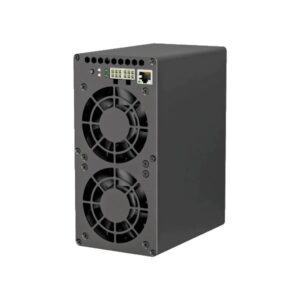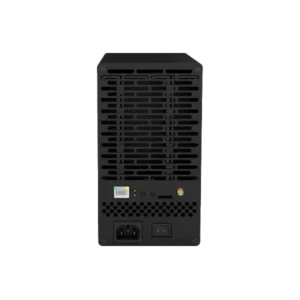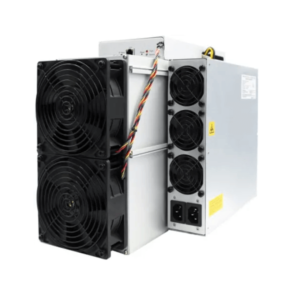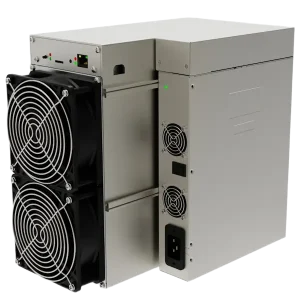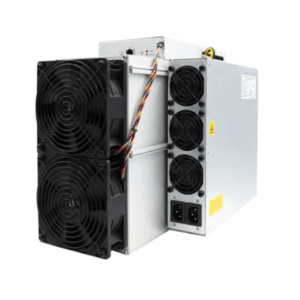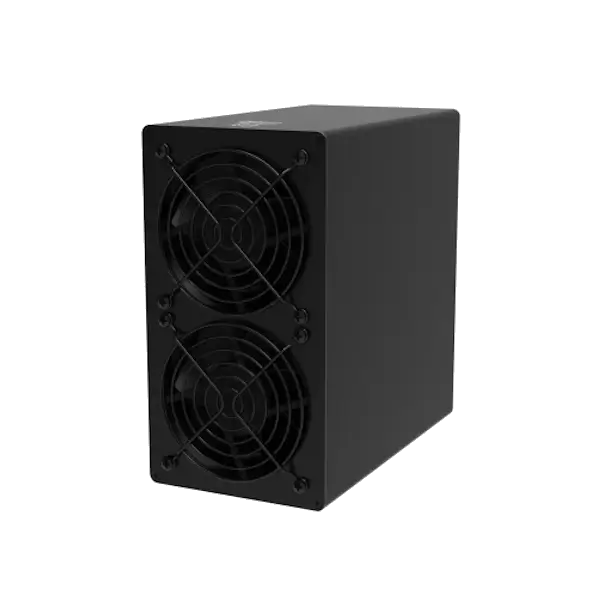
IceRiver KS7 Lite
R24000
The IceRiver KS7 Lite is a 4.2 TH/s kHeavyHash ASIC miner for Kaspa (KAS) mining, consuming approximately 500W using KS7-generation chip efficiency (~119 W/TH). Home-friendly design runs from a standard wall socket. Ideal for individual South African Kaspa miners with standard residential power.
Product Description
Product Overview
The IceRiver KS7 Lite is a compact, lower-power variant in IceRiver’s KS7 Kaspa mining series, delivering 4.2 terahashes per second on the kHeavyHash algorithm. Unlike the high-wattage KS7 30Th flagship, the KS7 Lite is designed for operators who want access to IceRiver’s KS7 platform and kHeavyHash ASIC technology at significantly reduced power requirements — making it a more practical option for small-scale Kaspa (KAS) mining and a potential bridge between home and commercial operations.
Kaspa (KAS) uses the kHeavyHash algorithm in a proof-of-work blockDAG architecture (GhostDAG), which provides near-instant block confirmations while maintaining PoW security. IceRiver is one of the primary manufacturers of dedicated Kaspa ASICs, with a full product range from the compact KS0/KS1 home miners through to the flagship KS7 30Th commercial unit. The KS7 Lite occupies an interesting mid-ground — offering KS7-class chip efficiency in a power envelope that remains more manageable than the flagship.
For South African operators, the KS7 Lite’s lower power draw (~500W) means it can be operated from a standard household circuit without dedicated electrical work, making it accessible to a wider range of home and small office miners interested in Kaspa.
Key Features
- 4.2 TH/s hashrate: KS7-platform Kaspa mining at a fraction of the KS7 30Th’s wattage. Suitable for home miners and operators who want dedicated kHeavyHash ASIC hardware without commercial power infrastructure requirements.
- ~500W power consumption: A dramatically lower power draw than the KS7 30Th (3500W), making the KS7 Lite feasible for home use on a standard South African 16A circuit without dedicated electrical work.
- KS7 chip efficiency: The KS7 Lite leverages IceRiver’s KS7 chip architecture, which offers improved efficiency (approximately 119 W/TH) compared to older KS5-class hardware (~170 W/TH). Better efficiency means lower electricity cost per KAS mined.
- kHeavyHash algorithm: Dedicated to Kaspa (KAS) mining. Not compatible with SHA-256 (Bitcoin), Blake2S (Kadena), Blake3 (Alephium), or other networks.
- Compact and accessible form factor: Lighter and smaller than the KS7 30Th, the Lite variant is more practical for small spaces. Confirm exact dimensions at time of order.
- Ethernet (RJ-45) connectivity: Wired network connection for pool communication. Web-based interface for configuration.
- Load-shedding practical: At ~500W, a standard 5kWh home battery can run the KS7 Lite for approximately 10 hours — covering most South African load shedding stages without a generator.
Technical Specifications
- Algorithm: kHeavyHash
- Supported coins: Kaspa (KAS)
- Hashrate: 4.2 TH/s (±5%)
- Power consumption: ~500W (±10%)
- Power efficiency: ~119 W/TH (±10%)
- Cooling type: Air-cooled
- Noise level: Moderate — quieter than commercial ASIC miners; confirm exact dB at order
- Input voltage: 200–240V AC
- Networking: Ethernet (RJ-45)
- Operating temperature: 5°C to 45°C
- Dimensions: Confirm at order — smaller than KS7 30Th
- Net weight: Confirm at order
Power & Installation Notes
South Africa’s 230V/50Hz supply is compatible with the KS7 Lite’s 200–240V input. No voltage converter is required.
At approximately 500W, the IceRiver KS7 Lite is one of the more accessible ASIC miners in terms of electrical infrastructure. A single unit can be operated from a standard South African 16A wall socket without dedicated circuit installation or electrician engagement. For multiple units, a dedicated circuit is recommended to avoid overloading shared household circuits.
Load shedding is significantly more manageable with the KS7 Lite. A 5kWh home battery can support approximately 10 hours of continuous operation at full load — more than sufficient for most scheduled load shedding blocks in any stage. Even a modest UPS (1–2kWh) provides 2–4 hours of runtime, covering many shorter outages. This makes the KS7 Lite one of the most load-shedding-resilient commercial Kaspa ASIC miners available.
The lower heat output at 500W means standard room ventilation is typically adequate. Avoid placing in an enclosed cabinet. Normal convective airflow around the unit is sufficient for single-unit home operation.
Electricity Cost Context — South Africa
Running the IceRiver KS7 Lite at 500W continuously consumes approximately 12 kWh per day, or roughly 360 kWh per month. At R2.80/kWh (reference residential tariff — municipal rates vary), the estimated monthly electricity cost is approximately R1 008 per month.
Calculation: (500 ÷ 1000) × 24 × 30 × R2.80 = ~R1 008/month.
At approximately R1 008 per month, the KS7 Lite has a modest electricity cost profile that makes it accessible for South African home and small-scale Kaspa miners. The improved ~119 W/TH efficiency means better KAS-per-rand of electricity than older KS5-class hardware at a comparable power level. Current KAS pricing and network difficulty should be evaluated before purchase. This is a cost estimate only.
Ideal Use Cases
- Home Kaspa miners: South African miners who want to mine KAS at home using IceRiver’s KS7 chip efficiency without the commercial power requirements of the KS7 30Th. Standard household socket operation makes this genuinely accessible.
- Load-shedding-resilient KAS mining: At 500W, standard home battery backup easily covers most load shedding scenarios — making this one of the most practical ASIC miners for uninterrupted home mining in South Africa.
- Operators scaling gradually: A lower-commitment entry into IceRiver’s KS7 platform before committing to higher-wattage KS7 30Th units for commercial deployment.
- Kaspa portfolio diversification: Adding KS7 Lite units to a mixed-miner portfolio alongside Bitcoin or other algorithm hardware for Kaspa exposure at modest power and capital cost.
- KS7 ecosystem comparison: Operators evaluating the full KS7 range. See also: IceRiver KS7 30Th for the flagship high-output commercial variant.
Frequently Asked Questions
Does the IceRiver KS7 Lite work on South African power?
Yes. SA’s 230V/50Hz is within the KS7 Lite’s input range. At ~500W, it can run from a standard household wall socket — no dedicated circuit or electrician required for single-unit home use.
What is the difference between the KS7 Lite and KS7 30Th?
The KS7 30Th delivers 30 TH/s at ~3500W — a commercial-scale miner requiring dedicated 32A circuit installation. The KS7 Lite delivers 4.2 TH/s at ~500W — suitable for home use from a standard socket. Both use KS7-generation chips at ~117–119 W/TH efficiency. See: IceRiver KS7 30Th.
What Kaspa pools work with the KS7 Lite?
All standard kHeavyHash Stratum pools: F2Pool, HeroMiners, K1Pool. Configure via the miner’s web interface using your pool URL, worker name, and KAS wallet address.
How does the KS7 Lite compare to the Goldshell KA Box for home mining?
The KA Box mines Kadena (KDA) on Blake2S; the KS7 Lite mines Kaspa (KAS) on kHeavyHash — different algorithms and coins. Both are home-friendly low-wattage ASIC miners but are not directly comparable in terms of coin or hashrate.
Is the KS7 Lite suitable for solo Kaspa mining?
At 4.2 TH/s, solo mining Kaspa is practically infeasible given the size of the network’s total hashrate — pool mining is strongly recommended for consistent, predictable KAS rewards. See our solo mining hardware range for devices better suited to solo mining strategies.
What’s Included
- 1× IceRiver KS7 Lite ASIC miner unit
- Power supply (confirm with order)
- Power cable (region-specific — South African plug may require local adaptor)
- Ethernet cable not included
- Quick-start guide