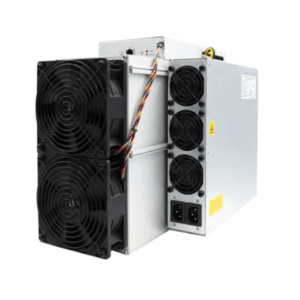
IceRiver KS7 30Th
R105000
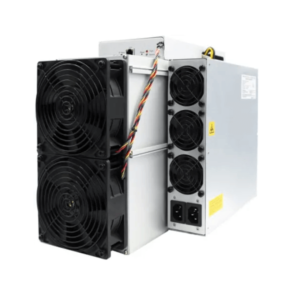
The IceRiver KS7 30Th is IceRiver’s flagship Kaspa miner, delivering 30 TH/s kHeavyHash at approximately 117 W/TH efficiency and around 3500W. Top-tier single-unit KAS mining output for commercial Kaspa operations. Air-cooled and compatible with South African 230V power.
Product Description
Product Overview
The IceRiver KS7 30Th is the flagship model in IceRiver’s KS7 series — a high-performance Kaspa (KAS) ASIC miner running the kHeavyHash algorithm at 30 terahashes per second. As the top-tier variant in IceRiver’s dedicated Kaspa mining hardware range, the KS7 30Th delivers the highest single-unit Kaspa output that IceRiver currently offers, making it the choice for commercial operators who want maximum KAS production per deployed unit.
Kaspa (KAS) operates on a unique blockDAG proof-of-work architecture (Chainweb-adjacent design called GhostDAG) with near-instant block confirmation times, using the kHeavyHash algorithm specifically designed for ASIC mining. The IceRiver KS7 series represents IceRiver’s most powerful Kaspa mining hardware, building on their established reputation from the KS3, KS5, and KS5 Pro series to push even further up the performance curve.
The KS7 30Th at 30 TH/s represents a significant step up from the KS5 20Th (20 TH/s) — a 50% hashrate increase per deployed unit — making it particularly attractive for commercial operators who want to maximise their Kaspa network contribution from each rack slot.
Key Features
- 30 TH/s hashrate: IceRiver’s highest Kaspa mining output, providing 50% more KAS network contribution per unit compared to the KS5 20Th. Maximum single-unit KAS pool contribution in the IceRiver range.
- ~3500W power consumption: At approximately 3500W, the KS7 30Th achieves approximately 117 W/TH on kHeavyHash — notably more efficient than earlier KS-series models, reflecting IceRiver’s continuous improvement in Kaspa ASIC chip design.
- kHeavyHash algorithm: Dedicated Kaspa (KAS) mining hardware. Not compatible with SHA-256 (Bitcoin), Blake2S (Kadena), or other algorithm networks.
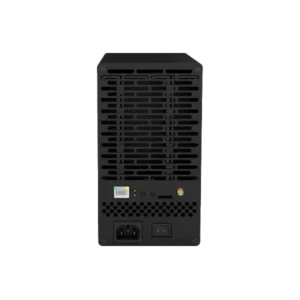
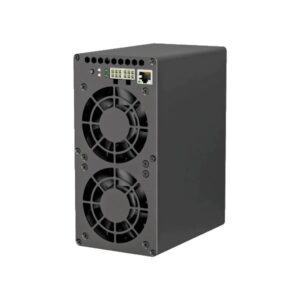
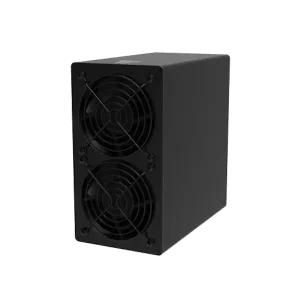
- Air-cooled design: Commercial-grade industrial ASIC enclosure with dual high-speed fans. No specialist cooling infrastructure required for standard mining room or container deployment.
- IceRiver KS7 series flagship: The KS7 30Th sits at the top of IceRiver’s current Kaspa miner range. Operators wanting the highest per-unit KAS output from IceRiver’s hardware platform should select this model.
- Ethernet (RJ-45) connectivity: Wired network connection for pool communication. Web-based configuration interface for pool setup and performance monitoring.
- Improved efficiency over KS5: The KS7 30Th’s ~117 W/TH is more efficient than the KS5’s ~170 W/TH, meaning lower electricity cost per KAS mined at equal hardware deployment scale.
Technical Specifications
- Algorithm: kHeavyHash
- Supported coins: Kaspa (KAS)
- Hashrate: 30 TH/s (±3%)
- Power consumption: ~3500W (±5%) at 25°C ambient
- Power efficiency: ~117 W/TH (±5%)
- Cooling type: Air-cooled, dual high-speed fans
- Noise level: ~75 dB(A)
- Input voltage: 200–240V AC
- Networking: Ethernet (RJ-45)
- Operating temperature: 5°C to 45°C
- Dimensions (L×W×H): 400 × 195 × 290 mm (approximate)
- Net weight: ~15–17 kg
Power & Installation Notes
South Africa’s 230V/50Hz grid supply is within the IceRiver KS7 30Th’s 200–240V input range. No voltage adaptor is required.
At approximately 3500W continuous draw, the KS7 30Th requires a dedicated high-amperage circuit. A dedicated 32A circuit, installed by a registered electrician, is required for safe single-unit continuous operation. Standard 16A domestic circuits (safely rated to ~2944W) are insufficient. For multi-unit deployments, each unit must have its own circuit breaker on a dedicated distribution board. Engage a qualified electrician for all installations.
Load shedding at 3.5 kW means a 10kWh residential battery provides approximately 2.9 hours of mining at full load — insufficient for extended load shedding without generator or commercial backup power support. Operators should factor South Africa’s load shedding schedule into daily KAS output projections and operational cost modelling.
Adequate ventilation is critical: the KS7’s fans push significant airflow to cool a 3.5 kW heat load. Ensure minimum clearance at inlet and exhaust faces, active air extraction from enclosed spaces, and ambient temperature maintained below 45°C. Active cooling may be required in South Africa’s hotter climates during summer.
Electricity Cost Context — South Africa
Running the IceRiver KS7 30Th at 3500W continuously consumes approximately 84 kWh per day, or roughly 2 520 kWh per month. At R2.80/kWh (reference residential tariff — municipal rates vary), the estimated monthly electricity cost is approximately R7 056 per month.
Calculation: (3500 ÷ 1000) × 24 × 30 × R2.80 = ~R7 056/month.
Despite this significant electricity cost, the KS7 30Th’s improved ~117 W/TH efficiency means it produces more KAS per rand of electricity than earlier KS5-class hardware. For South African operators on commercial or industrial tariffs, or with access to renewable energy, the economics are more favourable. This is a cost estimate only — not a profitability forecast. Evaluate current KAS pricing and network difficulty before purchase.
Ideal Use Cases
- Commercial Kaspa mining operations: Operators who want maximum per-unit KAS hashrate from IceRiver hardware in a commercial farm setting with dedicated power infrastructure.
- Maximising KAS output per rack slot: At 30 TH/s per unit, the KS7 30Th delivers 50% more hashrate per deployed machine than the KS5 20Th — reducing the total number of machines needed to achieve a target KAS output.
- IceRiver ecosystem operators scaling up: Operators already running IceRiver KS3, KS5, or KS5 Pro units who want to upgrade to the highest-performance IceRiver Kaspa hardware available.
- Improved efficiency over KS5: The KS7’s better J/TH ratio (117 W/TH vs 170 W/TH) means lower electricity cost per KAS mined, improving operating economics at scale.
- Comparison with KS7 Lite: Operators evaluating the full KS7 range should also consider the IceRiver KS7 Lite, which offers lower hashrate and power consumption at a more accessible price point.
Frequently Asked Questions
Does the IceRiver KS7 30Th work on South African power?
Yes. SA’s 230V/50Hz is within the KS7’s input range. A dedicated 32A circuit from a registered electrician is required for safe continuous operation.
What is the difference between the KS7 30Th and KS7 Lite?
The KS7 30Th delivers 30 TH/s at higher wattage. The KS7 Lite offers lower hashrate at reduced power draw and cost — it’s the more accessible entry into the KS7 platform. See: IceRiver KS7 Lite.
What Kaspa mining pools work with the KS7 30Th?
All kHeavyHash Stratum-protocol pools are compatible. Popular options include F2Pool, HeroMiners, and K1Pool. Configure pool details via the miner’s web interface.
How does the KS7 30Th compare to the Bitmain KS5 Pro 21Th?
The KS7 30Th delivers 30 TH/s at ~117 W/TH, versus 21 TH/s at ~167 W/TH for the KS5 Pro. The KS7 offers both more hashrate and better efficiency per terahash — it’s a newer-generation, higher-tier machine. See: Bitmain Antminer KS5 Pro 21Th.
Can I mine Bitcoin with the IceRiver KS7?
No. The KS7 is a kHeavyHash ASIC and mines Kaspa only. For Bitcoin mining, see our Bitcoin ASIC miners.
What’s Included
- 1× IceRiver KS7 30Th ASIC miner unit
- Integrated or bundled PSU (confirm with order)
- Power cable (region-specific — South African plug may require local adaptor or electrician wiring)
- Ethernet cable not included
- Quick-start guide