
Mining Safety Checklist for 2026
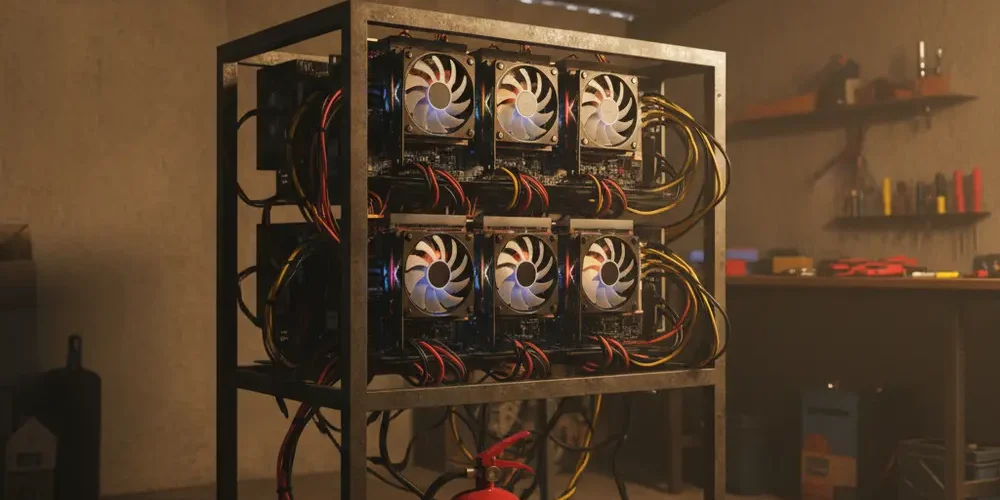
Home mining rigs run hot, draw serious continuous power, and never switch off. That combination makes them one of the highest-risk pieces of equipment in any South African home, and most miners only think about safety after something goes wrong.
This checklist gives you a clear, structured framework to audit your setup today. By the end, you will know exactly what to fix, what to monitor, and when to call a professional before a hardware failure becomes a house fire.
Note for South Africa:
- Load-shedding creates repeated power-cut and restoration cycles. Each restoration surge puts stress on your hardware and wiring. This is a risk that most global mining guides ignore entirely.
- Highveld summers regularly push non-air-conditioned rooms above safe operating temperatures for ASIC miners. If you are in Gauteng or a similar region, ambient heat management is non-negotiable.
- Any new or altered electrical installation in South Africa must comply with SANS 10142-1, the South African wiring standard, and must be certified by a registered electrician. Non-compliance can void your home insurance.
At a glance:
- Your mining rig must be on a dedicated, correctly rated circuit, not shared with other household loads.
- Ambient room temperature and airflow directly affect hardware lifespan and fire risk.
- You need a CO2 fire extinguisher and a heat detector in your mining room, not just a standard smoke alarm.
- Disclose your mining activity to your insurer before something goes wrong, not after.
Key takeaways:
- Electrical faults and overheating are the two leading causes of mining rig fires in home environments.
- South African miners face unique risks from load-shedding surges that require UPS and surge protection.
- A NICSA-registered electrician and a Certificate of Compliance are legally required for any wiring changes.
Why Mining Safety Matters More in 2026
The Real Risks Facing Home Miners Today
Modern ASIC miners and GPU rigs are not consumer appliances. They draw power continuously at levels that most household circuits were never designed to handle. A single high-end ASIC miner can pull over 3,000 watts around the clock, which is more than most electric stoves draw during cooking.
In South Africa, load-shedding adds a layer of risk that miners in other countries do not face. Every time power is restored after an outage, a surge travels through the line. If your rig is not protected, that surge hits your PSU, your motherboard, and your GPUs directly. According to MyBroadband’s energy coverage, power-quality events linked to load-shedding have been consistently documented as a cause of equipment damage in South African homes.
The risks can be grouped into three categories:
- Electrical: Overloaded circuits, undersized wiring, faulty PSUs, and load-shedding surges.
- Thermal: Overheating components, inadequate airflow, and high ambient room temperatures.
- Fire: Ignition from electrical faults, lack of detection equipment, and wrong extinguisher type.
Electrical Safety – Laying the Right Foundation
Circuit Loads, Wiring Standards, and Eskom Realities
The most important rule in mining electrical safety is simple: your rig must be on a dedicated circuit. Sharing a circuit with other household appliances means you are constantly at risk of tripping a breaker or, worse, overloading wiring that was never rated for the load.
In South Africa, all residential electrical installations are governed by SANS 10142-1 (Edition 3, 2021). This standard sets out the requirements for circuit protection, earthing, and dedicated circuits for high-load equipment. Any new circuit you add for a mining rig must comply with this standard and must be signed off with a Certificate of Compliance (CoC) by a NICSA-registered electrician. Using an unregistered person to do the work voids the CoC and can invalidate your home insurance.
For load-shedding protection, a quality UPS (Uninterruptible Power Supply) or an inverter with surge suppression is essential. A basic surge protector strip is not sufficient. Look for a UPS rated for your rig’s full draw, with a fast enough transfer time to prevent a hard shutdown on every outage cycle.
| Protection Type | What it covers | Good for SA mining? |
|---|---|---|
| Basic surge protector strip | Minor voltage spikes only | No – insufficient for restoration surges |
| UPS with AVR | Surges, sags, and brief outages | Yes – minimum recommended |
| Online double-conversion UPS | Full power conditioning, all surge types | Best option for valuable hardware |
| Inverter with lithium battery | Extended runtime, surge buffering | Yes – popular SA solution, check transfer time |
PSU Selection, Redundancy, and Safe Cabling Practices
Your power supply unit is the single point of failure most likely to cause a fire. A poorly rated, counterfeit, or overloaded PSU running at 100% capacity 24 hours a day will degrade fast. The widely referenced guideline in the mining community is to run your PSU at no more than 80% of its rated capacity under continuous load. This is sometimes called the 80% rule, and it exists because sustained operation near the rated limit generates excess heat and shortens component life.
When selecting and installing your PSU, keep these points in mind:
- Buy from reputable brands with documented efficiency ratings. Avoid unbranded or heavily discounted units.
- Use only the cables supplied with the PSU. Mixing cables from different PSU brands is a known fire risk.
- Do not daisy-chain SATA power connectors for GPU risers. Use dedicated PCIe power cables.
- Check all connectors are fully seated before powering on. Loose connections arc and generate heat.
- Inspect cables monthly for signs of heat damage, fraying, or discolouration.
If you are running multiple rigs or an ASIC, consider having your electrical setup professionally assessed before scaling up. A licensed electrician can confirm your DB board and wiring can handle the sustained load safely.
Heat Management – Keeping Your Rig and Your Home Safe
Ambient Temperature Targets and Ventilation Planning
Every ASIC miner has a specified ambient intake temperature range, and operating outside that range voids your warranty and increases the risk of a thermal event. Always check the official product manual from Bitmain or MicroBT for your specific model before setting up. Do not assume a range – verify it for your exact unit.
South African miners in Gauteng and other Highveld regions face a seasonal challenge. In summer, unventilated rooms can regularly exceed 35 degrees Celsius, which pushes many ASIC models outside their safe operating window. Air conditioning, active ventilation, or a combination of both is not optional in these regions during the warmer months.
Ventilation planning basics:
- Ensure your mining room has a clear intake path for cool air and a separate exhaust path for hot air. Hot and cool air must not mix in the same channel.
- A room with only one opening will recirculate hot air. You need at least one intake point and one exhaust point.
- Position intake fans low (cool air sinks) and exhaust fans high (hot air rises).
- Leave at least 30 cm of clear space around ASIC units for airflow. Do not stack miners directly on top of each other without proper rack spacing.
- Measure actual room temperature at the hardware intake point, not at a thermostat on the wall.
Thermal Throttling, Shutdowns, and Monitoring Tools
Most modern ASIC miners have built-in thermal protection that reduces performance or initiates a shutdown when temperatures exceed safe thresholds. This is a safety feature, not a malfunction. If your miner is throttling frequently, it is telling you something is wrong with your cooling setup.
GPU rigs managed through mining software typically allow you to set custom fan curves and temperature limits. Use these tools. Set a hard shutdown temperature for each GPU and do not leave a rig running unattended without monitoring software active.
Practical monitoring steps:
- Use software dashboards (such as HiveOS, RaveOS, or your ASIC’s web interface) to log temperatures over time.
- Set alert thresholds so you receive a notification before a hardware shutdown occurs.
- Check GPU and chip temperatures after every significant change in ambient conditions or mining software updates.
- Keep a log of normal operating temperatures so you can spot drift early.
Fire Risk – Prevention, Detection, and Response
Fire Safety Equipment Every Home Miner Should Have
Standard household smoke detectors work by detecting combustion particles in the air. In a mining room that already has elevated temperatures and fine dust from cooling fans, a smoke detector may not respond quickly enough or may give false alarms from dust build-up. A heat detector, which responds to temperature rise rather than smoke particles, is a better fit for high-heat mining environments. Ideally, use both types in the mining room.
For fire suppression, the correct extinguisher type matters. CO2 extinguishers are generally recommended for electrical and electronics fires because they do not leave residue that damages components further and do not conduct electricity. Dry powder extinguishers will put out the fire but will destroy your hardware in the process. Clean agent systems (such as FM-200) are used in data centres but are expensive for home use. Under South African standards, portable fire extinguishers fall under SANS 1910 – consult a fire safety professional or the South African Bureau of Standards for specific compliance guidance.
Minimum fire safety equipment for a home mining room:
- One CO2 fire extinguisher, mounted and accessible within arm’s reach of the door.
- A heat detector installed on the ceiling of the mining room.
- A smoke detector in the corridor or room adjacent to the mining space.
- A clear, unobstructed exit from the mining room at all times.
- No flammable storage (cardboard boxes, cleaning products, paper) in the mining room.
The Mining Safety Checklist for 2026
Use this checklist to audit your setup. Work through each section and note any items that need action. This checklist applies to both GPU rigs and ASIC miners in a South African home environment.
| Area | Check Item | Done? | Notes |
|---|---|---|---|
| Electrical | Rig is on a dedicated circuit, not shared | Yes / No | Required under SANS 10142-1 |
| Electrical | Circuit rated correctly for continuous load | Yes / No | Apply 80% rule to circuit and PSU |
| Electrical | CoC issued by NICSA-registered electrician | Yes / No | Legally required for new/altered wiring |
| Electrical | UPS or inverter with surge suppression installed | Yes / No | Essential for load-shedding protection |
| Electrical | PSU running at 80% or less of rated capacity | Yes / No | Check total rig draw vs PSU rating |
| Electrical | All cable connections fully seated, no daisy-chaining | Yes / No | Inspect monthly |
| Heat | Ambient intake temp within manufacturer spec | Yes / No | Check Bitmain or MicroBT manual for model |
| Heat | Separate intake and exhaust airflow paths | Yes / No | No recirculation of hot air |
| Heat | 30 cm clearance around each ASIC unit | Yes / No | More if manufacturer specifies |
| Heat | Temperature monitoring software active | Yes / No | Set alert thresholds |
| Heat | Fan curves and shutdown temps configured | Yes / No | GPU rigs: use mining OS settings |
| Fire | CO2 extinguisher accessible at room exit | Yes / No | Check expiry date annually |
| Fire | Heat detector installed in mining room | Yes / No | Not just a standard smoke alarm |
| Fire | No flammable materials stored in mining room | Yes / No | Clear the room of cardboard, paper, liquids |
| Fire | Exit path from mining room is unobstructed | Yes / No | Check regularly |
| Maintenance | Dust cleaning scheduled every 4 to 6 weeks | Yes / No | More frequent in dusty SA regions |
| Maintenance | Insurer notified of mining equipment at home | Yes / No | Non-disclosure can void claims |
| Maintenance | Temperature and performance logs reviewed weekly | Yes / No | Spot thermal drift early |
Common Mistakes Home Miners Make
- Skipping the dedicated circuit. Plugging a rig into a shared wall outlet is one of the most common causes of tripped breakers and wiring faults.
- Using a surge strip instead of a UPS. A surge strip does not protect against load-shedding restoration surges. In South Africa, this is a real and frequent risk.
- Running the PSU at 100% capacity. A PSU at full load runs hot and degrades rapidly. Apply the 80% rule.
- Not telling your insurer. Running commercial-grade equipment from a residential property is a material change. Non-disclosure can result in a repudiated claim.
- Ignoring dust build-up. Dust is an insulator. It traps heat on components and accelerates thermal failure. In drier, dustier parts of South Africa, cleaning intervals need to be shorter than global guides suggest.
- Using the wrong fire extinguisher. Dry powder will put out a fire but will destroy your hardware. Use CO2 for electrical fires.
If You Are New to Home Mining
If this is your first mining setup, start with these foundational steps before anything else:
- Have a licensed electrician assess your DB board and home wiring before you plug anything in. Do not assume your existing circuits can handle the load.
- Start with a single GPU rig or entry-level ASIC to understand power draw and heat output before scaling up.
- Buy a UPS or inverter from day one. South African load-shedding is not a future risk – it is a current reality.
- Read the official product manual for your hardware. Temperature limits and airflow requirements are documented. Use them.
- Browse the Sell Your PC shop for locally available mining hardware options that are suited to South African conditions.
For SA miners scaling beyond a single rig, the safest power profile we deploy is the Avalon Q 90T on hybrid solar, with three-phase hydro builds standardising on the Bitmain Antminer S21 XP Hydro 473T.
If You Have Mined Before and Are Scaling Up
If you are expanding an existing setup, the risks increase proportionally. Here is what experienced miners often overlook when scaling:
- Revisit your electrical assessment. What was safe for one rig may not be safe for three. Get a new CoC if you are adding circuits.
- Review your UPS capacity. A UPS sized for a single machine will not protect a multi-rig rack. Recalculate total draw and upgrade if needed.
- Reassess your ventilation. Airflow requirements scale with hardware count. What worked for two machines may create a hotspot problem with five.
- Check with your insurer again. A larger setup changes your risk profile. Contact the South African Insurance Association for guidance on disclosure obligations if you are unsure of your obligations.
- Consider professional support for your inverter or UPS. Our professional inverter repair service can help ensure your power protection is in good working order.
When to Call a Professional – And When to Stop Mining
Some situations require a professional, not a forum post. Stop mining and call a licensed electrician if you notice any of the following:
- A burning smell from your wiring, switchboard, or PSU.
- Breakers tripping repeatedly under normal load conditions.
- Visible scorch marks on cables, outlets, or your distribution board.
- Your UPS or inverter is alarming frequently without a clear load-shedding cause.
- Any wall outlet or plug feels warm to the touch.
You should also stop mining temporarily if your room temperature consistently exceeds the intake temperature limit specified in your hardware manual. Running outside rated conditions is not just a safety risk, it is also false economy. The hardware damage you accumulate running hot will cost more than the mining revenue you would have earned.
If you are unsure about your setup or need a second opinion, get in touch with the Sell Your PC team and we can point you in the right direction.
Frequently asked questions
Do I need a dedicated circuit for my mining rig in South Africa?
Yes. Running a mining rig on a shared household circuit is unsafe and likely non-compliant with SANS 10142-1. A dedicated circuit, installed and certified by a NICSA-registered electrician, is the correct approach. The electrician must issue a Certificate of Compliance for the new installation.
Will my home insurance cover damage caused by my mining rig?
It depends on your policy and whether you have disclosed your mining activity. South African home insurance policies require you to disclose material changes to your risk profile. Running commercial-grade electrical equipment from a residential property may qualify as a material change. Contact your insurer directly and confirm cover in writing before deploying hardware. The South African Insurance Association provides consumer guidance on disclosure obligations.
What is the best fire extinguisher for a mining room?
A CO2 fire extinguisher is generally recommended for electrical and electronics fires. It does not conduct electricity and does not leave residue that causes further damage. Dry powder extinguishers are effective at suppressing fire but will destroy your hardware. Check that your extinguisher is serviced and in date, and mount it at the exit of the room so you can reach it quickly.
How often should I clean the dust from my mining rig?
In typical conditions, a cleaning interval of every four to six weeks is a common recommendation. In dustier South African environments, such as the Highveld or areas near mining and industrial activity, you may need to clean more frequently. Dust acts as a thermal insulator on heatsinks and fans, and it increases the risk of overheating and component failure.
Is a UPS really necessary for South African home miners?
Yes, for most South African home miners a UPS or a quality inverter with surge suppression is essential. Load-shedding creates repeated power-cut and restoration cycles. Each restoration can introduce a surge that stresses PSUs and sensitive electronics. A basic surge protector strip is not sufficient protection. Look for a UPS with automatic voltage regulation (AVR) rated for your rig’s total power draw.
Summary
- Mining rigs are high-draw, continuous-load equipment that require a dedicated, certified electrical circuit.
- Load-shedding is a real and ongoing risk in South Africa. A quality UPS or inverter with surge protection is non-negotiable.
- Ambient temperature and ventilation directly affect hardware safety. Check your hardware manual for the intake temperature limit specific to your model.
- Every mining room needs a CO2 extinguisher and a heat detector, plus regular dust cleaning and monitoring.
- Disclose your setup to your insurer and use a NICSA-registered electrician for any wiring changes.
This is educational content, not financial advice.

