
Noise Reduction Without Cooking the Miner
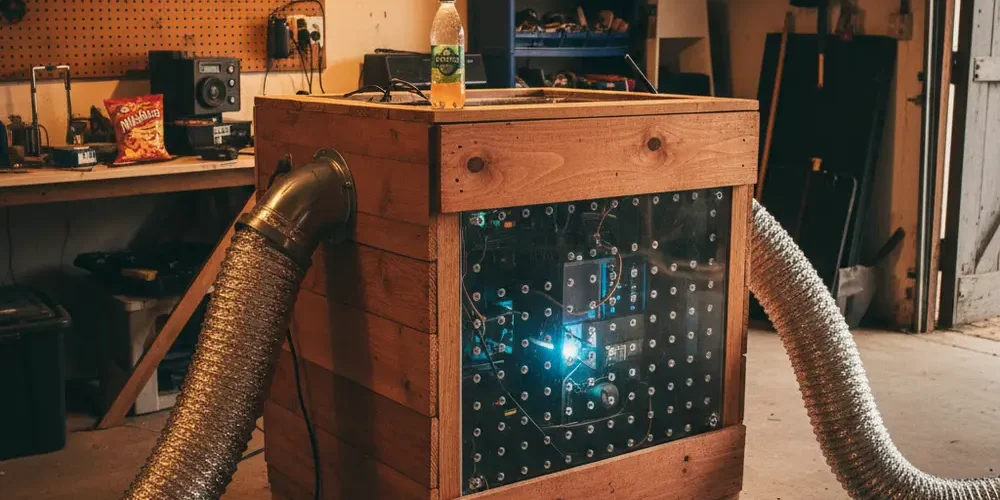
Running an ASIC miner at home means living with a machine that produces as much noise as a vacuum cleaner, all day, every day. The problem is that most noise reduction attempts end in a thermal shutdown because the airflow math was never done first.
By the end of this article, you will know how to calculate the minimum airflow your miner needs, how to safely reduce fan speed using firmware, and how to design an enclosure that cuts noise without trapping heat.
Note for South Africa:
- South African homes, especially in Gauteng and the Western Cape, frequently reach high ambient temperatures in summer, which reduces your thermal headroom for any fan speed reduction.
- Johannesburg sits at roughly 1,700 m above sea level. Thinner air at altitude means lower air density, so the same fan speed moves less cooling capacity than it would at sea level. This must be factored into your airflow calculations.
- Load-shedding causes repeated power cycling, which stresses fan bearings over time. If you are running a second-hand ASIC, inspect the fan bearing condition before attempting any noise reduction. Check our Bitcoin ASIC miner listings if you are sourcing hardware locally.
- Body corporate rules in sectional title complexes may restrict audible noise from residential units. Check your scheme's conduct rules and reference South African noise standards (SANS) for residential noise context before assuming you are compliant.
At a glance:
- Most commercial ASICs produce between 70 dB and 80 dB at full fan speed, which is unsuitable for most home environments.
- Airflow math must come before any fan speed reduction. Skipping this step risks thermal throttling or hardware damage.
- Firmware tools like BraiinsOS and VNish allow safe, monitored fan speed adjustments that stock firmware does not permit.
- Enclosures only help if they use a duct-through design. Sealed boxes cause thermal shutdowns.
Key takeaways:
- Calculate your minimum required airflow from your miner's TDP and ambient temperature before touching fan settings.
- Undervolting is the most effective combined method for reducing both heat output and noise simultaneously.
- Never reduce fan speed without real-time temperature monitoring on chip and board sensors.
Why ASIC Miners Are So Loud (And Why That Matters at Home)
ASIC miners are engineered for commercial server rooms, not living spaces. The fans are high-static-pressure blowers designed to push air through dense heatsink stacks at full throttle, continuously. Noise was never a design priority.
According to comparative data from ASIC miner noise level comparisons, most commercial units are rated between 70 dB and 80 dB at full fan speed. That is roughly the same as a loud restaurant or a running vacuum cleaner. In a home garage or wendy house, that level of noise carries through walls and affects neighbours.
The Two Sources of ASIC Noise: Fans and Coil Whine
There are two distinct noise sources on a running ASIC miner:
- Fan noise is the dominant source at full speed. It presents as a continuous high-frequency roar from the blower fans on the inlet and exhaust sides.
- Coil whine comes from inductors on the power delivery circuitry vibrating at switching frequencies. It becomes more noticeable when fan speed drops because the fan noise no longer masks it.
Reducing fan speed helps with the first problem but can make the second more apparent. Addressing both requires a combined approach: lower the fan speed within safe thermal limits, and use vibration isolation to decouple the unit from the surface it sits on.
Understanding the Airflow Math Before You Touch Anything
This is the step most home miners skip, and it is the reason noise reduction attempts fail. You cannot safely reduce fan speed without first knowing how much airflow your miner actually needs.
CFM, Static Pressure, and Heat Load: What These Numbers Actually Mean
Three numbers govern every cooling decision on an ASIC miner:
- CFM (cubic feet per minute) is the volumetric flow rate of air through the miner. More CFM means more heat removed per minute.
- Static pressure is the fan's ability to push air through resistance, such as a heatsink stack or an enclosure duct. Reducing fan speed drops static pressure significantly, which matters more than CFM in high-resistance paths.
- Heat load (TDP) is the total watts of heat the miner produces at a given operating point. This is your starting variable for every airflow calculation.
The relationship between these variables follows the fan affinity laws. Reducing fan speed by 20% reduces airflow by roughly 20%, but static pressure drops by roughly 36% and fan power drops by nearly 50%. Noise reduction is roughly proportional to speed reduction, but measured on a logarithmic dB scale, so a 20% speed reduction does not produce a 20% reduction in perceived noise.
How to Calculate the Minimum Airflow Your Miner Needs
The core formula, as described by Engineering Toolbox's ventilation reference, is based on the heat balance equation. In simplified terms: the airflow required is proportional to the heat load divided by the allowable temperature rise across the miner.
To apply this practically, you need three inputs from your miner's datasheet: the rated power draw in watts, the maximum allowable inlet air temperature, and the maximum allowable exhaust temperature. The difference between inlet and exhaust is your allowable temperature rise. Check the Bitmain Antminer official specifications or the WhatsMiner official knowledge base for your specific model's figures.
If you are in Johannesburg, note that lower air density at altitude means the same volumetric airflow carries less cooling capacity than at sea level. You may need a higher fan speed than the same miner would require in Cape Town or Durban to achieve the same thermal result.
Fan Speed Reduction: How Much Is Safe and How Much Is Not
Once you know your minimum required airflow, you have a thermal ceiling. Fan speed reduction is only safe within the gap between your current operating temperature and that ceiling. If your ambient temperature in summer already puts your miner close to its inlet temperature limit, that gap may be very small or non-existent.
| Method | Noise Reduction Potential | Risk Level | Best For |
|---|---|---|---|
| Firmware fan curve (BraiinsOS, VNish) | Moderate. Depends on thermal headroom. | Low if monitored. | Most home miners as a first step. |
| Undervolting via firmware | Good. Reduces heat, allows lower fan speed. | Low to moderate. | Miners with performance headroom to spare. |
| Aftermarket fan replacement | Variable. Mixed community results. | Moderate to high. | Advanced users only, check static pressure specs. |
| Acoustic enclosure (duct-through) | Good. Addresses room noise directly. | Low if designed correctly. | Garage or outbuilding setups. |
| Sealed box | High short-term. Causes thermal shutdown. | Very high. Do not do this. | Never appropriate for a running ASIC. |
Custom Fan Curves and Firmware Options for Popular ASIC Models
Stock Antminer firmware does not allow meaningful fan speed customisation. Third-party firmware changes this significantly. Two widely used options for South African home miners are BraiinsOS and VNish.
- BraiinsOS allows custom fan speed curves and autotuning profiles that reduce chip voltage, lower heat output, and therefore reduce the fan speed needed to maintain safe chip temperatures. According to Braiins' own noise reduction guidance, this firmware approach is safer than physical fan replacement when done within thermal limits.
- VNish firmware supports fan speed floor and ceiling settings, per-board frequency and voltage adjustments, and real-time temperature dashboards. This makes it easier to monitor chip and PCB temperatures while experimenting with speed reductions.
Before flashing any third-party firmware, check warranty implications with your supplier. If your miner is still under any form of warranty, confirm whether firmware changes affect your cover. Compatibility also varies by model and firmware version, so verify your specific device before proceeding.
Enclosures and Acoustic Panels That Do Not Trap Heat
A well-designed enclosure can meaningfully reduce the noise that escapes into your home. A poorly designed one will shut your miner down within minutes. The difference comes down to whether the design allows sufficient airflow or restricts it.
Duct-Through Designs vs Sealed Box Mistakes
A duct-through enclosure routes air in from outside the enclosure on the inlet side and exhausts it out through a separate duct on the exit side. The miner sits inside, and all noise is contained within an internally lined box. The inlet and exhaust ducts are lined or baffled to reduce sound transmission through the openings.
A sealed box does the opposite. It contains the miner completely, with no airflow path. Surface temperatures climb within seconds, and thermal shutdown follows. This is the most common DIY enclosure mistake, as noted across community experience from home miners.
For lining materials, keep these principles in mind:
- Sound absorption (foam) and sound blocking (mass-loaded vinyl) are different properties. You need both for meaningful noise reduction inside an enclosure.
- Standard acoustic foam reduces high-frequency fan noise. Low-frequency rumble requires decoupling the miner from the enclosure floor using rubber mounts or isolation feet.
- Any opening reduces acoustic isolation. Duct openings should be baffled or lined with absorptive material to prevent sound from transmitting directly through the gap.
Practical Airflow Setup: A Step-by-Step Audit for Home Miners
Use this process before making any changes. Each step builds on the last. Validate every result against your specific miner model's datasheet.
- Measure current temperatures. Use a thermometer or IR gun to record inlet air temperature (room ambient near the miner intake) and exhaust air temperature. Note the difference.
- Record current fan RPM and noise level. Log current RPM from the miner dashboard. If you have a decibel meter, record the dB level at one metre from the miner. This is your baseline.
- Calculate minimum required airflow. Using your miner's rated TDP (watts), your ambient inlet temperature, and the maximum allowable chip or exhaust temperature from the manufacturer datasheet, calculate the minimum airflow needed. If you are in Johannesburg, apply an altitude correction for lower air density.
- Determine your thermal headroom. Compare your current exhaust temperature to the maximum allowable. If you have at least 10 to 15 degrees Celsius of headroom, modest fan speed reduction is likely feasible. If the gap is smaller, do not reduce fan speed without first reducing heat load through undervolting.
- Evaluate enclosure options. If the miner is in a garage or outbuilding, a duct-through enclosure lined with dense foam and mass-loaded vinyl is a practical next step. Ensure your inlet and exhaust ducts are sized to match or exceed the miner's required airflow at reduced static pressure.
- Test and re-measure after each change. Do not make multiple changes simultaneously. Change one variable, run the miner for at least 30 minutes under load, and re-measure temperatures. If chip or board temperatures remain within the manufacturer's safe range, proceed. If they climb, revert.
Practical Airflow Setup for a South African Home Environment
Dealing With Load-Shedding, Dust, and High Ambient Temperatures
South African home miners face three environmental challenges that commercial miners in controlled data centres do not: frequent power cycling, high ambient temperatures, and dust ingestion from garages and outbuildings.
- Load-shedding causes repeated power-on and power-off cycles. Each cold start spins fans up to full speed briefly, which stresses bearings. If you are buying a second-hand ASIC, listen for bearing noise on startup. A grinding or rattling sound on spin-up indicates worn bearings that should be replaced before you attempt any noise reduction work.
- High ambient temperatures in summer, particularly in Gauteng and inland regions, can push ambient temperatures to levels that leave little or no thermal headroom for fan speed reduction. In peak summer, you may need to accept higher fan speeds or consider running the miner during cooler overnight hours.
- Dust accumulates on heatsink fins and fan blades, reducing airflow efficiency over time. Clean your miner with compressed air at regular intervals. Blocked heatsinks force fans to work harder to achieve the same cooling result, which raises both noise and temperatures simultaneously.
Undervolting is also worth considering from an electricity cost perspective. South African electricity tariffs from Eskom and municipal distributors are a real operating cost, and running an ASIC at reduced voltage and frequency lowers power draw, which reduces both heat and the electricity bill. Whether the hashrate reduction is financially worthwhile depends on current network difficulty and your tariff. Consider exploring our mining hardware shop for newer, more efficient models if your current unit runs hot by design.
Common Mistakes to Avoid
These are the mistakes that most commonly result in overheating or hardware damage during noise reduction attempts:
- Building a sealed enclosure without any inlet or exhaust ducting.
- Reducing fan speed without first measuring current chip temperatures or calculating minimum airflow.
- Flashing third-party firmware without checking model compatibility first.
- Replacing stock fans with aftermarket units that cannot match the static pressure requirements of the miner's heatsink stack.
- Making multiple changes at once, which makes it impossible to identify which change caused a problem.
- Ignoring dust buildup on heatsinks and blaming the fan for temperature increases.
If You Are New to ASIC Noise Reduction
Start here if this is your first attempt at quieting a home miner:
- Read your miner's datasheet first and note the operating temperature range and fan specifications.
- Install BraiinsOS or VNish firmware to gain access to temperature monitoring dashboards and fan controls.
- Start with undervolting before touching fan settings. Reducing heat output is the safest first step.
- Do not attempt an enclosure build until you have established a stable thermal baseline with the miner running in open air.
- If you have questions about your specific hardware or want to assess a second-hand unit, contact our team for guidance.
If You Have Done This Before
For miners who have already done basic firmware tuning and want to go further:
- Measure airflow with a proper anemometer rather than relying on RPM readings alone. RPM does not account for fan wear or partial blockage.
- Design your enclosure using a system resistance curve to confirm your chosen duct diameter does not create back-pressure that exceeds the fan's static pressure at the reduced speed you are targeting.
- Consider per-board voltage tuning in VNish to find the efficiency sweet spot for each hashboard individually, rather than applying a blanket undervolt.
- Evaluate immersion cooling as an option if your miner is a high-TDP unit and noise reduction via air cooling has reached its practical limit. Browse our hydro and immersion Bitcoin miners to see what purpose-built quiet alternatives look like.
If your noise problem is bad enough to warrant a hardware change rather than a room change, hydro-cooled units like the Bitmain Antminer S21 XP Hydro 473T sit at a different acoustic baseline to any air-cooled S19 or S21 unit, and the solar-tuned Avalon Q 90T runs cooler and quieter than the typical 3.5 kW air-cooled rig.
When to Accept the Noise vs When to Relocate the Miner
Not every home environment can accommodate a running ASIC miner quietly enough to be practical. Here is a clear decision framework:
- If your summer ambient temperatures leave less than 5 degrees Celsius of thermal headroom, fan speed reduction is not a realistic option. Relocate the miner to a cooler space or consider undervolting to reduce heat load.
- If you are in a sectional title complex or estate, check your conduct rules before investing in noise reduction equipment. South African noise standards and body corporate rules may require you to achieve a noise level that is not achievable with a standard air-cooled ASIC, regardless of your enclosure design.
- If the miner is in a detached outbuilding or garage with no shared walls, a duct-through enclosure is usually the most cost-effective path to acceptable noise levels.
- If none of these options work for your situation, selling the air-cooled unit and replacing it with a hydro or immersion model is a legitimate solution. Explore our sell your items page if you want to move on your current hardware.
Frequently asked questions
Can I reduce fan speed on an Antminer without third-party firmware?
Stock Antminer firmware provides very limited fan control. Meaningful custom fan curves require third-party firmware such as BraiinsOS or VNish. Always verify compatibility with your specific model and firmware version before flashing.
How many decibels can I realistically remove from an ASIC miner?
A combination of firmware undervolting, a modest fan speed reduction, and a well-designed duct-through enclosure can reduce perceived noise significantly in the room where the miner sits. However, the dB figures vary by model, ambient temperature, and enclosure quality. Do not rely on general estimates. Measure your own baseline and measure again after each change.
Does undervolting reduce hashrate too much to be worthwhile?
It depends on your electricity tariff and current network difficulty. Undervolting reduces power draw and heat, which lowers your running cost and allows lower fan speeds. The hashrate reduction is often modest at mild undervolt levels. Run the numbers for your specific tariff before deciding.
Are there South African noise regulations I need to comply with?
SANS 10103 covers the measurement and rating of environmental noise from residential premises, and major metro by-laws reference SANS thresholds. Sectional title body corporates may impose stricter internal rules. Check your specific complex rules and your local municipality's environmental by-laws. This article flags the context but does not constitute legal advice.
What is the biggest risk of DIY ASIC enclosure builds?
Inadequate exhaust ducting is the most common failure. A sealed or poorly vented enclosure causes rapid heat buildup and triggers a thermal shutdown within minutes of the miner reaching operating temperature. Always design the duct path before building the enclosure, and test with the miner running before sealing anything permanently.
Summary
- Calculate minimum required airflow from your miner's TDP, ambient temperature, and manufacturer specifications before reducing fan speed.
- Use firmware tools (BraiinsOS or VNish) to access custom fan curves and real-time temperature monitoring. Do not guess.
- Undervolting reduces heat output, which creates more thermal headroom for fan speed reduction. It is the most effective combined approach.
- Duct-through enclosures work. Sealed boxes cause thermal shutdowns. Invest time in the design before building.
- South African conditions, including high ambient temperatures, altitude in Johannesburg, and load-shedding bearing stress, make baseline measurement and monitoring more important, not less.
This is educational content, not financial advice.

