
Where to Sell Your Gaming PC Safely in SA
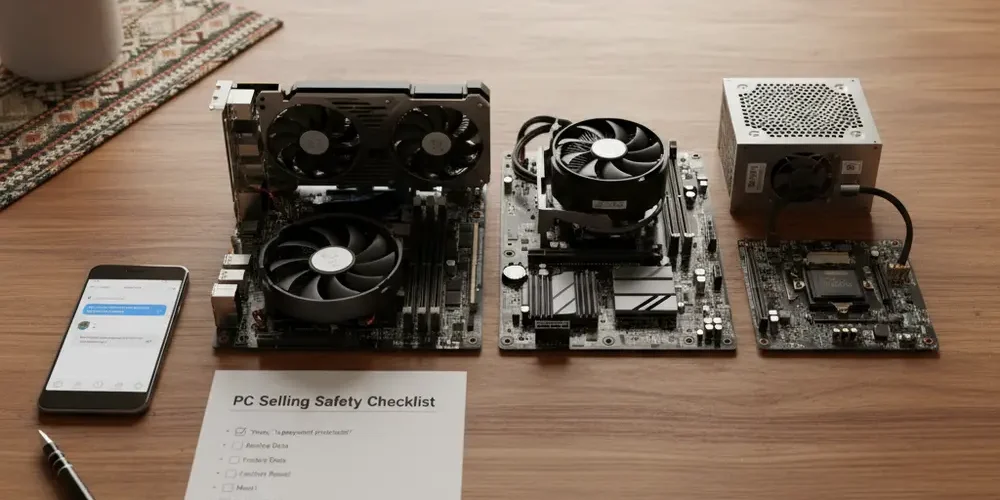
Selling a gaming PC privately in South Africa can put real money back in your pocket, but it also puts you directly in the path of some of the most common online scams in the country. Getting this right means knowing where to list, how to vet a buyer, and exactly when to hand over your hardware.
By the end of this guide, you will know which platforms are worth your time, which payment methods are actually safe, and how to complete a handover without putting yourself or your data at risk. We cover the full process from listing to final sale.
Note for South Africa:
- Fake EFT proof-of-payment is one of the most common scams targeting private sellers on South African classifieds platforms.
- POPIA (the Protection of Personal Information Act) means you have a legal and personal reason to wipe all data from your PC before any handover.
- Load shedding can disrupt courier timelines, so factor that in if you plan to ship your hardware rather than meet in person.
At a glance:
- Classifieds platforms (OLX, Gumtree, Facebook Marketplace) offer reach but carry the highest scam risk.
- Tech-focused communities like MyBroadband offer more accountability through user reputation and post history.
- Dedicated buyback services like Sell Your PC offer the safest and fastest route, often at a fixed or quoted price.
- Cash or verified bank transfer (with your own banking app confirmation) are the only truly safe payment options for private sales.
Key takeaways:
- Never release your hardware based on a screenshot of a proof of payment. Confirm funds in your own account first.
- Wipe your drives completely before listing or handing over your PC.
- Meeting at a police station parking lot is the safest in-person handover location in South Africa.
Why Selling a Gaming PC in South Africa Comes With Unique Risks
Gaming PCs are high-value items, which makes them a preferred target for scammers on local classifieds platforms. A mid-range rig or a single high-end GPU can attract fraudulent buyers who are specifically looking for easy targets among inexperienced private sellers.
South Africa has a well-documented problem with online classifieds fraud. The combination of anonymous listings, EFT-based payments, and limited platform accountability creates conditions where scammers operate with low risk to themselves. Understanding the landscape is the first step to protecting yourself.
Common Scam Types Targeting Private Sellers
These are the scam patterns most frequently reported by South African private sellers of electronics:
- Fake EFT proof of payment: A buyer sends a convincing-looking payment screenshot. The money never arrives. Always confirm in your banking app before handing over anything.
- Overpayment scam: A buyer "accidentally" sends too much and asks you to refund the difference before the original payment clears or is reversed.
- Courier scam: A buyer insists on using their own courier service, which is fake. You ship the item and receive nothing.
- Impersonation: Someone poses as a legitimate buyer or uses a stolen identity to build false trust.
- Inspection swap: A buyer asks to inspect the hardware and swaps a component for a faulty one during the meetup.
For a broader look at online marketplace scams in South Africa, Fin24 covers these patterns in detail and is worth reading before you list.
Your Selling Options – Platforms and Buyers Compared
Not all platforms carry the same risk or reach the same audience. The right choice depends on how quickly you want to sell, how much effort you want to invest, and how much risk you are willing to manage.
| Platform or Method | Reach | Scam Risk | Verification | Speed |
|---|---|---|---|---|
| OLX South Africa | Very high | High | None built-in | Variable |
| Facebook Marketplace | High | Medium-high | Profile-linked only | Variable |
| MyBroadband Forum | Medium | Lower | User reputation history | Medium |
| Dedicated buyback service | Direct only | Very low | Business-verified | Fast |
| Discord / hobby groups | Low-medium | Low-medium | Community-based | Slow to medium |
Online Classifieds – OLX, Gumtree, Facebook Marketplace
OLX South Africa and Gumtree offer the largest audiences of any local classifieds platform, which is useful for visibility but comes with a trade-off. Neither platform offers built-in escrow, verified payment processing, or meaningful buyer verification. You are on your own when it comes to vetting whoever responds to your listing.
Facebook Marketplace South Africa ties listings to Facebook profiles, which adds a basic layer of identity accountability. You can check a buyer’s profile activity, how long the account has existed, and whether you share mutual connections. That said, fake or recycled accounts are common, and there is no payment protection built into the platform.
If you use any of these platforms, treat every buyer as unverified until proven otherwise. Do not let platform reach give you a false sense of security.
Dedicated Tech Buyback Services
Buyback services like Sell Your PC offer a fixed or quoted price for used hardware, handle the valuation themselves, and remove most of the risk from the transaction. You deal with a registered business rather than an anonymous stranger. The trade-off is that you may receive a lower price than a private sale would fetch, but the process is significantly faster and safer.
This is worth considering seriously if you are selling high-value components, do not want the hassle of vetting buyers, or have had a bad experience with classifieds in the past. For corporate or bulk asset disposal, there are also professional IT asset disposal services designed for that purpose.
Community Forums and Groups
The MyBroadband Buy and Sell forum is one of the most trusted spaces for second-hand tech sales in South Africa. Listings are tied to registered accounts with visible post history, which gives buyers and sellers a way to assess reputation before transacting. Community moderation adds another layer of accountability that anonymous classifieds simply cannot offer.
Discord servers and gaming community groups can also work, particularly for selling to enthusiasts who understand the hardware. These spaces tend to attract more informed buyers, which reduces the risk of lowball offers or bad-faith inquiries. The downside is a smaller audience and slower sales cycle.
How to Vet a Buyer Before You Meet or Ship
Vetting a buyer is not optional. It is the step most private sellers skip, and it is where most problems start. A few minutes of checking can prevent significant losses.
Here is what to look for when a buyer contacts you:
- Check their profile age and activity history on whichever platform they found you on.
- Search their phone number or email address online. Scammers often leave traces across multiple platforms.
- Ask a specific technical question about the hardware. Genuine buyers can usually answer. Scammers often cannot.
- Be cautious of buyers who are overly eager, push for urgency, or refuse to meet in person.
- Do not share your home address before you have completed basic verification steps.
Payment Methods – What Is Safe and What Is Not
Payment is where most private sales go wrong in South Africa. The South African Banking Association is clear on one point: a proof-of-payment screenshot is not confirmation that money has arrived. Screenshots can be faked, and some payment methods allow reversals after the fact.
Here is a straightforward breakdown:
- Cash (in person): Still the safest method for high-value items. Count it carefully, use a counterfeit detection pen for large amounts.
- EFT with in-app confirmation: Acceptable only if you log into your own banking app and confirm the deposit yourself before releasing the goods.
- PayPal or third-party digital wallets: Offer buyer protection in some cases, but that same protection can be used fraudulently against sellers. Use with caution.
- Cryptocurrency: Transactions are irreversible, which protects sellers, but crypto is not widely accepted in private SA sales and adds complexity for most buyers.
- Cheques or money orders: Do not accept these. They can be reversed or forged.
The rule is simple. If you cannot independently confirm the money is in your account, the hardware stays with you.
Safe Handover Practices – Meeting, Shipping, and Documentation
How and where you hand over your hardware matters as much as vetting the buyer. Skipping this step is where physical risks, not just financial ones, can arise.
In-person meetups:
- Meet in a busy, public place during daylight hours. A shopping centre food court or petrol station forecourt works well.
- Meeting at a police station parking lot is an option widely recommended in South Africa for high-value private sales. It is a recognised safety measure and most serious buyers will not object.
- Bring someone with you if the item is valuable or bulky.
- Test the hardware together at the meetup point so the buyer can confirm it works before handing over payment.
Shipping considerations:
- Only use a courier service you have arranged and paid for yourself. Never hand over a parcel to a courier organised by the buyer.
- Take out courier insurance for the value of the item before it leaves your hands.
- Note that load shedding can affect courier collection and delivery timelines across South Africa, so build in extra time.
- Only ship after payment has fully cleared and you have confirmed it in your own banking app.
Documentation to keep:
- Save copies of all communications with the buyer.
- Photograph the hardware before it leaves your possession, including serial numbers.
- Get the buyer’s full name and contact number. You are entitled to ask, and any legitimate buyer will provide this.
Checklist – Preparing Your Gaming PC for a Safe Sale
Work through this before you list or agree to any sale. Each step protects either your data, your money, or both.
- Back up your data and then perform a full drive wipe. Use the Windows built-in Reset option with the "Remove everything" setting selected. Follow Microsoft’s official guide to wiping a computer if you are unsure of the process. This is also a requirement under POPIA, South Africa’s data privacy legislation.
- Photograph every component before listing. Note the serial numbers of the GPU, CPU, and motherboard. This protects you if a buyer later claims something is missing or damaged.
- List accurately. Include honest condition notes, known faults, and any missing accessories. Inaccurate listings attract disputes and damage your reputation on community platforms.
- Set a firm price. Research current market value on MyBroadband and similar platforms before listing. A realistic price reduces lowball offers and time-wasters.
- Verify buyer identity before agreeing to meet. Get a name and contact number. On classifieds platforms, check their profile activity.
- Confirm payment independently before handing over the hardware. Log into your banking app yourself. Do not accept a screenshot as proof.
- Choose a safe meeting location. Public, busy, and ideally a police station parking lot for high-value hardware.
- If something feels wrong, walk away. Any buyer who pressures you to rush, refuses to meet in person for a high-value item, or insists on unusual payment methods is a red flag. You are never obligated to complete a sale.
- Keep your documentation after the sale. A quick note of what you sold, to whom, and for how much is good practice and useful if a dispute arises later.
Common Mistakes When Selling a PC Privately
These are the errors that cost South African sellers the most, and they are all avoidable:
- Releasing hardware based on a proof-of-payment screenshot without confirming receipt in your own banking app.
- Listing with insufficient photos or no serial number documentation, leaving yourself unprotected against component swap claims.
- Agreeing to ship via a courier the buyer has organised, which is a known scam vector.
- Meeting at your home address rather than a neutral public location.
- Selling a device without wiping the drive, which exposes your personal data and potentially breaches POPIA.
- Accepting the first offer out of impatience, especially when it comes with pressure to decide quickly.
If You Are New to Selling Tech Privately
If this is your first time selling hardware, start here:
- Use a platform with some community accountability, such as MyBroadband, before trying anonymous classifieds.
- Accept cash only for your first sale. It removes payment verification risk entirely.
- Meet the buyer at a busy public location and bring a friend if you can.
- Set a price based on research, not guesswork. Check recent sold listings on MyBroadband or similar platforms.
- Consider using a buyback service like Sell Your PC for your first transaction if you want zero risk and a straightforward process. You can contact the team to get a quote before committing.
If You Have Sold Hardware Before
If you have done this before and want to optimise your process:
- Build a selling profile on MyBroadband with positive feedback before listing high-value items. Reputation increases buyer confidence and sale price.
- Document components with photos and serial numbers as a standard step, not an afterthought.
- Use instant payment confirmation via your banking app as a non-negotiable before any handover.
- Consider splitting a high-value rig into components for better total return, if you have the time and patience for multiple listings.
- Use the same checklist every time, even for lower-value sales. Consistency prevents the kind of shortcuts that lead to losses.
Frequently Asked Questions
Is it safe to sell a gaming PC on OLX South Africa?
OLX can be used safely, but it requires careful buyer vetting and strict payment confirmation before any handover. The platform itself offers no payment protection or verified listings, so the safety burden falls entirely on you as the seller. Follow the vetting and payment steps in this guide and treat every inquiry as unverified until you have confirmed otherwise.
What is the safest payment method for a private PC sale in South Africa?
Cash remains the safest option for in-person high-value sales. If you accept EFT, you must confirm the deposit in your own banking app before releasing the hardware. Never accept a payment screenshot as proof. The South African Banking Association advises consumers that proof-of-payment documents can be falsified and should not be treated as confirmation of receipt.
Do I need to wipe my PC before selling it?
Yes, and it is more than just good practice. Under POPIA, personal information on a device that passes to a new owner creates a real privacy risk. Use the Windows Reset function with the "Remove everything" option, and follow Microsoft’s guidance to ensure the drive is fully wiped. This protects your data, your accounts, and any other personal information stored on the machine.
Can I require a buyer to show ID before a cash handover?
As a private seller, you can request identification as a condition of sale. It is not a formal legal requirement in a private transaction, but any legitimate buyer will understand the request. Getting a name and contact number at minimum is a reasonable and commonly accepted practice for high-value private sales in South Africa.
What should I do if I think I have been scammed?
Stop the transaction immediately if you have not yet handed over the hardware. If a payment has already been made and reversed, or if you have shipped goods and received nothing, report the incident to SAPS and notify your bank as quickly as possible. Keep all communications, screenshots, and transaction records as evidence. You can also report scam activity to the platform where the interaction took place.
Summary
- Choose your platform carefully. Community forums like MyBroadband offer more accountability than anonymous classifieds, and dedicated buyback services remove most risk entirely.
- Confirm payment yourself in your banking app before releasing hardware. Screenshots prove nothing.
- Wipe your drives before listing or handing over. This protects your data and aligns with your POPIA obligations.
- Meet in public, bring documentation, and do not feel pressured to complete any deal that feels wrong.
- For a low-stress sale with no buyer vetting required, a dedicated service like Sell Your PC is worth considering as a straightforward alternative to private listing.
This is educational content, not financial advice.

