
Why Selling Your PC to Cash Crusaders Is a Bad Idea
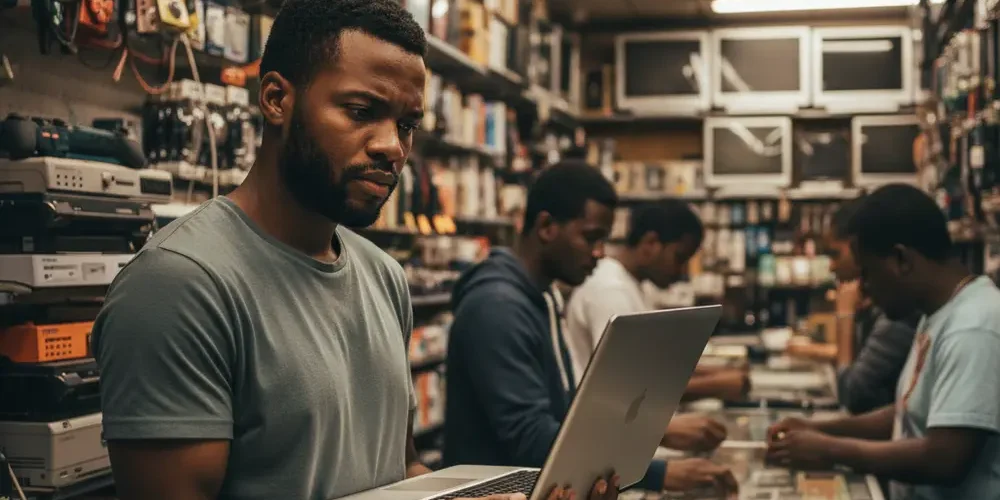
Every year, thousands of South Africans walk into stores like Cash Crusaders hoping to get a fair return on a used laptop or PC. What many of them do not expect is a payout that falls well short of what the device is actually worth on the open market.
This article breaks down why Cash Crusaders is rarely the best option for selling used electronics, what legal and data risks you face as a seller, and what to do instead. By the end, you will have a clear picture of your options and a practical checklist to protect yourself before any sale.
Note for South Africa:
- The Second-Hand Goods Act 6 of 2009 requires stores like Cash Crusaders to capture your ID details for every transaction. This is a legal requirement, not optional.
- Your personal data remains on your device unless you take deliberate steps to remove it before handing it over.
- South African platforms like Gumtree, Facebook Marketplace, and specialist buyers typically return significantly more value than a walk-in store.
At a glance:
- Cash Crusaders buys at a steep discount to ensure their own resale margin, so sellers almost always receive less than market value.
- Your ID details are shared with SAPS as a routine part of the transaction under South African law.
- Personal data left on a device is a real risk, and a basic factory reset is not always enough.
- Better alternatives exist for South African sellers, from private listings to specialist buyers.
Key takeaways:
- Convenience at a walk-in store comes at a direct cost to your payout.
- Selling used electronics in South Africa carries legal and data privacy obligations you need to understand before you sell.
- Preparing your device properly before any sale protects you regardless of where you sell.
What Is Cash Crusaders and How Does It Work?
Cash Crusaders is a South African franchise with stores across the country. According to their own website, they operate a buy-and-sell model alongside a secured loan (pawn) service. They accept a wide range of second-hand goods, including laptops and desktop PCs.
The appeal is straightforward: you walk in, they assess your device, and you walk out with cash the same day. For someone in urgent need of money or without easy internet access, that convenience is real. But convenience has a price, and with electronics, that price is steep.
The Pawn and Buy Model Explained
When Cash Crusaders buys your device outright, they need to resell it at a profit. That means they must factor in their margin, any refurbishment costs, the time the item sits on the shelf, and operational overhead. The result is that their offer to you will always sit well below what a private buyer would pay for the same item.
The pawn route works differently: you leave the device as security for a short-term loan, with the option to buy it back. If you do not redeem it, they keep the device. Either way, the store does not pay you what the device is worth on the open market.
Why the Payout Is Almost Always Lower Than Expected
This is the core issue for most sellers. Consumer reviews on Hellopeter show a recurring pattern: sellers arrive with a device they have checked on Gumtree or Facebook Marketplace, and they receive an offer that is a fraction of what they expected. Positive reviews of Cash Crusaders tend to focus on speed and friendliness, not on the payout amount.
How Cash Crusaders Prices Your Device
The store’s assessor evaluates your device based on their own internal criteria. Condition, age, model, and current stock levels all play a role. There is no obligation for them to match or even approach the private-market price. If they already have several of the same model in stock, your offer will be even lower.
You are also in a weaker negotiating position in person. Accepting or walking away with the device is your only leverage, and most sellers have already committed to the idea of leaving with cash.
The Margin Reality for Second-Hand Stores
A retail reseller needs to cover store rent, staff, electricity, franchise fees, and refurbishment. That overhead has to come from somewhere. The gap between what they pay you and what they charge the next buyer is how the model works. This is not a criticism of their business. It is simply a structural reality that makes a second-hand store a poor choice when your goal is to maximise what you receive for your device.
| Selling Method | Typical Payout | Speed | Effort Required |
|---|---|---|---|
| Cash Crusaders (walk-in) | Well below market value | Same day | Low |
| Gumtree / Facebook Marketplace | Close to market value | Days to weeks | Medium |
| Specialist buyer (e.g. Sell Your PC) | Fair, transparent offer | Fast turnaround | Low to medium |
| OLX private listing | Close to market value | Days to weeks | Medium |
Safety and Security Risks When Selling Used Electronics to a Store
The financial trade-off is one problem. The data and legal risks are another. Many South African sellers hand over a laptop or PC without taking the steps needed to protect their personal information. Once the device leaves your hands, you have very limited recourse if something goes wrong.
Your Personal Data and What Happens to It
A used laptop or PC likely contains saved passwords, browser history, banking details, personal photos, work documents, and linked accounts. Unless you have wiped the device properly, all of that data travels with it. Cash Crusaders’ public-facing information does not commit to a specific data sanitisation standard for every device they purchase, so you cannot assume the next person to switch it on will not have access to your files.
Microsoft’s own support documentation explains how to factory reset a Windows laptop before selling, including the "Remove everything" option that wipes personal files, apps, and settings. For older devices without drive encryption, a basic reset may not fully overwrite all data. Taking this step yourself, before handing over the device, is the only way to be sure.
Proof of Ownership and Legal Exposure Under the Second-Hand Goods Act
This is the part most sellers are unaware of. Under the Second-Hand Goods Act 6 of 2009, all registered second-hand goods dealers in South Africa are required to capture your ID details for every transaction. Those records are submitted to SAPS as part of the dealer’s compliance obligations, as confirmed by the South African Police Service second-hand goods guidelines.
What this means in practice is that your identity is formally linked to the device at the point of sale. If that device is later flagged as stolen, whether correctly or incorrectly, you may be contacted by police even if you are the legitimate owner. Sellers who cannot produce proof of purchase are in a more difficult position, even when they have nothing to hide.
The privacy implication is also worth noting. Your ID details, the device’s description, and the transaction record become part of a system that is accessible to law enforcement. This is not inherently wrong, but it is something most sellers do not know before they walk in.
Your Consumer Rights as a Seller in South Africa
The Consumer Protection Act 68 of 2008 is primarily designed to protect buyers, but it also places obligations on suppliers to be fair and transparent. If a store’s valuation process is misleading or if material information is withheld, there may be grounds for a complaint to the National Consumer Commission. In practice, disputes about a store’s offer are difficult to challenge, because there is no legal obligation for them to match market value.
Your strongest protection as a seller is knowledge. Knowing the current market value of your device before you walk in, understanding what documentation is required, and preparing your device correctly are all within your control. No legislation can recover money you have already accepted for a fair deal you did not fully understand.
Better Alternatives for Selling Your Laptop or PC in South Africa
If your priority is getting a fair return, there are better options available to most South African sellers. The South African tech community on MyBroadband consistently recommends private sales over second-hand stores for electronics, with Facebook Marketplace and Gumtree being the most commonly mentioned platforms.
Private Sales, Specialist Buyers, and Online Platforms Compared
Private sales on platforms like Gumtree South Africa allow you to set your own price, compare similar listings, and deal directly with a buyer. There is no middleman margin. The trade-off is time and the need to manage the process yourself, including safe meeting arrangements and secure payment.
Specialist buyers offer a middle ground. They assess your device, make a transparent offer, and typically complete the transaction faster than a private listing. If you want to sell your laptop or PC to a specialist buyer in South Africa, the process is straightforward and you are more likely to receive a fair market-based offer than at a walk-in store.
A brief note on connectivity: load shedding and inconsistent internet access do affect some South African sellers’ ability to use online platforms easily. If that applies to you, a specialist buyer with a simple online or phone-based process may be more practical than managing a full private listing.
Common Mistakes Sellers Make
Common mistakes to avoid:
- Handing over a device without wiping personal data first.
- Not checking the device’s current market value on at least two platforms before accepting any offer.
- Forgetting to remove linked accounts, including Google, Microsoft, and any banking apps.
- Not having proof of purchase available, which can complicate the transaction under the Second-Hand Goods Act.
- Accepting the first offer in-store without understanding you can walk away and explore other options.
- Assuming the store will handle data removal on your behalf.
If You Have Never Sold a Device Before
Start here if this is your first time selling used electronics:
- Check what similar devices are selling for on Gumtree SA and Facebook Marketplace before you do anything else.
- Back up anything you want to keep: photos, documents, and work files.
- Do a full factory reset using Microsoft’s built-in reset tool and choose the "Remove everything" option.
- Gather your proof of purchase and any accessories that came with the device.
- Read up on what ID and documentation a second-hand buyer may require under South African law.
- Consider a specialist buyer if you want a faster, more transparent process than a private listing.
If You Have Sold Electronics Before
Check these steps even if you have been through this before:
- Confirm BitLocker or drive encryption is disabled before resetting, especially on business laptops.
- Remove all Microsoft, Google, and cloud accounts before the reset, not after.
- Check that the device is not linked to a Microsoft Intune or corporate device management profile, which can cause issues for the buyer.
- Compare at least two current platforms for pricing before committing to any offer.
- If selling to a specialist buyer, confirm their process for IT asset disposal if data security is a priority for you.
Before You Sell Your Laptop or PC: Pre-Sale Checklist
- Back up your data. Copy everything you want to keep to an external drive or cloud storage before you do anything else.
- Remove all linked accounts. Sign out of and remove Google, Microsoft, Apple, and any banking or financial apps. Do this before the reset.
- Perform a full factory reset. Use the "Remove everything" option in Windows Settings. Disable BitLocker first if it is active on the device.
- Gather your proof of purchase. A receipt, invoice, or original packaging helps under the Second-Hand Goods Act and may support a higher offer from a specialist buyer.
- Check market value on at least two platforms. Look at active listings on Gumtree SA and Facebook Marketplace for the same model and condition before accepting any offer.
- Know what ID is required. Under South African law, any registered second-hand goods dealer will ask for your ID document. Have it ready and understand that this information is shared with SAPS as part of the transaction record.
Frequently asked questions
Does Cash Crusaders wipe devices before reselling them?
Cash Crusaders does not publicly commit to a specific data sanitisation standard for every device they purchase. You should not assume your data will be securely removed after the sale. Always wipe the device yourself before handing it over.
Is selling to Cash Crusaders legal and safe?
Yes, selling to Cash Crusaders is legal. They are a registered second-hand goods dealer operating under the Second-Hand Goods Act 6 of 2009. The main concerns are financial (low payout) and practical (data privacy and legal exposure if proof of ownership is unclear), not legality.
What ID do I need to sell electronics to a second-hand store in South Africa?
Under the Second-Hand Goods Act, dealers are required to capture your South African ID document details for every transaction. This record is submitted to SAPS. You should bring a valid South African ID book or smart card when selling to any registered second-hand goods dealer.
Can I get a better price by selling my laptop privately in South Africa?
In most cases, yes. Private platforms like Gumtree SA and Facebook Marketplace allow you to set your own price based on current market rates. You eliminate the store’s margin, which is the main reason walk-in stores pay less. The trade-off is that private sales take more time and require you to manage the process yourself.
What happens if the device I sell is later flagged as stolen?
If a device you legitimately own is flagged in the SAPS system, you could be contacted for questioning even if you are innocent. This is one reason why having proof of purchase is important. If you can demonstrate you are the legitimate owner, this significantly reduces your legal exposure in such a scenario.
Summary
Before you sell, keep these points in mind:
- Cash Crusaders’ business model requires them to buy below market value. That is not a flaw. It is how they operate, and it is the main reason sellers walk away with less than they expected.
- Your personal data is your responsibility. Wipe the device yourself before any sale, regardless of who is buying it.
- The Second-Hand Goods Act creates a legal paper trail that links your identity to the device. Know this before you walk in.
- Private sales and specialist buyers are realistic alternatives that typically offer better returns for South African sellers.
- If you want guidance on the best way to sell your used electronics, you can get in touch with the Sell Your PC team or browse available options on the Sell Your PC shop.
This is educational content, not financial advice.

